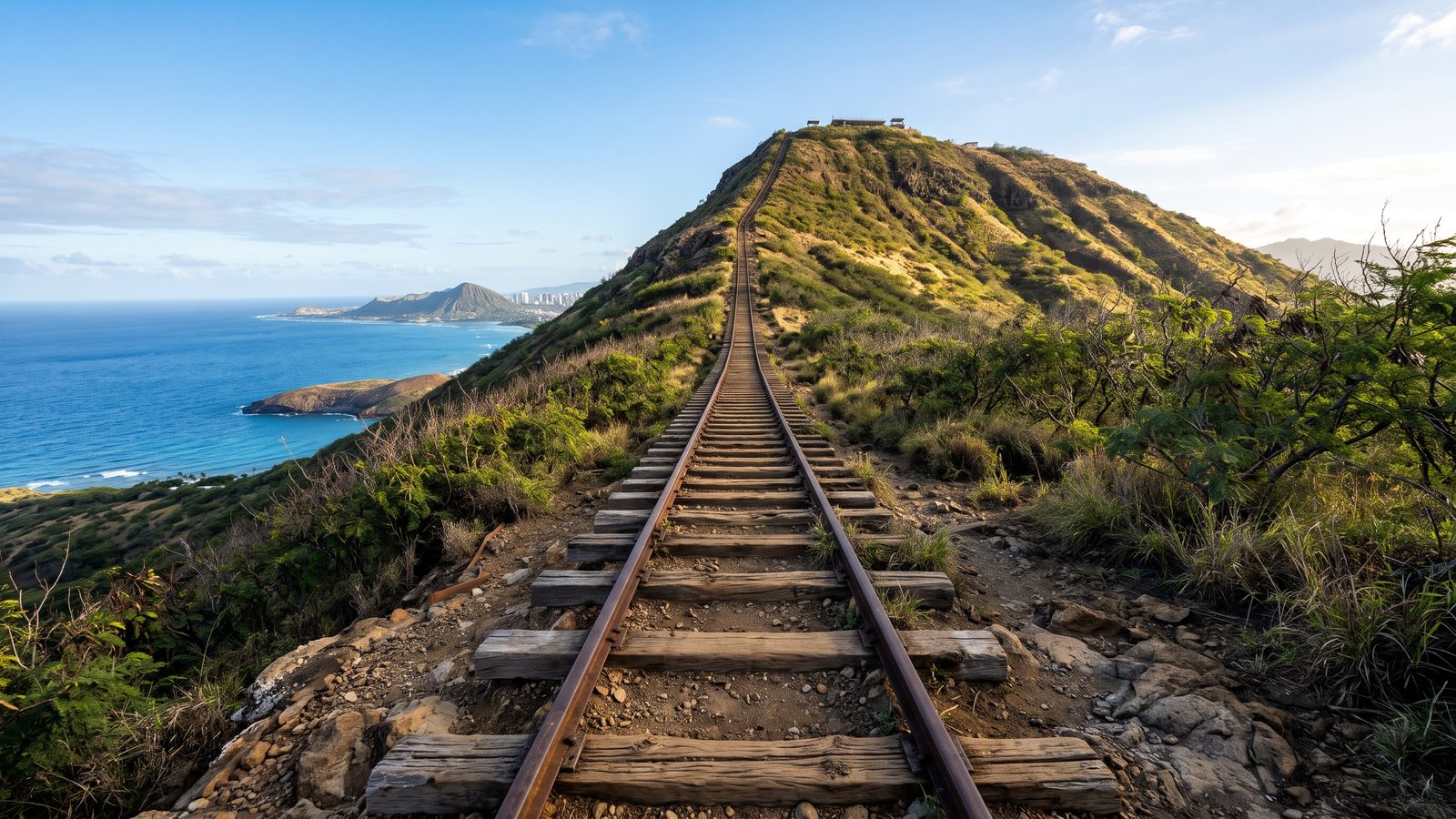
Welcome to Koko Head Crater, one of Honolulu’s most dramatic landforms and challenging outdoor adventures. Rising sharply above southeastern Oahu, this extinct tufa cone holds a rich legacy of geological force and military history. As you ascend its famous incline, you tread upon history while taking in expansive views of the Pacific Ocean, lush valleys, and distant coastal landmarks that make Hawaii truly unforgettable.
This self-guided audio tour leads you step by step along the historic World War II railway track. You will discover the crater's flora and fauna, its strategic wartime past, and the breathtaking panoramic rewards waiting at the summit. Get ready for an invigorating climb through history and nature.
What you'll hear on this tour
Stop 1. Climbing the 1,048 Railway Steps
You ascend 1,048 steep steps, embarking on a trek along a former World War II railway track. As you climb this iconic staircase, imagine soldiers hauling vital military supplies up this very path, their heavy boots echoing against the weathered metal ties. Each step you take connects you to that wartime past while pushing your endurance. As the path winds upward, your legs feel the intense burn, but the expanding views of southeastern Oahu reward your effort. The island unfolds dramatically beneath you with every gain in elevation. You are participating in a rewarding physical pilgrimage to the crater summit, converting historical infrastructure into an unforgettable personal journey.
Stop 2. Standing on the Crater Rim Apex
You reach the crater summit, where the coastal winds whip around you and the vast Pacific Ocean stretches toward the horizon. Standing at the lip of this ancient cinder cone, you gaze directly into a volcanic amphitheater shaped by immense geological power. Look closely at the scoria underfoot; these small, cooled volcanic embers whisper tales of explosive eruptions that once birthed the island. Up here, the sky feels closer and the sheer scale of the crater rim leaves you in awe. You stand at the very edge of Oahu's untamed natural architecture, enjoying the ultimate reward for conquering the grueling climb to the top.
Stop 3. Wartime Outpost on the Rim
You stand on the historical site of a crucial World War II observation and communication post. Picture this high crater rim bristling with military equipment as vigilant soldiers scan the Pacific horizon for enemy ships or aircraft. The steep railway tracks you climb were originally built as a vital transport artery, hauling supplies and personnel to strategic vantage points for the defense of Oahu. Remnants of concrete foundations scattered nearby mark the locations of temporary wartime structures. This rugged terrain served as a functional military installation, acting as a silent guardian overseeing the island's coastal defenses during a pivotal era in world history.
Stop 4. Resilient Life of Pele's Flower
You step onto the volcanic earth, feeling the fiery geologic origins beneath your feet. Along the steep slopes, hardy ʻōhiʻa lehua trees cling tightly to the soil, displaying vibrant red blossoms known as the flower of Pele. Beneath the shade of the crater rim's unique microclimate, delicate native ferns unfurl while native ʻapapane honeycreepers flit through the leafy canopy above. Their distinct calls echo across the valley, continuing a song heard for centuries. You sense how ancient lava flows cooled to form this rich terrain, nurturing a resilient ecosystem where native Hawaiian plant and animal life thrives despite the harsh conditions.
Stop 5. Panoramas Across Southeastern Oahu
You pause to catch your breath as a sweeping panoramic vista opens around you. The deep blue Pacific Ocean stretches to an endless horizon, shimmering under the sunlight. To your left, the iconic outline of Diamond Head rises majestically above the Waikiki coastline, where trade winds blow across historic shores. Below your feet, lush emerald valleys unfurl, carved by volcanic activity and centuries of patient erosion. This spectacular vantage point offers a humbling perspective on Oahu’s raw beauty, inviting you to admire the intricate contours of the island and the stunning interplay of land, light, and sea.
Stop 6. Ingenious WWII Military Infrastructure
You observe the practical engineering embedded directly into the terrain of Koko Head Crater. The stairs beneath your boots are repurposed World War II railway ties, laid to carry equipment to a former radar station on the summit. Weathered steel and concrete remnants contrast sharply with the surrounding dark volcanic rock, showing how human infrastructure adapts to nature over time. Notice the consistent incline engineered into the hillside, demonstrating a practical approach built for efficiency and utility during wartime. These durable wooden ties transform a historic transport line into a continuous ladder, blending strategic human design with a rugged volcanic landscape.
Planning your visit
- Best time to go
- Early morning near sunrise or late afternoon to avoid the intense midday sun and heat.
- Approximate duration
- about 1.5 to 2 hours
- Where to start
- Koko Head District Park, at the base of the crater railway staircase.
Access and conditions change seasonally — check the official site before you go.
Frequently asked questions
Is Koko Head Crater worth visiting?
Yes, visiting Koko Head Crater is highly rewarding for those seeking a challenging workout, historic World War II railway stairs, and spectacular 360-degree panoramic views of Oahu's coastline.
How long do you need at Koko Head Crater?
Plan for about 1.5 to 2 hours total. This provides enough time for the steep climb up the 1,048 railway ties, taking rest breaks, enjoying the summit views, and making a careful descent.
What was Koko Head Crater used for during World War II?
During World War II, Koko Head Crater served as a vital military observation and radar post to guard Oahu against enemy naval and air attacks. The railway was constructed to haul personnel and heavy equipment to the crater summit.
Keep exploring
Header image is an AI-generated illustration of Koko Head Crater. AllTours.ai is an AI audio tour guide — point your camera at any landmark and hear its story.