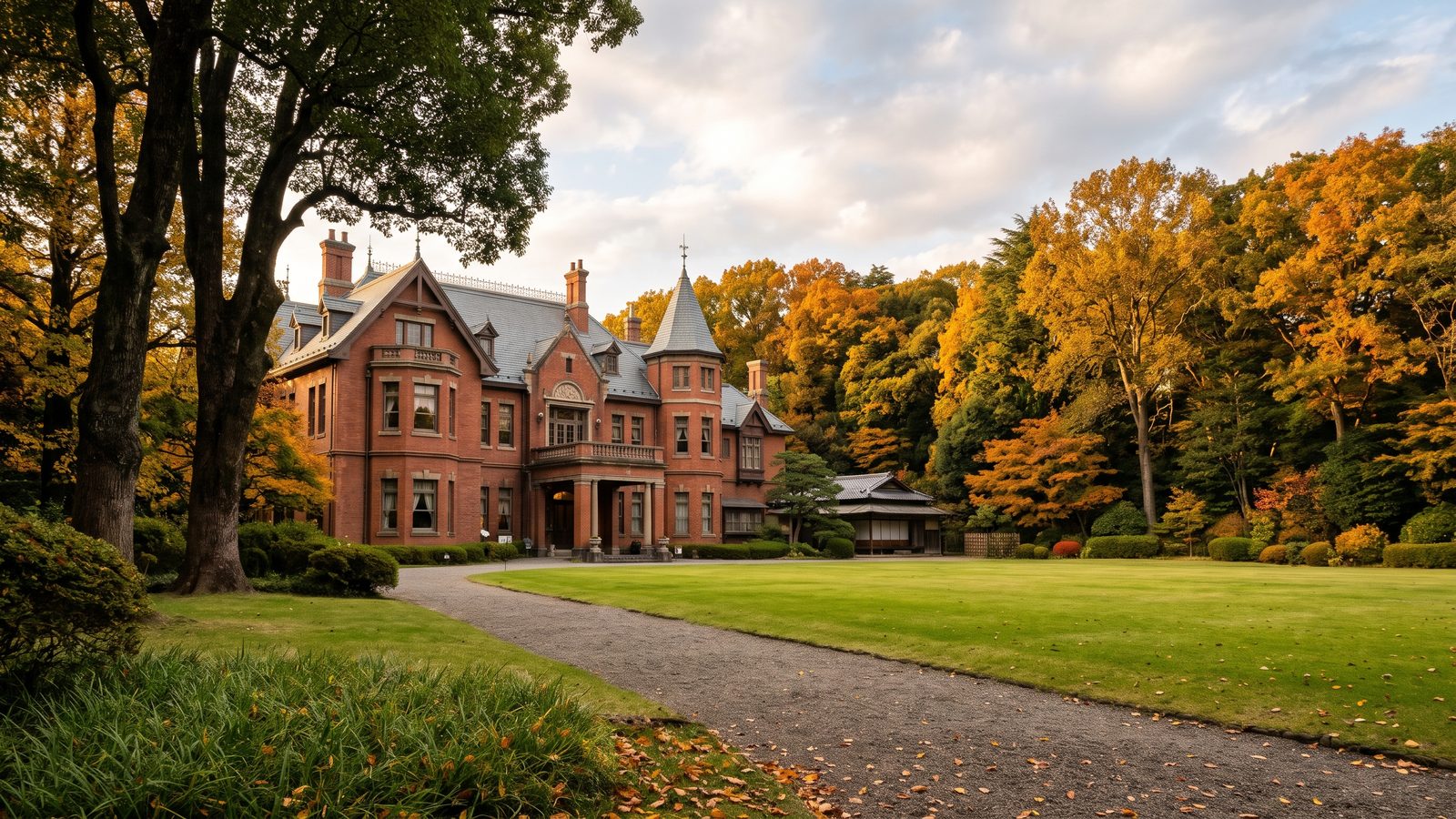
Step away from Tokyo's urban rush into the peaceful grounds of Komaba Park, once the grand private estate of the powerful Maeda clan. Built in the late 1920s for Marquis Toshinari Maeda, this unique retreat offers a rare glimpse into Japan's early Showa era. Here, Western-style luxury meets traditional Japanese aesthetic traditions across sprawling lawns, historic mansions, and quiet garden sanctuaries designed for reflection.
This audio tour guides you through the estate's remarkable dual identity. As you explore the grand residence and serene grounds, you will discover how one of Japan's wealthiest aristocratic families seamlessly blended international diplomatic style with deeply rooted cultural heritage right in the heart of Tokyo.
What you'll hear on this tour
Stop 1. Legacy of the Maeda Clan
You stand on land that once served as the magnificent estate of Marquis Toshinari Maeda, head of the former Kaga Domain. Constructed between 1927 and 1929, this grand Western-style mansion reflects the immense prestige of one of Japan’s wealthiest families during the early Showa era. Marquis Maeda, an accomplished general and diplomat, commissioned the residence to project international sophistication while retaining cultural roots. Although World War II interrupted this elegance and led to requisitioning by Occupation forces, the Maeda family later donated the estate to preserve its history. As you explore, you step into a captivating pre-war world where Japan’s elite gathered to shape policies and foster international diplomacy.
Stop 2. A Jacobean Revival Masterpiece
You approach the magnificent main mansion, completed in 1929 as a stunning example of Jacobean Revival architecture. Take in the rich, reddish-brown brickwork laid in meticulous Flemish bond patterns. Notice the elaborate gables, complex slate roof with dormer windows, and half-timbered upper stories reflecting classic English country houses. As you step inside, a grand oak staircase commands your attention with its intricate balustrade, showcasing how Japanese craftsmen mastered Western architectural forms. Bay windows flood the spacious rooms with natural light, creating a harmonious visual dialogue between two distinct architectural traditions that highlights both strength and refined European elegance.
Stop 3. A Dialogue of Two Worlds
Inside the residence, you sense the fascinating cultural dualism of early Showa high society. The Western mansion once hosted foreign dignitaries and high-society galas, embracing European courtly etiquette and musical performances. Yet, steps away sits the traditional Japanese-style house, or watei. Here, the Maeda family preserved Japan's spiritual and artistic heart through intimate tea ceremonies, quiet ikebana flower arranging, and poetry readings. You are observing a conscious negotiation of identity, where a prominent family integrated global diplomatic influence without forfeiting indigenous cultural traditions. This dual architecture beautifully encapsulates Japan’s broader historical journey of balancing international modernity with cherished heritage.
Stop 4. Craftsmanship in Every Detail
Look closely as you walk through the interior, where daily living space transforms into fine art. You see stylized Art Deco wrought iron balustrades gracefully accenting the curved oak banister. Examine the unique fireplace surrounds, each featuring detailed stone carvings or vibrant ceramic tiles. Overhead, delicate plasterwork displays geometric rosettes and subtle friezes on the ceilings. Rich wall coverings of patterned silk and embossed leather envelope you in warmth, while stained glass windows filter natural light into vibrant, symbolic hues. Every room offers a miniature masterpiece, demonstrating how master artisans harmonized varied textures and decorative styles into one coherent aesthetic vision.
Stop 5. The Strolling Pond Garden
Step onto the stone pathways of the traditional Japanese garden, designed around a classic strolling pond layout known as chisen-kaiyu-shiki teien. The curving pond represents a vast ocean, inviting you on an imaginative journey through nature. Ancient stones are strategically placed by master craftsmen to suggest distant mountain ranges and floating spiritual islands. Winding paths prevent you from viewing the entire landscape at once, revealing fresh, dramatic vistas at every turn. Gnarled pine trees stand as symbols of longevity and resilience. Here, every natural element is deliberately orchestrated to inspire inner peace, reflection, and a deep, quiet connection to the surrounding landscape.
Stop 6. Sanctuary of Ancient Trees
As you wander deeper into the park, massive ancient camphor trees tower overhead, offering shade and year-round greenery. A gentle stream meanders through the landscape, providing a calming acoustic backdrop as colorful carp glide smoothly through the pond, occasionally attracting swift kingfishers. Artfully placed rocks evoke natural landscapes in miniature, honoring traditional Japanese garden principles. Pruned pine branches reflect decades of skilled care, bridging human craftsmanship with nature’s vitality. In spring, bright rhododendron blooms illuminate the garden paths. Take a moment to absorb this living sanctuary, where carefully tended natural elements create an inviting retreat from the surrounding city.
Planning your visit
- Best time to go
- Spring or autumn mornings offer pleasant weather, vivid rhododendron or foliage colors, and a peaceful atmosphere.
- Approximate duration
- about 1 hour
- Where to start
- Main entrance of Komaba Park, near the Former Maeda Family Main Residence.
Access and conditions change seasonally — check the official site before you go.
Frequently asked questions
Is Komaba Park worth visiting?
Yes, Komaba Park offers a unique blend of Tudor-style architecture, traditional Japanese gardens, and rich history, providing a serene escape from Tokyo's bustling urban center.
How long do you need at Komaba Park?
Most visitors spend about 1 hour exploring the former Maeda residence, strolling through the gardens, and enjoying the peaceful grounds.
What is the history of Komaba Park?
Komaba Park was originally the private estate of Marquis Toshinari Maeda, head of the Kaga Domain. Constructed between 1927 and 1929, it served as an aristocratic residence before being preserved for public enjoyment.
Keep exploring
Header image is an AI-generated illustration of Komaba Park. AllTours.ai is an AI audio tour guide — point your camera at any landmark and hear its story.