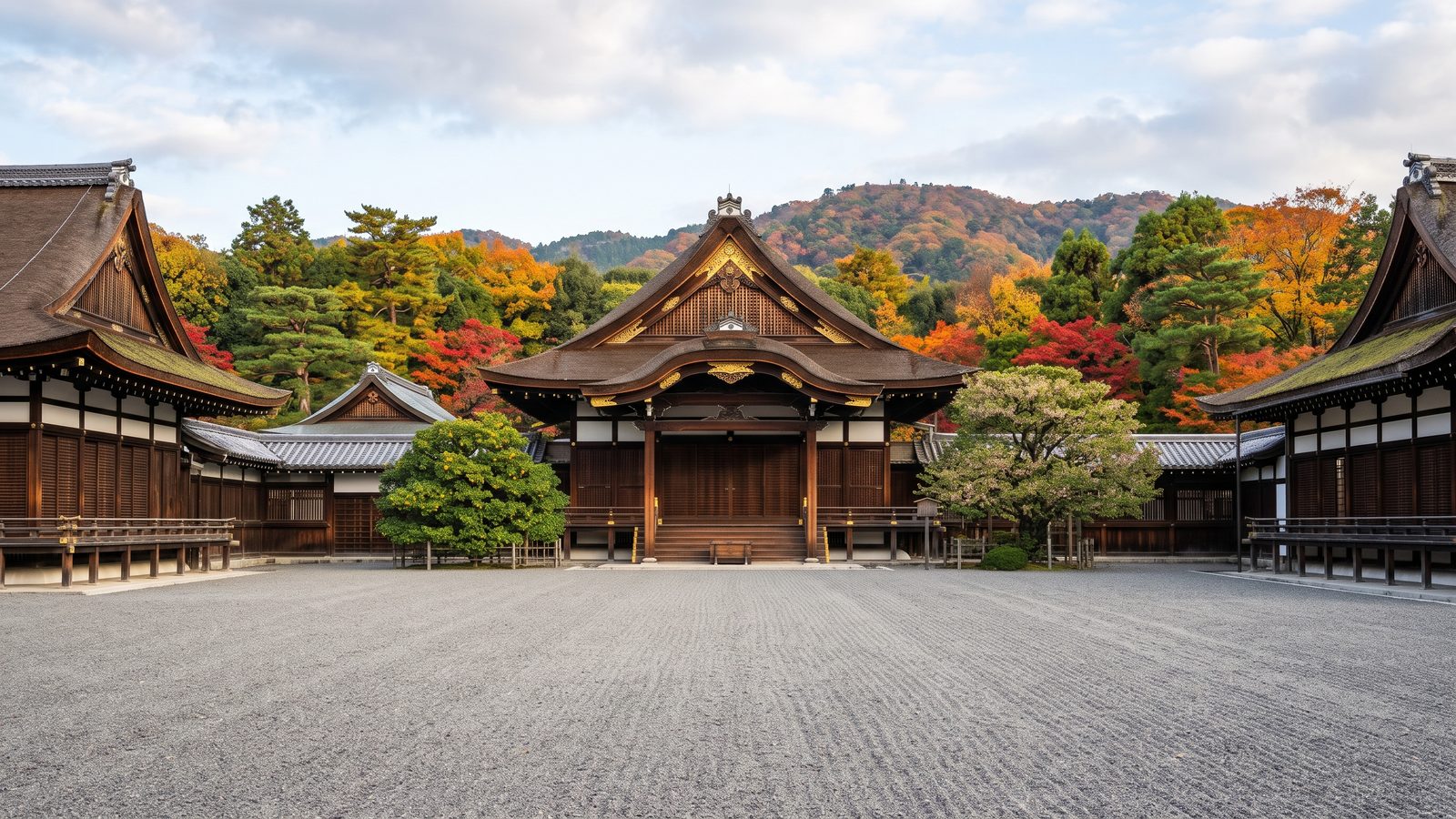
Step into the historic grounds of Kyoto Imperial Palace, the long-standing residence of Japan's emperors for over a thousand years. Enclosed by grand gates and imposing walls, this serene park preserves the exquisite architecture and courtly traditions of past eras. As you explore the open gravel paths and stately halls, you will trace the living legacy of imperial rule before the national capital moved to Tokyo.
Rebuilt in 1855 to preserve Edo-period styles, the palace grounds offer an extraordinary window into royal life, traditional gardens, and sacred ceremonies. This audio tour guides you through historic halls, tranquil pond landscapes, and centuries of court culture at your own pace.
Listen to a sample
The opening of this tour, exactly as AllTours narrates it on site.
What you'll hear on this tour
Stop 1. Sacred Throne of Imperial Legacy
You stand before the historical center of Japan's imperial power, where emperors resided for over a millennium. Look toward the Shishin-den hall, housing the elevated Takamikura throne used during momentous enthronement ceremonies. Imagine solemn processions filled with Kuge court nobles in elaborate attire, gathering to witness the sovereign's ascension. Nearby in the Seiryo-den, you discover the Emperor's private realm, where daily governance, private audiences, and quiet rest took place alongside ladies-in-waiting. Although political control shifted to shoguns in Edo, the Emperor remained the sacred head of state. Every structure here reflects strict protocol, ancient rites, and the enduring legacy of the imperial court.
Stop 2. Harmony of the Shinden-Zukuri Style
You gaze upon the pinnacle of Shinden-zukuri architecture, designed to blend naturally with surrounding landscapes. Notice the elevated wooden floors rising above the ground to combat dampness, signaling the majesty of these spaces. Wide engawa verandas wrap around the buildings, inviting nature directly into the interior. Up above, admire the distinctive hiwadabuki roofs, skillfully crafted from layered hinoki cypress bark. Inside, flexible fusuma sliding screens and paper shoji replace solid permanent walls, allowing rooms to reconfigure effortlessly from grand imperial ceremonies to intimate gatherings. Natural, unadorned wood and crisp white plaster create a serene elegance where simplicity meets imperial grandeur.
Stop 3. Strolling the Heart-Shaped Oikeniwa
You step into the Oikeniwa, or Imperial Pond Garden, a sanctuary created for contemplative imperial strolls. Notice how the central pond is shaped like the Chinese character for 'heart' and features three distinct islands representing mythical realms. As you walk along the winding paths of this chisen-kaiyu-shiki stroll garden, every turn reveals a newly composed vista of pruned pine trees, stone arrangements, and moss-covered lanterns. Further within the grounds lies the Gonaitei Garden, a private sanctuary next to the imperial residence. Its understated elegance offers you a quiet retreat where subtle rock compositions and reflective waters express perfect balance.
Stop 4. Centuries of Imperial Resilience
You walk upon ground rich with centuries of court history. While the original Heian-kyō palace stood further west, the court relocated here in the late 14th century for greater security. What you see today is a reconstruction built in 1855 following frequent fires that repeatedly forced the imperial family into temporary noble residences. Despite political dominance shifting to the Shogunate in Edo, this site remained Japan's symbolic heart. Here, the final enthronement before the Meiji Restoration took place just thirteen years before Emperor Meiji moved the capital to Tokyo. Even afterward, enthronement ceremonies for Emperors Taisho and Showa returned to these historic grounds.
Stop 5. Courtyard Elegance and Courtly Arts
You enter a world once steeped in miyabi, the refined aesthetic ideal of Japan's imperial court. Imagine the rustle of twelve-layered junihitoe kimonos worn by noblewomen, their colors carefully chosen to match the changing seasons. Here, emperors and courtiers composed waka poetry inspired by the gardens, turning literary contests into major national cultural events. The echoing notes of gagaku court music and ancient dances once filled these halls during grand festivals, while precise tea ceremony rituals cultivated harmony and deep mindfulness. Every stone and seasonal blossom around you reflects this deep appreciation for nature, shaping artistic expressions that spread across the nation.
Stop 6. Preserving Ancient Court Protocols
You explore spaces governed by Yusoku Kojitsu, the ancient court protocols detailing every official gesture and ceremony. Before the Shishinden hall, envision the Sokui no Rei enthronement ritual, where sacred Takamikura and Michodai thrones sat upon a raised dais to affirm imperial lineage. Nearby at the Seiryōden, the On-tsune-goten reveals the Emperor’s daily life, carefully structured around spiritual customs. Traditional unpainted cypress wood and hinoki bark roofs reinforce a deep reverence for natural materials and timeless form. From ceremonial layout to courtly dances like the Gosechi-no-mai, these enduring customs preserved continuity and stability across more than a millennium.
Planning your visit
- Best time to go
- Spring or autumn during early morning or late afternoon for gentle sunlight across the gardens and gravel courtyards.
- Approximate duration
- about 1 to 1.5 hours
- Where to start
- Seisho-mon Gate on the western side of the Kyoto Imperial Palace grounds.
Access and conditions change seasonally — check the official site before you go.
Frequently asked questions
Is Kyoto Imperial Palace worth visiting?
Yes, Kyoto Imperial Palace is highly worth visiting for anyone interested in Japanese history and classic architecture. It offers a rare look at traditional imperial life, expansive cypress-roofed halls, and historic gardens within a serene park setting.
How long do you need at Kyoto Imperial Palace?
Most visitors spend between 1 and 1.5 hours exploring the key palace halls, courtyards, and gardens at a comfortable walking pace.
Why is Kyoto Imperial Palace a reconstruction?
The palace suffered several devastating fires throughout its long history. The current structures were meticulously rebuilt in 1855, preserving classical Edo-period architectural styles and traditional court layouts.
Keep exploring
Header image is an AI-generated illustration of Kyoto Imperial Palace. AllTours.ai is an AI audio tour guide — point your camera at any landmark and hear its story.