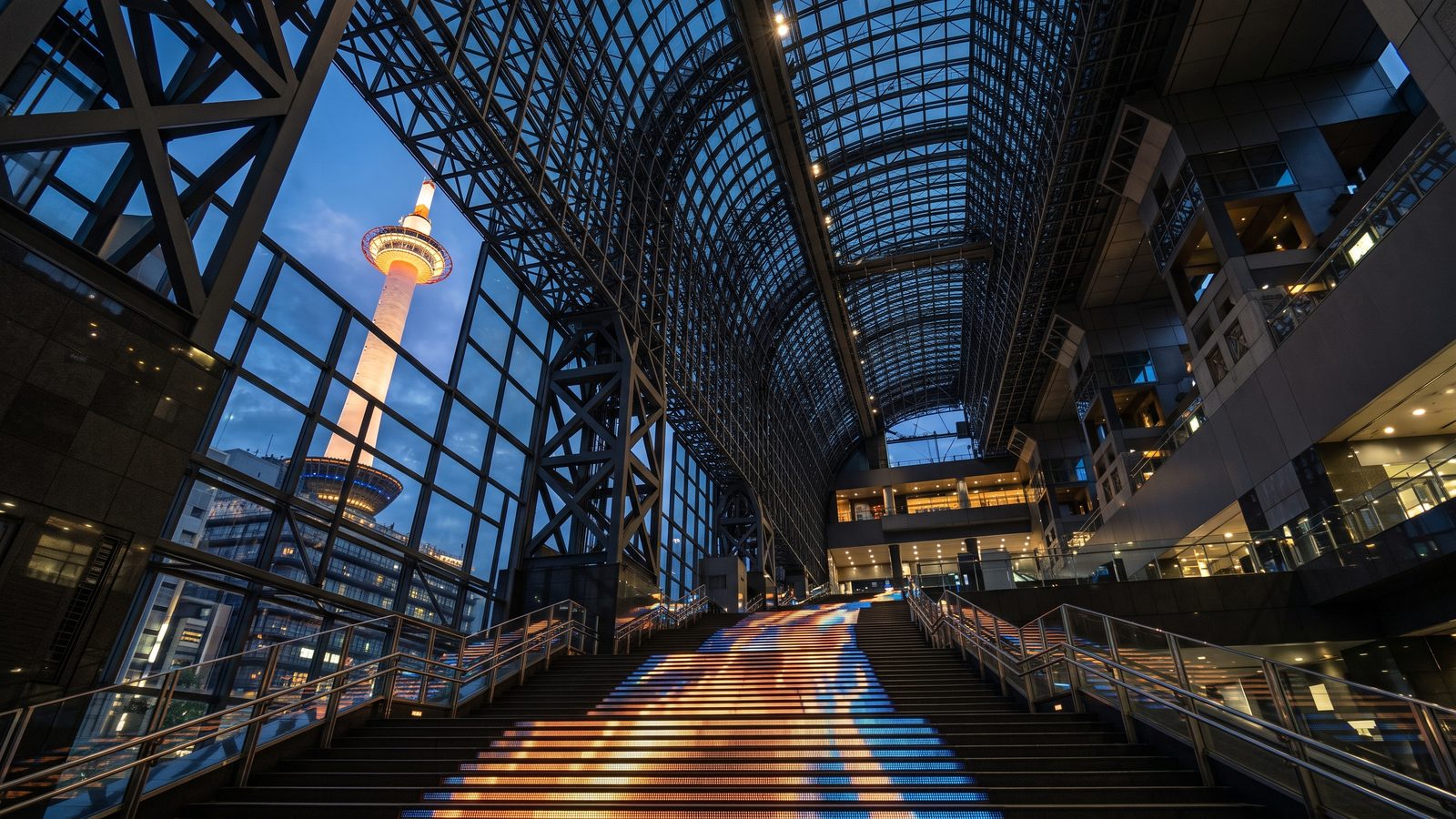
Welcome to Kyoto Station Building, a breathtaking architectural masterpiece and vibrant city within a city. Designed by Hiroshi Hara and opened in 1997 to commemorate Kyoto’s 1200th anniversary, this massive steel-and-glass structure offers a bold, futuristic contrast to the city's ancient temples. As you explore its soaring atrium, dynamic Grand Stairway, and elevated Skyway, you will discover a seamless blend of transit hub, culture, and modern design.
This self-guided audio tour leads you through the building's iconic architectural spaces, sweeping elevated viewpoints, culinary hotspots, and bustling subterranean shopping arcades. Prepare to experience the dynamic, beating heart of modern Kyoto, where Japan's ancient traditions seamlessly meet cutting-edge contemporary design and incredible urban energy.
Listen to a sample
The opening of this tour, exactly as AllTours narrates it on site.
What you'll hear on this tour
Stop 1. Hiroshi Hara's Cathedral of Steel
Stand in the vast atrium and feel the sheer scale of Hiroshi Hara’s deconstructivist masterpiece. Built as a futuristic city within a city, this structural marvel stands in deliberate contrast to Kyoto's historic wooden temples. As you look upward, you notice the multi-layered roof channeling sunlight through an exposed steel and glass frame. The soaring Grand Concourse creates a dizzying sense of verticality, blurring traditional boundaries between interior and exterior space. Below you, the dramatic Grand Staircase ascends like an illuminated public plaza, while the glass Skyway tube hangs high above. Every structural element works together, transforming a standard transportation hub into a monumental, high-tech architectural sculpture.
Stop 2. Panoramas from Skyway to Terrace
Step onto the suspended Skyway, a glass-enclosed corridor floating high above the bustling concourse floor. As you look down, you see the Grand Staircase bustling below like an active public stage. Ascend further to the open-air Happy Terrace on the rooftop, where sweeping vistas of Kyoto unfold around you like a painted scroll. You can easily spot the sleek Kyoto Tower standing tall against the misty backdrop of the timeless Higashiyama mountains. From this unique viewpoint, you witness ancient temple roofs emerging amidst urban modernity. Even looking back inward down the atrium reveals a dizzying, beautiful interplay of light dancing across giant steel beams.
Stop 3. Ramen Alleys and Culinary Delights
Prepare your palate for a delicious journey through the station's rich culinary landscape. On the 10th floor, you discover Kyoto Ramen Koji, a vibrant alley gathering regional noodle styles from all across Japan, from rich Kyushu pork broth to lighter Hokkaido soy ramen. If you prefer refined dining, head to the upper levels of the Isetan department store for exquisite multi-course Kyo-ryori meals paired with panoramic city views. For travelers on the go, the basement levels offer elegant ekiben bento boxes ideal for bullet train trips. Wherever you explore, from matcha-infused treats to artisanal breads, you encounter Kyoto’s sophisticated culinary identity at every turn.
Stop 4. Underground Arcades and Luxury Fashion
Immerse yourself in the bustling retail energy that fills this grand structure. On the upper floors, the prestigious Isetan Department Store offers high-end fashion and traditional kimonos. Head down into its basement depachika, a paradise of Kyoto pickles, matcha desserts, and gourmet bentos. Below ground, you can explore The Cube, a maze of shops featuring handcrafted ceramics, delicate textiles, and classic yatsuhashi souvenirs to take home. Continuing into the expansive Porta underground mall, you find vibrant boutiques and cozy cafes. From luxury designer labels to authentic local crafts, this shopping haven provides a perfect taste of Kyoto's blend of heritage and contemporary style.
Stop 5. The Pulsing Nexus of Travel
Feel the energetic rhythm of one of Japan’s most efficient travel hubs. You stand at the center of a grand transit network where sleek Tokaido Shinkansen bullet trains depart with legendary precision, connecting you swiftly to Tokyo or Hiroshima. Local JR lines carry travelers directly to Arashiyama's bamboo groves or Nara’s ancient Great Buddha, while the private Kintetsu line serves historic pilgrimage routes. Beneath your feet, the Karasuma subway line links seamlessly to central Kyoto. Right outside, city buses orchestrate a continuous movement across the city. You are witnessing a masterfully choreographed symphony of movement that effortlessly connects millions of visitors to Japan's cultural heartland.
Stop 6. A Bold 21st Century Statement
Gaze up into the vast urban canyon carved from glass and structural steel. This soaring cathedral of light represents a deliberate, defiant embrace of 21st-century design within an ancient capital. Notice how the exposed framework celebrates its industrial aesthetic, leaving modern engineering visible for all to admire. The Grand Stairway serves as more than steps; it functions as a public gathering plaza and a dynamic canvas for light projections. Suspended above, the glass-encased Skyway offers a futuristic viewpoint over the city's continuous pulse. Hiroshi Hara's provocative design challenges traditional Japanese architectural concepts, asserting a forward-looking identity while honoring Kyoto's enduring place in history.
Planning your visit
- Best time to go
- Late afternoon to early evening, allowing you to experience the atrium in natural daylight and see the illuminated Grand Stairway and city lights after dark.
- Approximate duration
- about 1.5 hours
- Where to start
- The main Central Concourse on the ground floor near the JR Central Gates.
Access and conditions change seasonally — check the official site before you go.
Frequently asked questions
Is Kyoto Station Building worth visiting?
Yes, Kyoto Station Building is well worth visiting even if you are not taking a train. Designed by Hiroshi Hara, it features striking modern architecture, rooftop vistas from the Happy Terrace, the floating Skyway walkway, and famed culinary hubs like Kyoto Ramen Koji.
How long do you need at Kyoto Station Building?
Most visitors spend 1 to 2 hours exploring the main architectural features, walking the Skyway, and enjoying the Grand Stairway views. If you plan to shop in the underground arcades or eat at the rooftop and ramen alley restaurants, plan for 2 to 3 hours.
When was the modern Kyoto Station Building built?
The current futuristic station building was designed by architect Hiroshi Hara and officially opened in 1997 to commemorate the 1200th anniversary of Kyoto's founding.
Keep exploring
Header image is an AI-generated illustration of Kyoto Station Building. AllTours.ai is an AI audio tour guide — point your camera at any landmark and hear its story.