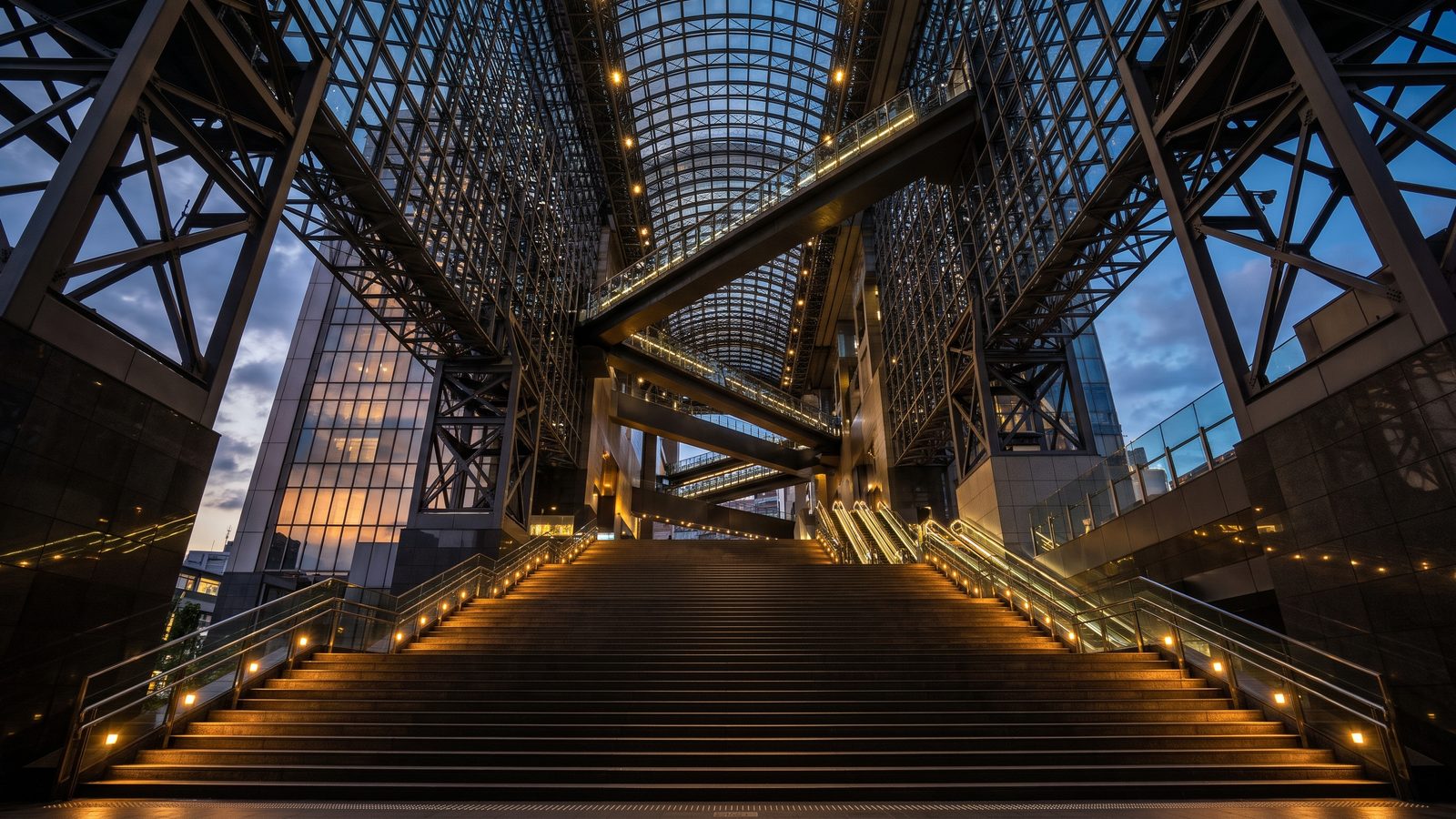
Welcome to Kyoto Station, an architectural marvel designed by Hiroshi Hara that serves as a bold, futuristic gateway to an ancient city. Opened in 1997 to commemorate Kyoto’s 1200th anniversary as the capital, this bustling hub contrasts soaring modern steel with centuries of tradition. As you step into its massive atrium, you witness how modern Japan's efficiency, cultural dialogue, and innovative spirit seamlessly coexist under one giant glass roof.
Beyond serving as a vital transport artery connecting Kyoto to Japan and the world, the complex is a sprawling city unto itself. Within its multi-layered design, you will discover soaring glass walkways, bustling depachika food halls, high-end shopping, and communal spaces designed to reflect traditional Japanese aesthetics in a contemporary light.
Listen to a sample
The opening of this tour, exactly as AllTours narrates it on site.
What you'll hear on this tour
Stop 1. Hiroshi Hara's Soaring Glass Canyon
You stand inside a towering, 60-meter-high grand atrium that functions as a light-filled canyon cutting through the heart of the complex. Look up at the exposed steel space frame, where a complex lattice of structural beams and glass panels creates a striking sense of scale paired with unexpected lightness. As you explore Hiroshi Hara's deliberate design, you notice how polished steel, expansive glass, and raw concrete assert a bold modern identity that challenges Kyoto's ancient temple aesthetics. Walk over to the dramatic Grand Staircase, which doubles as an illuminated canvas at night, or glance up at the glass-enclosed Skyway promenade floating high above to appreciate the building's intricate geometry.
Stop 2. A Modern Reflection of Ancient Philosophy
As you move through this vast, open space, you witness a thoughtful cultural dialogue between modern engineering and traditional Japanese values. Notice how the Grand Staircase functions as a contemporary engawa, a communal veranda where visitors pause and watch the city's pulse, mirroring the contemplative spaces of ancient temples. The airy atrium subtly echoes the uncluttered aesthetic of Zen gardens, offering a moment of calm amidst urban busyness. Throughout your visit, you experience omotenashi, Japan's deep-seated hospitality, evident in every interaction and layout choice. Even below ground in the depachika food halls, you encounter local delicacies presented with seasonal reverence, treating food as a refined, artistic cultural tradition.
Stop 3. From Wooden Station to Futuristic Landmark
You are standing on historic ground where Kyoto's original station—a modest wooden structure—welcomed its first trains from Kobe in 1877 during the Meiji Restoration. That gateway was replaced in 1914 by a majestic Renaissance-style building representing Imperial Japan's aspirations, which tragically burned down in a devastating 1950 fire. A functional rebuild followed in 1952 to serve a recovering post-war nation. Finally, in 1997, to celebrate Kyoto's 1200th anniversary as the capital, the current futuristic structure by Hiroshi Hara opened. Its controversial, modern design challenged traditional aesthetics, opening a bold new architectural chapter while honoring the station's deep historical roots.
Stop 4. Kyoto's Vibrant Underground and Sky-High Culinary Scene
You find yourself surrounded by a diverse culinary crossroads catering to every craving. On the 11th floor of the Isetan department store, the Cube Gourmet presents high-end kaiseki dining with sweeping city views, where chefs craft Kyoto's seasonal ingredients into edible art. Descending to the B1F Porta area, you discover bustling noodle shops serving Kyoto's distinct, lighter soy-sauce based ramen. Before boarding your train, browse ekiben vendors offering artfully arranged bento boxes filled with local specialties like saba-sushi and delicate yuba tofu skin. You can also relax in tranquil tea houses serving authentic matcha paired with wagashi sweets, capturing Kyoto's rich culinary traditions.
Stop 5. Multi-Layered Retail Arenas and Artisanal Craft Treasures
You enter a multi-layered shopping paradise that stretches from deep underground to high above the concourse. Explore the colossal Isetan department store, offering high-end fashion, homeware, and cosmetics across its soaring levels. Below the main terminal, navigate the bustling corridors of the Porta underground mall, filled with modern apparel and trendy cafes highlighting local designers. In Isetan's basement depachika, you can pick up obanzai home cooking, yatsuhashi sweets, and local sake. Ascend to The Cube floors to browse traditional crafts like Kiyomizu-yaki ceramics and fine Nishijin-ori silk products, or pop into Asty Road near the Shinkansen gates for last-minute travel souvenirs.
Stop 6. The Orchestrated Symphony of Kansai Transit
You stand at the center of an orchestrated symphony of movement connecting Kyoto to the entire Kansai region and beyond. The Tokaido Shinkansen high-speed lines launch bullet trains east toward Tokyo and west toward Hakata. On the regional tracks, the JR Kyoto Line carries you to Osaka, while the Sagano Line provides direct access to Arashiyama's famous bamboo groves. Private Kintetsu trains head south toward Nara's deer park and ancient temples, while the Karasuma Subway Line runs directly beneath you through Kyoto's city core. Just outside, a vast bus terminal dispatches local city buses and highway coaches to every corner of the city.
Planning your visit
- Best time to go
- Late afternoon into early evening to catch the sunset from the upper decks and see the Grand Stairway illuminated at night.
- Approximate duration
- About 1 to 2 hours
- Where to start
- The Central Concourse / Main Atrium on the ground floor of Kyoto Station.
Access and conditions change seasonally — check the official site before you go.
Frequently asked questions
Is Kyoto Station worth visiting for non-travelers?
Yes, Kyoto Station is a architectural destination in its own right. Beyond transit, visitors come to experience Hiroshi Hara's futuristic 60-meter glass atrium, climb the illuminated Grand Staircase, enjoy rooftop views, and explore extensive dining and shopping corridors.
How long do you need at Kyoto Station?
Plan for about 1 to 2 hours to walk through the main atrium, explore the Skyway and Grand Stairway, browse the depachika food halls, and appreciate the building's striking modern architecture.
When was the modern Kyoto Station built and why?
The current station building, designed by architect Hiroshi Hara, opened in 1997 to commemorate the 1200th anniversary of Kyoto's founding as Japan's capital.
Keep exploring
Header image is an AI-generated illustration of Kyoto Station. AllTours.ai is an AI audio tour guide — point your camera at any landmark and hear its story.