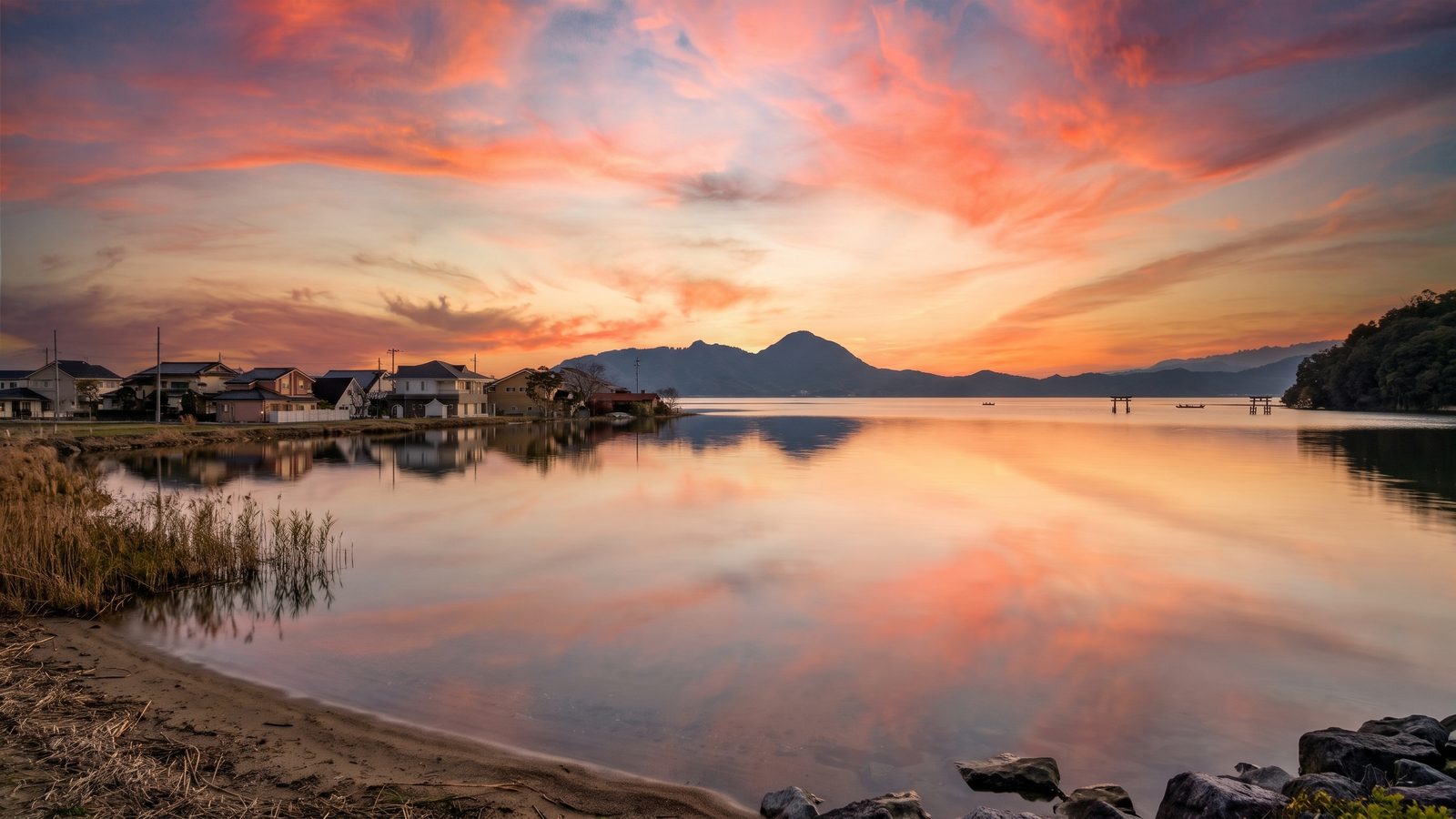
Welcome to Lake Biwa, the ancient heart of Shiga Prefecture and Japan's largest freshwater body. Shaped like a traditional biwa lute, this ancient lake provides life-giving water to over 14 million people across the Kansai region. As you walk along its shores in Otsu, you are standing at a historic crossroads where sacred mountains, ancient temples, and vast waters create a living landscape shaped by millions of years of natural evolution.
This self-guided audio tour reveals the rich ecosystem, dramatic peaks, and rural traditions surrounding the lake. Take your time exploring Shiga's coastal scenery while discovering floating shrine gates, rare endemic wildlife, and sacred mountain sanctuaries overlooking these ancient, shimmering waters.
Listen to a sample
The opening of this tour, exactly as AllTours narrates it on site.
What you'll hear on this tour
Stop 1. A Shimmering Canvas of Mountain Reflections
You stand before Lake Biwa and immediately sense its immense, sea-like scale stretching all the way to the distant horizon. The majestic Hira Mountains frame the western shore, their peaks often wrapped in a soft, mystical haze. As you watch, the water shifts continuously from deep sapphire blue in open stretches to shimmering jade green near the reedy banks. Off the shore, the iconic torii gate of Shirahige Shrine appears to float on the surface, perfectly framed by the expansive sky. Whether softened by morning mist or painted in brilliant sunset oranges, this vast natural landscape continuously transforms before your eyes.
Stop 2. The Lifeblood of the Kansai Region
You gaze across the crystal surface of Lake Biwa, realizing you are looking at the vital source of life for over 14 million people across Kansai. Fed by more than 120 rivers and hidden underground springs, this massive basin holds an astonishing 27.5 billion cubic meters of water. Here begins the historic Biwako Canal, a famous Meiji-era engineering triumph that channels fresh water straight to Kyoto. Beneath the calm surface, deep thermal currents circulate constantly through depths reaching over 100 meters, refreshing the lake and sustaining sacred traditions where Shinto shrines and Buddhist temples face the purifying flow.
Stop 3. An Ancient Cradle of Unique Wildlife
As you look across the water, you observe an isolated ecosystem millions of years in the making. Deep below thrives the exclusive Biwa trout alongside the massive Biwa catfish, top native predators sharing these waters with over 60 rare mollusk species. Swaying gracefully along the shoreline, dense yoshi reed beds act as natural water filters while offering shelter to young fish fry and nesting birds. You might catch a glimpse of a white-tailed eagle circling overhead or spot a delicate reed warbler moving among the stalks. The towering Hira Mountains sculpt unique microclimates that sustain this dynamic, irreplaceable sanctuary.
Stop 4. Sacred Peaks and Mountain Guardians
You look west across the lake toward the dramatic Hira Mountains, rising as living sentinels above the water. In cold months, snow caps these high peaks, spawning the powerful Hira no Oroshi wind that sweeps across the basin. To the southwest stands sacred Mount Hiei, home to the ancient Enryaku-ji temple complex. Here, Tendai Buddhist monks once wielded great influence over Japanese history. These peaks do far more than form a backdrop; they gather life-giving water, channel fierce winds, and preserve centuries of spiritual heritage that continues to guard and inspire the communities living around Lake Biwa.
Stop 5. Enduring Harmony in the Satoyama Landscape
You step into the gentle rural tapestry hugging Lake Biwa's shores, where centuries of traditional satoyama land stewardship endure. Terraced rice paddies and family-run tea plantations cascade down the hillsides, nurtured by generations whose lives follow the lake's steady rhythms. Traditional minka farmhouses with tiled and thatched roofs rest quietly beneath persimmon trees, preserving centuries of agrarian heritage. You feel a deep connection to the earth where silk production and freshwater fishing long sustained ancient capitals. This peaceful landscape offers you a rare glimpse into authentic Shiga life, where human heritage and nature exist in timeless balance.
Stop 6. Tranquil Stillness and Migratory Haven
You experience a profound quiet settling over Lake Biwa as winter arrives. Snow blankets the distant Hira Mountains, creating a striking contrast against the serene, misty waters. Thousands of migratory birds, including graceful swans and wild ducks, seek sanctuary here, dotting the delicate ice forming along shallow shores. The crisp winter breeze, known as the Biwako-bako wind, sweeps across the open water, shaping gentle waves under soft, diffused light. You witness a peaceful, painterly side of Shiga, where locals gather over hot nabe stews and the vast landscape rests in breathtaking winter beauty.
Planning your visit
- Best time to go
- Early morning or sunset during spring or autumn for clear mountain views and mild weather.
- Approximate duration
- about 2 to 3 hours
- Where to start
- Otsu Port or the Lake Biwa shoreline near Otsu Station.
Access and conditions change seasonally — check the official site before you go.
Frequently asked questions
Is Lake Biwa worth visiting?
Yes, Lake Biwa offers breathtaking mountain and lake scenery, ancient temples like Enryaku-ji on Mount Hiei, unique endemic wildlife, and easy accessibility from nearby Kyoto.
How long do you need at Lake Biwa?
A half-day to full-day visit allows you to comfortably explore the Otsu waterfront, take a audio walking tour or scenic boat ride, and visit nearby historic sites.
What is the history and significance of Lake Biwa?
Formed millions of years ago, Lake Biwa is one of the world's oldest lakes and Japan's largest freshwater body, serving historically as a strategic trade route, a spiritual site, and a vital water source for 14 million people in Kansai.
Keep exploring
Header image is an AI-generated illustration of Lake Biwa. AllTours.ai is an AI audio tour guide — point your camera at any landmark and hear its story.