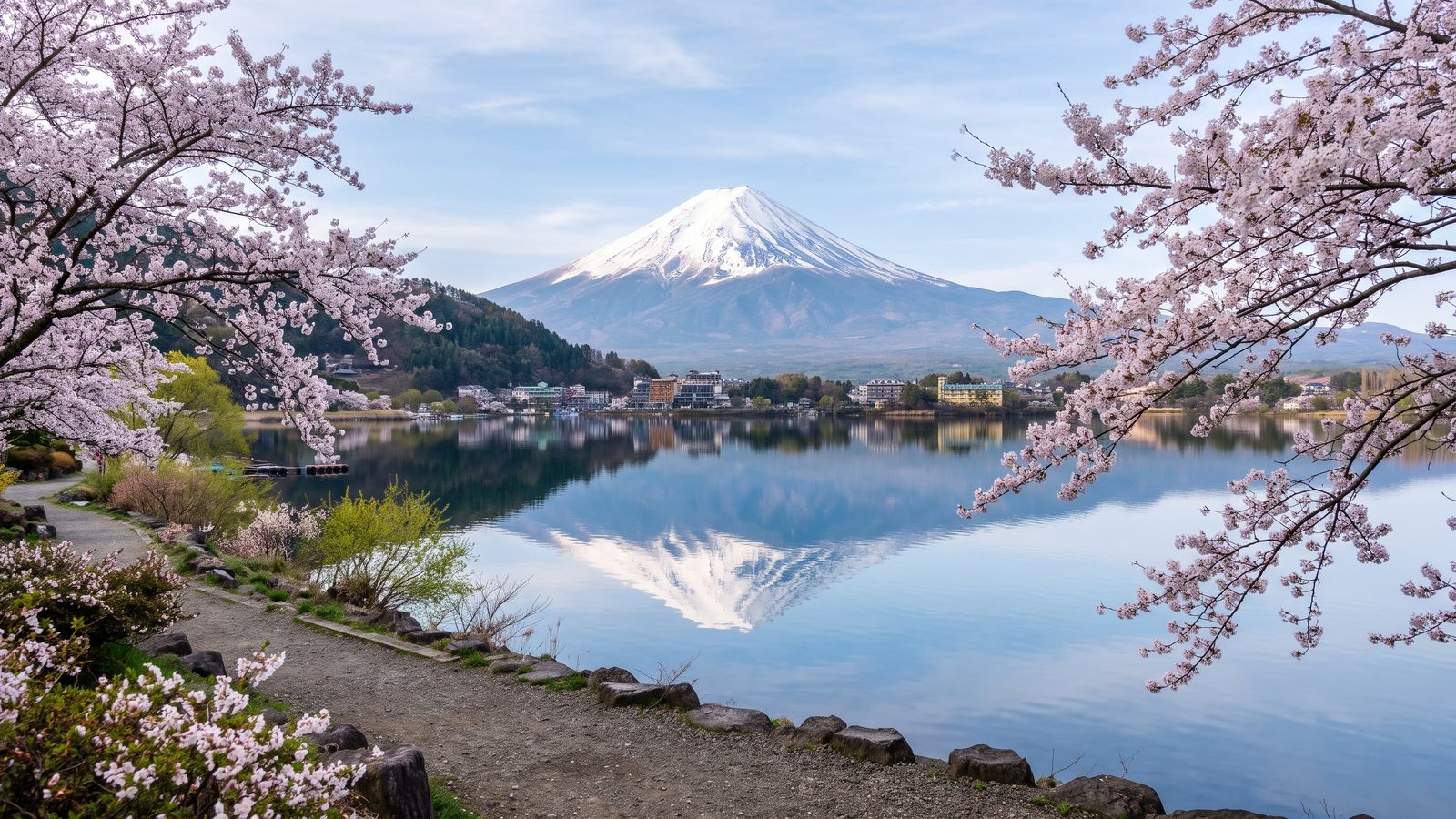
Welcome to Lake Kawaguchiko, a stunning natural canvas formed by the ancient eruptions of Mount Fuji. As the second largest and lowest in elevation of the Fuji Five Lakes, this tranquil body of water provides the ultimate vantage point to admire Japan's most sacred peak. Stroll along the shoreline where changing seasons, sacred legends, and magnificent reflections create an unforgettable harmony between water and volcanic rock.
This self-guided audio tour reveals the geological wonders, spiritual traditions, and seasonal beauty surrounding the lake. From lush primeval forests to vibrant flower fields framing Mount Fuji, experience the rich stories that make this region a cherished destination for pilgrims and travelers alike.
What you'll hear on this tour
Stop 1. The Reflection of Sakasa Fuji
Look across the tranquil water to witness Sakasa Fuji, the celebrated upside-down reflection of Mount Fuji’s symmetrical cone. As light shifts across the sky, you see a living canvas where subtle contours and volcanic ridges amplify on the lake’s surface. Spring surrounds the shore in delicate pink cherry blossoms, while autumn frames the peak in blazing maple leaves. If you look closely at the upper slopes on a clear day, you can spot the distinct lines of the Gotemba and Subashiri climbing trails. Under ideal conditions at sunrise or sunset, you might even glimpse Diamond Fuji, when the crowning sun sparkles directly atop the summit.
Stop 2. The Sacred Sacred Volcano
Before you stands Mount Fuji, a geological marvel shaped by countless eruptions over hundreds of thousands of years, concluding with its fiery 1707 Hoei eruption. You are gazing upon the sacred dwelling of Konohanasakuya-hime, the delicate blossom princess believed to calm the volcano's heart. For centuries, Fujikō pilgrims and yamabushi monks climbed these rugged slopes seeking spiritual purification and enlightenment. High above, the Ohachi crater catches the first light of dawn in Japan, casting the massive Kage-Fuji shadow over the landscape. Its brilliant snow cap continuously melts into underground streams, nourishing the lakes and valleys resting below.
Stop 3. Waters Born of Volcanic Lava
You stand before Lake Kawaguchiko, born centuries ago when massive lava flows dammed ancient river valleys. Sitting at 830 meters above sea level, it is the lowest of the Fuji Five Lakes and reaches depths down to 14.6 meters. As you admire its clear, reflective waters, remember local folklore that speaks of a benevolent dragon deity guarding the depths to keep them pristine. These transparent waters sustain a thriving aquatic ecosystem while painting reflections of cherry blossoms and vibrant maples. It offers an unobstructed panorama that makes it universally cherished as the region's quintessential viewing spot.
Stop 4. Seasonal Artistry on Display
Gaze around the shores to experience a landscape constantly transformed by floral color. In spring, delicate pink cherry blossoms cluster along the coastline and near Chureito Pagoda, capturing the transient spirit of mono no aware. As late spring arrives, vast fields of pink, white, and magenta shibazakura spread across the ground like a vibrant woven carpet against the dark volcanic backdrop. Come summer, the air around Oishi Park fills with the soothing scent of purple lavender fields. Each season paints a dynamic frame around Fuji’s stoic peak, blending natural fragrance with unforgettable views.
Stop 5. Geological Forces and Living Forests
Observe the sheer geological power etched into Mount Fuji's majestic slopes, built layer upon layer from lava, ash, and volcanic rock. Beneath the mountain lies the Aokigahara Jukai, the Sea of Trees, a dense forest that grew upon ancient lava flows from the eruption of 864 AD. Soil here is deeply porous, capturing centuries of snowmelt that filter deep underground to emerge as crystal-clear springs and waterfalls. Look for dramatic shifts in local weather as the immense peak pulls moisture directly from the atmosphere, frequently cloaking its summit in mysterious, clinging clouds.
Stop 6. Deep into Volcanic Caverns
Step away from the water's edge to explore the primeval landscape carved by Mount Fuji's eruptions. Entering the Aokigahara forest, you walk upon a complex labyrinth of twisted volcanic rock where dense trees create a hushed silence and localized magnetic anomalies disrupt compasses. Deep beneath the surface, you can visit subterranean lava caves like the Narusawa Ice Cave, where subterranean ice formations glisten year-round amidst the dark basalt rock. This raw terrain reveals how ancient volcanic destruction gave birth to an extraordinary, untamed ecosystem waiting to be explored.
Planning your visit
- Best time to go
- Early morning or late afternoon for clear views of Fuji and calm water reflections; spring or autumn offer iconic seasonal colors.
- Approximate duration
- about 2 to 3 hours
- Where to start
- Kawaguchiko Station or the northern shore of Lake Kawaguchiko.
Access and conditions change seasonally — check the official site before you go.
Frequently asked questions
Is Lake Kawaguchiko worth visiting?
Yes, Lake Kawaguchiko is famous for providing some of the clearer, most accessible views of Mount Fuji, framed by seasonal cherry blossoms, lavender, and autumn leaves alongside scenic walks.
How long do you need at Lake Kawaguchiko?
Most visitors spend half a day to a full day exploring the shores, parks, and nearby primeval forest trails, though an overnight stay gives the best chance to see Mount Fuji uncovered by clouds.
How was Lake Kawaguchiko formed?
Lake Kawaguchiko was formed when ancient lava flows from Mount Fuji's eruptions dammed local river valleys, creating the second largest and lowest in elevation of the Fuji Five Lakes.
Keep exploring
Header image is an AI-generated illustration of Lake Kawaguchiko. AllTours.ai is an AI audio tour guide — point your camera at any landmark and hear its story.