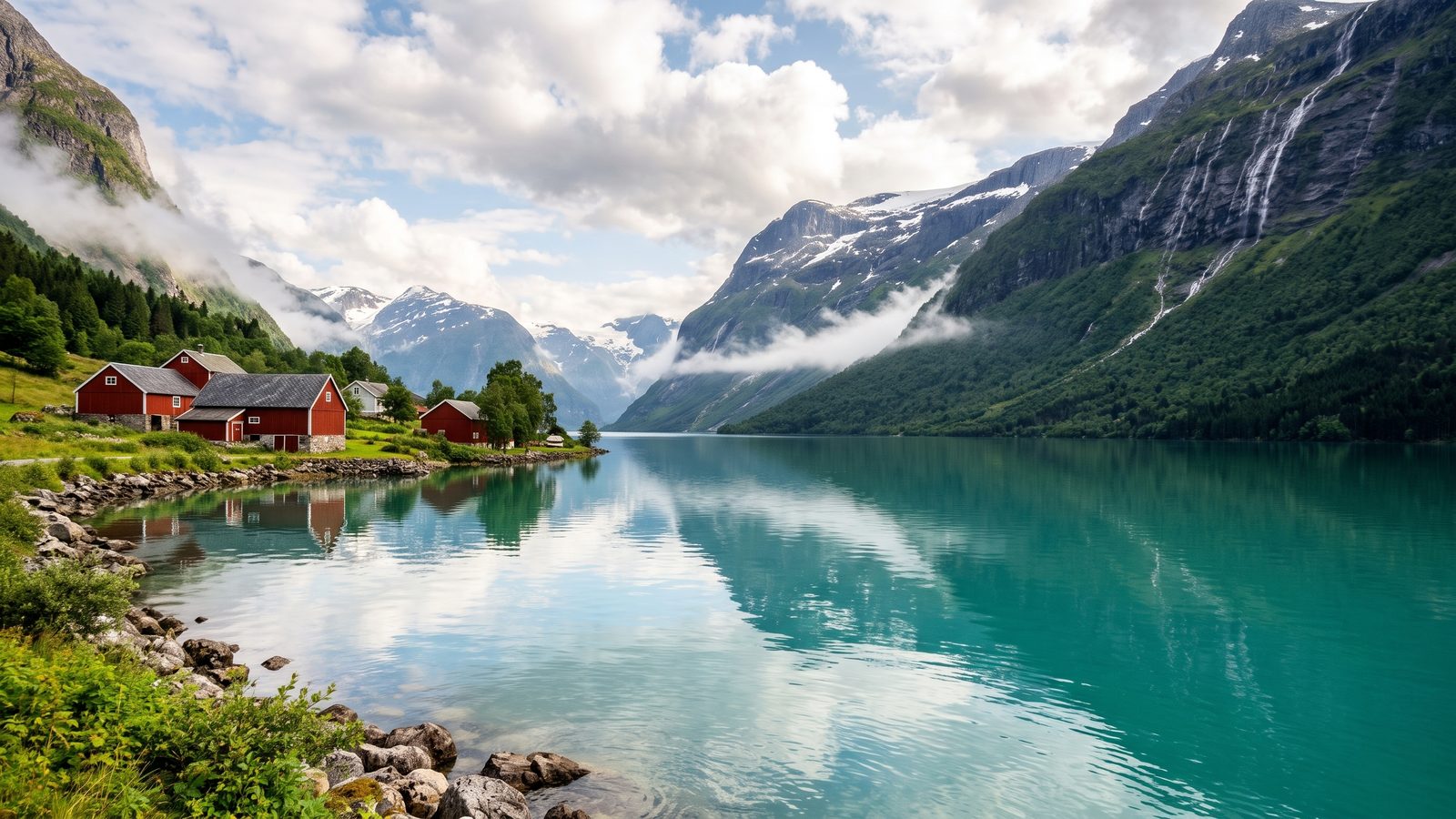
Welcome to Lake Lovatnet, an awe-inspiring fjord-like expanse in Stryn, Vestland, where bright turquoise glacial waters meet towering rock faces. As you journey along the shoreline, you enter a dramatic landscape shaped by ancient ice and powerful geological shifts. This self-guided audio tour reveals the delicate balance between human resilience and raw nature, guiding you through serene pine forests, historic farmsteads, and lingering memories of historic rockslides.
From mysterious local folklore to centuries-old wood construction, Lovatnet tells a story of adaptation and enduring community spirit. Immerse yourself in the vivid colors, rich cultural heritage, and sheer tranquility that make this Norwegian valley one of the most remarkable destinations in Northern Europe.
What you'll hear on this tour
Stop 1. Shadows of the Ramnefjell Catastrophe
As you gaze across the turquoise waters of Lake Lovatnet, you stand in a valley deeply sculpted by ancient glaciers and marked by tragic events. Look up toward Ramnefjellet mountain, where raw nature dramatically altered human lives. In 1905, a colossal rockslide roared down these slopes directly into the lake, creating a devastating wave that swept away nearby shore villages. Decades later, in 1936, another massive landslide struck the same area, sending a secondary surge across the water. You can still spot the visible scars etched high into the mountain walls, serving as silent, powerful reminders of nature's formidable force and the incredible strength of the people who inhabited this shore.
Stop 2. Turquoise Waters and Precipitous Cliffs
Look at the vibrant, almost surreal turquoise hue of the lake beneath you. This striking color comes directly from glacial meltwater carrying fine mineral sediment from the surrounding mountains. As you scan the panorama, notice how sheer, dark cliffs plunge directly into the clear depths, their rock faces sculpted over thousands of years. Dense green pine and birch forests cling tightly to the lower slopes, offering a vivid contrast against pale, snow-dusted summits that often rest beneath soft mountain mists. Watch how the shifting sunlight paints transient shadows across the serene water, continuously transforming the dramatic visual balance between earth, sky, and glacier.
Stop 3. Tales of the Mysterious Nøkk
While you listen to the peaceful lapping of waves against the bank, remember that local tradition fills these icy depths with lingering mystery. Old folklore tells of the Nøkk, an elusive water spirit believed to dwell beneath Lovatnet's calm surface. Legends describe how he lures unsuspecting travelers toward the water using enchanting melodies, taking the form of a handsome man riding a dripping white horse or a maiden with sweeping hair. Elders long warned visitors never to venture too close to the edge, lest they be pulled beneath the cold currents. You are walking along a shore where ancient myth and landscape seamlessly intertwine.
Stop 4. Resilient Stave and Timber Farmsteads
Look toward the surrounding farmsteads scattered along the mountainside. You are observing centuries of traditional Norwegian wooden craftsmanship, carefully constructed to harmonize with a demanding climate. Notice the characteristic red-painted exteriors built using stave construction methods, where heavy vertical posts hold up the steep gabled roofs designed to effortlessly shed mountain snow and rain. Inspect the hand-hewn timbers and simple detailing framing the doors and windows. These understated buildings reflect practical design born from absolute necessity, demonstrating how past generations forged sustainable, beautiful shelters capable of enduring heavy mountain storms.
Stop 5. Enduring Traditions and Valley Identity
As you walk through this tranquil landscape, you are connecting with a culture shaped by geographic isolation and strong self-reliance. For centuries, valley communities developed a proud identity centered on adapting to raw natural elements. Look closely at the regional customs, where generations pass down intricate knitting patterns and prepare hearty local dishes harvested from the surrounding lake and slopes. Listen to the local dialect, which still preserves distinct echoes of ancient Norse speech. Even during annual boat gatherings, the vibrant community spirit shines through, illustrating an enduring bond between neighbors who have thrived side by side along these vivid waters.
Stop 6. Inspired Colors of the Glacier
Observe how natural light dances across the water's surface, creating a living canvas of sapphire blues and emerald greens. This intense visual spectacle served as a major muse for Norwegian Romantic painters, who sought to capture the untamed beauty of the nearby Jostedalsbreen glacier melt on canvas. In nearby villages, folk artists translated this profound connection into intricate rosemaling floral patterns painted onto wooden furniture and farm buildings. As you take in the contrast between gleaming white snow peaks and rich forest canopy, you are experiencing the exact natural masterpiece that inspired generations of Scandinavian artists.
Planning your visit
- Best time to go
- Late spring through early autumn during daylight hours, when glacial melt peaks and lake colors are most vibrant.
- Approximate duration
- About 2 to 3 hours
- Where to start
- Along the shoreline access points of Lake Lovatnet in Stryn, Vestland.
Access and conditions change seasonally — check the official site before you go.
Frequently asked questions
Is Lake Lovatnet worth visiting?
Yes, Lake Lovatnet is world-renowned for its brilliant turquoise glacial water, towering cliffs, rich local history, and serene walking routes along the shoreline.
How long do you need at Lake Lovatnet?
Most visitors spend between 2 and 3 hours exploring the lakeside, admiring the scenery, and following the self-guided audio tour stops.
What happened at Lake Lovatnet in 1905 and 1936?
In 1905 and 1936, colossal rockslides detached from Ramnefjellet mountain and crashed into the lake, generating massive waves that swept away shore villages.
Keep exploring
Header image is an AI-generated illustration of Lake Lovatnet. AllTours.ai is an AI audio tour guide — point your camera at any landmark and hear its story.