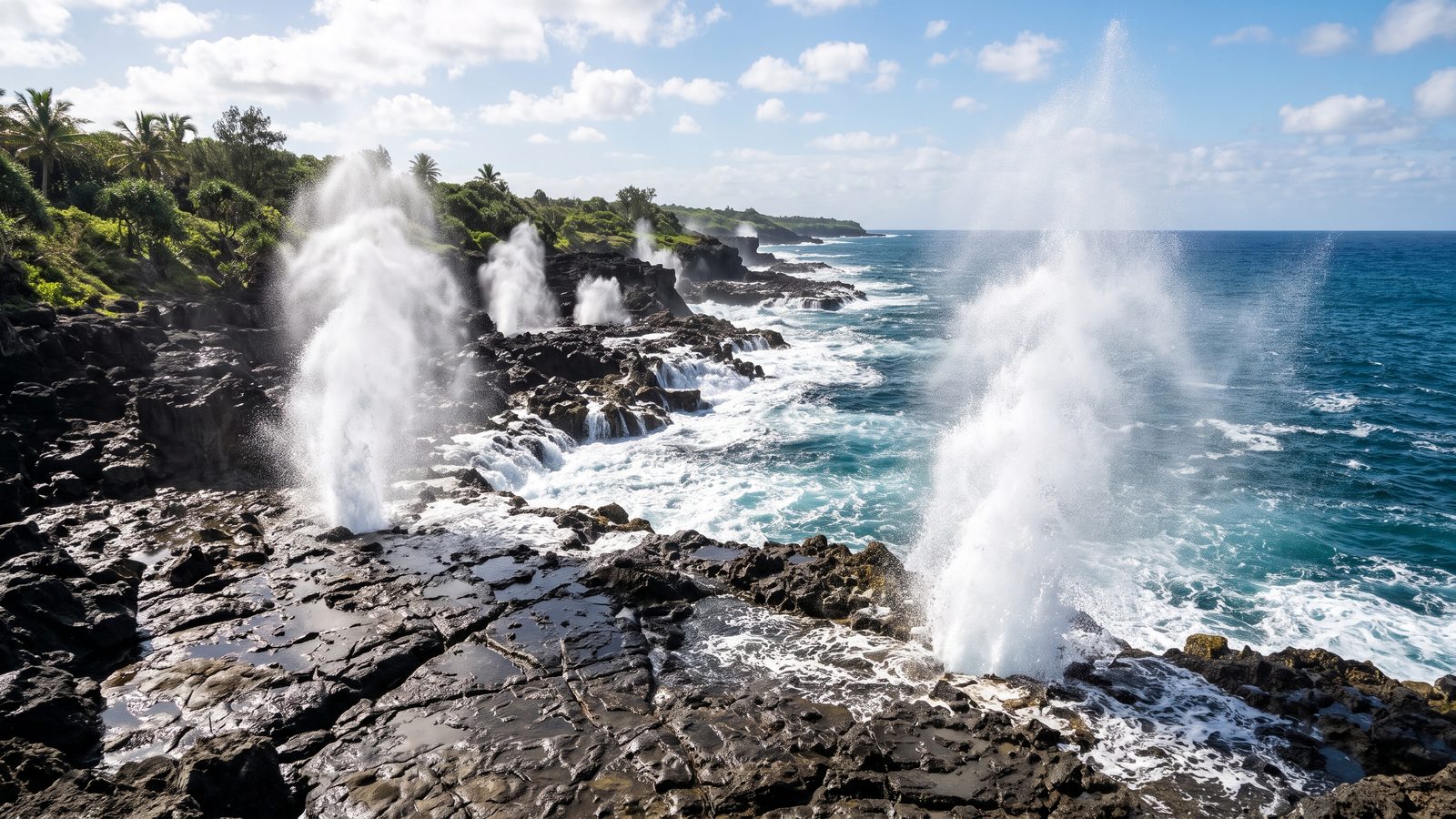
Welcome to the Mapu a Vaea Blowholes, also known as the Whistle of the Chief on the southwestern coast of Tongatapu in Tonga. Along this five-kilometer stretch of rugged limestone shoreline, ocean waves surge into subterranean volcanic channels, forcing plumes of seawater high into the air with a booming roar. As you walk along the natural terraces near Houma, you will feel the ocean's mist and experience one of the South Pacific's most dramatic geological wonders.
This self-guided audio tour reveals how ancient volcanic activity, coral reef formations, and persistent Pacific tides combined to shape this majestic spectacle. Discover how local traditions interpreted the blowholes' thunderous exhalations, while learning tips for capturing unforgettable photos of the exploding spray.
What you'll hear on this tour
Stop 1. The Rhythm of Earth's Breath
Step closer to the rocky edge of the coastline and feel the cool mist brushing across your face. As you look down, observe the intricate network of fissures and subterranean tunnels carved deep into the dark volcanic rock. These natural channels serve as arteries through which the Pacific Ocean surges. When incoming swells push seawater into these subterranean chambers, hydraulic pressure builds rapidly until high-pressure plumes erupt upwards with a thunderous roar. Notice how resilient green mosses and hardy succulents manage to cling to the wet rock faces despite the salty spray. You are listening to the living pulse of the earth, experiencing a natural display that islanders traditionally used to read ocean conditions.
Stop 2. Volcanic Origins and Ancestral Echoes
You stand atop a dramatic chapter in Tonga's geological saga, where ancient volcanic activity beneath the ocean floor created the porous limestone foundation beneath your feet. For thousands of years, the relentless sea has dynamically carved and refined these formations. Ancient Tongan oral traditions tell of the islands emerging directly from the ocean's depths. To early islanders, these powerful exhalations of seawater and compressed air resonated like the breath of the earth or the roaring voices of ancestral deities residing within the ocean depths. The precise angle of the rock terraces and the consistent wave patterns align perfectly here, channeling the ocean's massive kinetic energy into a persistent spectacle through the ages.
Stop 3. The Relentless Power of the Pacific
Feel the untamed power of the Pacific Ocean surging directly beneath your feet as heavy swells travel across the deep water to crash against ancient volcanic rock. Watch the dramatic color shift from the deep, mysterious indigo of open ocean trenches to vibrant turquoise hues in shallow pools where sunlight pierces crystal-clear waters. The ocean acts as architect and sculptor of this entire landscape, driving its rhythmic breath through natural channels to create high-reaching marine spouts. Beyond the crashing waves, these nutrient-rich waters sustain vibrant marine life, from colorful fish in coral gardens to migrating whales travelling past the coast. You are witnessing the untamed element that gives life and form to Tonga.
Stop 4. Sculpted Ancient Coral Reefs
Look closely at the rough ground beneath your feet and touch the honeycomb texture of porous limestone. You are standing on ancient coral reefs that were uplifted by volcanic forces over eons of geological time. Tiny marine organisms built this sturdy platform layer by layer out of calcium carbonate, leaving behind delicate cavities and subtle color shades ranging from cream to ochre. The explosive channels you see before you are not mere cracks, but avenues carved by centuries of persistent wave action dissolving softer rock strata. This solid shelf provides an enduring stage where biological history and relentless ocean hydraulics meet to produce a spectacular natural showcase.
Stop 5. Capturing the Explosive Water Plumes
As you prepare your camera to photograph the erupting water, consider the high dynamic range created by bright mist exploding against dark, shaded volcanic rocks. Set a fast shutter speed to freeze droplets mid-air, capturing the crisp texture of seawater caught in full explosion. To give your photos a sense of dramatic scale, lower your camera angle near the rock surface so the plumes tower impressively against the horizon. Using a polarizing filter cuts glare from atmospheric haze while deepening the vivid blues of the sky and Pacific waters. Look out for sunlight refracting through fine water mist, creating fleeting rainbows that add magical detail to your shots.
Stop 6. A Coastline Carved by Waves
Feel the cool ocean spray against your face as you gaze out over this rugged edge of Tongatapu. This shoreline represents a constant battleground where relentless waves shape porous limestone cliffs into dramatic overhangs and deep crevices. Beneath the surface, concealed channels channel incoming currents straight toward the cliff face, amplifying the force of the water before it vents skyward. Imagine ancient Tongan navigators paddling near these waters, using the distinct silhouette of this mist-shrouded coast as a vital landmark guiding their canoes home. You can sense the remarkable resilience of the land as it stands firm against the eternal power of the surrounding sea.
Planning your visit
- Best time to go
- High tide during strong ocean swells, typically in the afternoon when sunlight illuminates the water mist.
- Approximate duration
- about 45 minutes
- Where to start
- The main viewing terrace at Mapu a Vaea Blowholes near the village of Houma.
Access and conditions change seasonally — check the official site before you go.
Frequently asked questions
Is Mapu a Vaea Blowholes worth visiting?
Yes, Mapu a Vaea Blowholes is widely considered one of Tonga's premier natural sights, offering visitors dramatic views of dozens of ocean blowholes erupting simultaneously along the limestone shore.
How long do you need at Mapu a Vaea Blowholes?
Most visitors spend between 30 and 60 minutes walking along the natural limestone terraces, taking photographs, and watching the water eruptions during high tide.
How were the Mapu a Vaea Blowholes formed?
The blowholes were created over thousands of years as volcanic uplift pushed ancient coral reefs above sea level, allowing wave erosion to carve subterranean channels through the porous limestone.
Keep exploring
Header image is an AI-generated illustration of Mapu a Vaea Blowholes. AllTours.ai is an AI audio tour guide — point your camera at any landmark and hear its story.