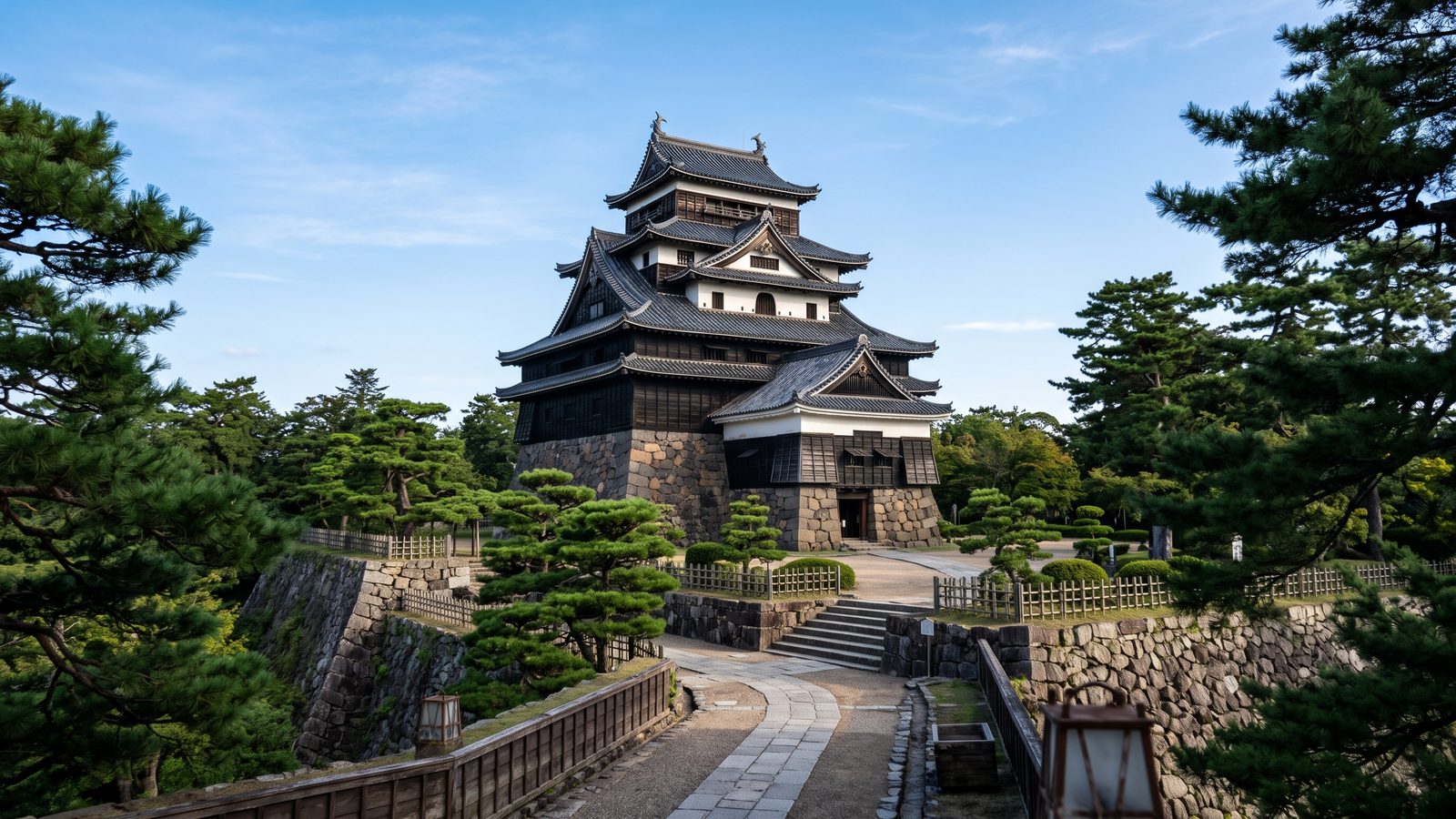
Welcome to Matsue Castle, one of only twelve original samurai keeps standing in Japan today. Built in the early 17th century by the Horio clan and later ruled by the Matsudaira dynasty, this imposing black fortress overlooks Lake Shinji in Shimane Prefecture. As you walk through its ancient grounds, you step directly into feudal history, exploring authentic timber architecture, clever defenses, and centuries of preserved samurai heritage.
This self-guided audio tour reveals the strategic genius behind the castle's black cypress lacquer walls, its deep connection to Japanese tea culture, and the community efforts that saved it from destruction during the Meiji Restoration. Discover the hidden stories behind one of Japan's grandest national treasures.
Listen to a sample
The opening of this tour, exactly as AllTours narrates it on site.
What you'll hear on this tour
Stop 1. Ingenious Design of the Black Keep
You stand beneath the striking main keep, looking up at its distinctive irimoya-zukuri hip-and-gable roof topped with protective shachihoko figures. The dark exterior features weather-resistant cypress planks coated in black lacquer, engineered to endure the harsh San'in winter. Beneath your feet, an unscalable stone foundation known as ishigaki curves upward. Inside, a massive central timber pillar anchors multiple floors against earthquakes. As you ascend, notice defensive features like ishiotoshi trapdoors for dropping stones and narrow sama slits for archers. Even the steep, irregular wooden stairs are a deliberate architectural trap, designed to disorient invaders and slow down any enemy attack step by step.
Stop 2. Centuries of Feudal Rule and Salvation
You stand on ground first surveyed in 1607 by Horio Yoshiharu, a loyal retainer of Tokugawa Ieyasu. Completed in 1611, the keep established the Horio clan's dominance before passing briefly to the Kyogoku clan. In 1638, Ieyasu's grandson, Matsudaira Naomasa, took control, beginning 234 years of stable rule that fostered immense cultural and economic growth. When the Meiji Restoration of 1868 threatened feudal fortresses across Japan with demolition, local citizens and former samurai stepped in. They pooled their own money to buy the castle back from the government, saving it from destruction and preserving one of Japan's twelve original keeps for you to experience today.
Stop 3. Moats, Cherry Blossoms, and Lake Vistas
You gaze out over the serene Horikawa moat system, an emerald ribbon of water encircling the fortress. Below, traditional boats glide under ancient stone bridges while cherry trees frame the keep in pink blossoms every spring. From the top floor of the castle, your eyes sweep past the city rooftops to the shimmering expanse of Lake Shinji, famous across Japan for its radiant sunsets. Surrounding the keep, meticulously maintained grounds filled with ancient pine trees offer striking visual perspectives throughout the seasons. Whether framed by summer greens or vibrant autumn foliage, the fortress creates a living landscape that reflects centuries of harmony between structure and nature.
Stop 4. Samurai Tea Rituals and Wabi-Sabi
You step into an atmosphere shaped by Lord Matsudaira Fumai, the seventh lord of Matsue and one of Japan's celebrated tea masters. He established the Fumai-ryu tea tradition, transforming Matsue into one of the country's great tea cities. Within these dark wooden halls, samurai set aside their weapons to engage in the disciplined, peaceful ritual of matcha preparation. The castle's austere aesthetic embodies wabi-sabi, finding quiet beauty in natural simplicity and imperfection. Every window placement and subtle trick of natural light was thoughtfully designed to foster contemplation, blending martial strength with the refined artistic and spiritual pursuits of the ruling samurai elite.
Stop 5. Strategic Beauty Beyond the Walls
You wander through gardens that blend landscape art with military strategy. Ancient, gnarled pines shade your path while deliberately obscuring sightlines from potential invaders. A tranquil central pond reflects the sky, serving both as a meditative element and a vital water reservoir during potential sieges. You observe karesansui dry landscape features, where raked gravel and stones represent distant mountains and flowing rivers. Weathered stone lanterns guide your way along paths lined with azaleas and medicinal plants. Here, samurai lords sought balance, creating a deliberate harmony between natural beauty, agricultural planning, and tactical defense outside the castle's main wooden keep.
Stop 6. Artifacts of the Matsudaira Clan
Inside the keep, you explore historical exhibits showcasing original samurai weapons and armor. You see authentic kabuto helmets, sharp katana swords, and long yari spears once wielded by the Matsudaira clan's elite warriors. Detailed scale models reconstruct the bustling Edo-period castle town, showing how the fortress connected to Lake Shinji. Original land grants, decrees, and timber construction diagrams reveal how the domain was built and governed. On the upper levels, displays of period clothing and household goods offer an intimate look into daily life. Finally, you reach the top floor, taking in the panoramic view exactly as the lords of Matsue once did.
Planning your visit
- Best time to go
- Spring for cherry blossoms along the moat, or late afternoon to catch the famous Lake Shinji sunset.
- Approximate duration
- About 1 to 1.5 hours
- Where to start
- At the main entrance of Matsue Castle near the lower grounds and Horikawa moat.
Access and conditions change seasonally — check the official site before you go.
Frequently asked questions
Is Matsue Castle worth visiting?
Yes. As one of only twelve original castle keeps remaining in Japan, Matsue Castle offers an authentic look into feudal samurai architecture, historic tea culture, and panoramic views of Lake Shinji.
How long do you need at Matsue Castle?
Plan to spend about 1 to 2 hours exploring the wooden interior of the main keep, the surrounding gardens, and walking along the historic Horikawa moat.
Why was Matsue Castle built and how did it survive?
Built in 1611 by Horio Yoshiharu for strategic control over the Izumo region, the castle survived the Meiji Restoration demilitarization because local citizens and former samurai pooled funds to purchase and preserve it.
Keep exploring
Header image is an AI-generated illustration of Matsue Castle. AllTours.ai is an AI audio tour guide — point your camera at any landmark and hear its story.