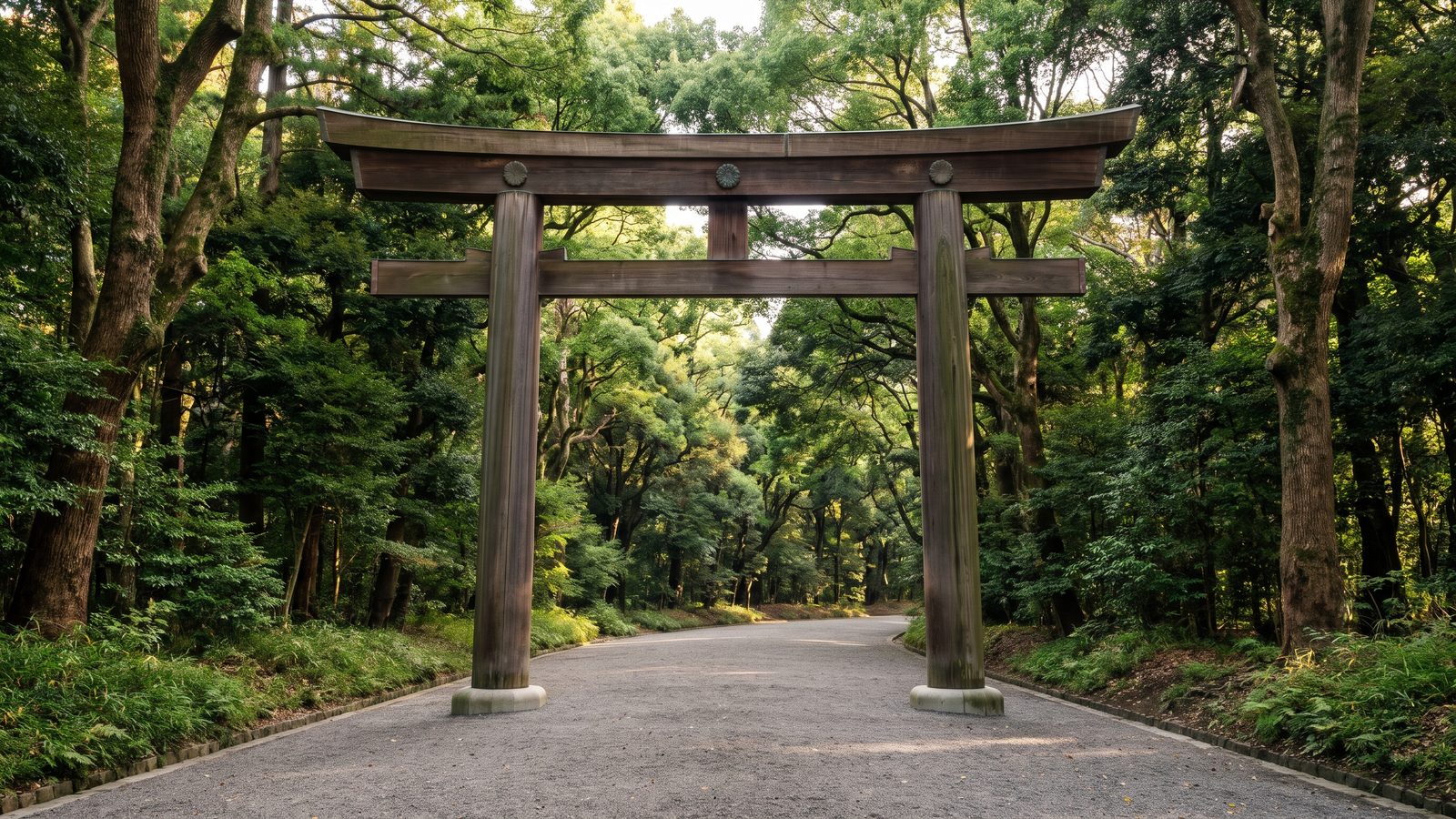
Step into a sprawling sanctuary of serenity where the modern pulse of Tokyo fades away. Dedicated to Emperor Meiji and Empress Shoken, Meiji Jingu Shrine stands as a living monument to Japan's transition into the modern era. As you pass beneath towering cypress torii gates, you enter a sacred forest designed to thrive for a thousand years. This peaceful oasis invites you to experience centuries of Shinto tradition.
Completed in 1920 through nationwide devotion, the shrine offers a profound escape from the bustling city. Explore its magnificent unpainted wooden architecture, observe sacred purification rituals, and wander along gravel paths beneath a dense green canopy. Let this audio guide reveal the enduring history, culture, and spiritual harmony within.
Listen to a sample
The opening of this tour, exactly as AllTours narrates it on site.
What you'll hear on this tour
Stop 1. A Nation's Living Monument
You stand on sacred ground consecrated to Emperor Meiji and Empress Shoken, whose late 19th and early 20th-century reign transformed Japan from a feudal society into a modern global power. Constructed between 1915 and 1920, this shrine was built through a nationwide effort, powered by hundreds of thousands of volunteers and millions in public donations. Together, they planted over 100,000 donated trees to create a self-sustaining forest. Although wartime air raids destroyed the original structures in 1945, passionate public fundraising restored the shrine by 1958. As you walk here, you feel the enduring resilience and reverence of the Japanese people.
Stop 2. The Forest of 100,000 Trees
Step deeper into the sanctuary and feel the cool shift in the air. You are walking through an engineered, living ecosystem composed of over 100,000 trees across 245 species, donated from across Japan and overseas. Forest engineers meticulously designed this evergreen canopy to mature naturally over a century and thrive for a thousand years. Above you, dense foliage filters the bright city light into a dappled glow, while the thick forest acts as a natural acoustic barrier, dampening the roar of Tokyo into a serene hush. Each rustling leaf reflects a collective gift of devotion and peaceful harmony.
Stop 3. Purity in Cypress and Copper
Look up at the elegant structures built in the classic Nagare-zukuri style, recognizable by asymmetrical gabled roofs that extend gracefully over the entrance. Notice the unpainted hinoki cypress wood, chosen for its natural grain and pale hue to reflect Shinto values of purity and simplicity. Distinctive copper roofs display a subtle verdigris patina that contrasts with the warm timber. High on the roof ridge, forked chigi finials and horizontal katsuogi logs mark the space as divine. Before you stands the Haiden, or Oratory Hall, leading your gaze toward the private Honden sanctuary hidden deeper within.
Stop 4. Rituals and Divine Spirits
Experience the heart of Shinto spirituality, where Emperor Meiji and Empress Shoken are venerated as divine kami. At the temizuya purification fountain, you ritually cleanse your hands and mouth before approaching the main sanctuary, symbolically washing away worldly impurities. When offering a prayer, follow traditional custom: bow deeply twice, clap your hands twice sharply to call the kami's attention, and finish with a final respectful bow. Nearby, you see wooden ema tablets filled with handwritten prayers and tied omikuji fortune slips. Surrounded by ancient guardian trees channeling sacred life force, you enter a space dedicated to reflection and inner peace.
Stop 5. Living Traditions and Sacred Prayers
Immerse yourself in the living tapestry of Japanese tradition. As you walk the shrine grounds, you witness how ancestral worship and national unity intertw seamlessly. You might spot a solemn Shinto wedding procession taking place, revealing timeless bridal ceremonies that bless new beginnings. Visitors attach wooden ema tablets to displays, sharing their hopes and personal aspirations with the divine spirits. Tied to nearby tree branches, white omikuji paper slips reflect a cultural dialogue with fortune and destiny. Every detail here, from the quiet demeanor of fellow pilgrims to the reverence for nature, highlights a deep cultural commitment to harmony and mindfulness.
Stop 6. The Art of Slowing Down
Listen to the soft crunch of gravel under your feet, encouraging an unhurried, deliberate pace. Softened light filters through the treetops, gently soothing your eyes and inviting quiet contemplation away from Tokyo's vivid energy. The simple, unpainted cypress architecture avoids flashy ornament, establishing a soothing visual silence. Crisp scents of damp earth and evergreen foliage offer a natural sense of calm. Here, tranquility comes from a carefully designed sense of order where visitors walk in hushed respect. As you move through this peaceful realm, you feel cleanly separated from the fast-paced world outside, allowing your mind to unwind completely.
Planning your visit
- Best time to go
- Early morning at opening for peaceful crowds and tranquil forest light.
- Approximate duration
- About 1 to 1.5 hours
- Where to start
- Begin at the main Harajuku entrance path by the towering torii gate.
Access and conditions change seasonally — check the official site before you go.
Frequently asked questions
Is Meiji Jingu Shrine worth visiting?
Yes, Meiji Jingu Shrine is one of Tokyo's most iconic spiritual sites, offering a serene forest escape, historic Shinto architecture, and rich cultural traditions right in the heart of the city.
How long do you need at Meiji Jingu Shrine?
Most visitors spend about 1 to 1.5 hours walking the forested paths, viewing the main shrine complex, participating in purification rituals, and exploring the grounds.
Who is Meiji Jingu Shrine dedicated to?
Meiji Jingu Shrine is dedicated to the divine spirits of Emperor Meiji and Empress Shoken, honoring their historical role in Japan's modernization during the late 19th and early 20th centuries.
Keep exploring
Header image is an AI-generated illustration of Meiji Jingu Shrine. AllTours.ai is an AI audio tour guide — point your camera at any landmark and hear its story.