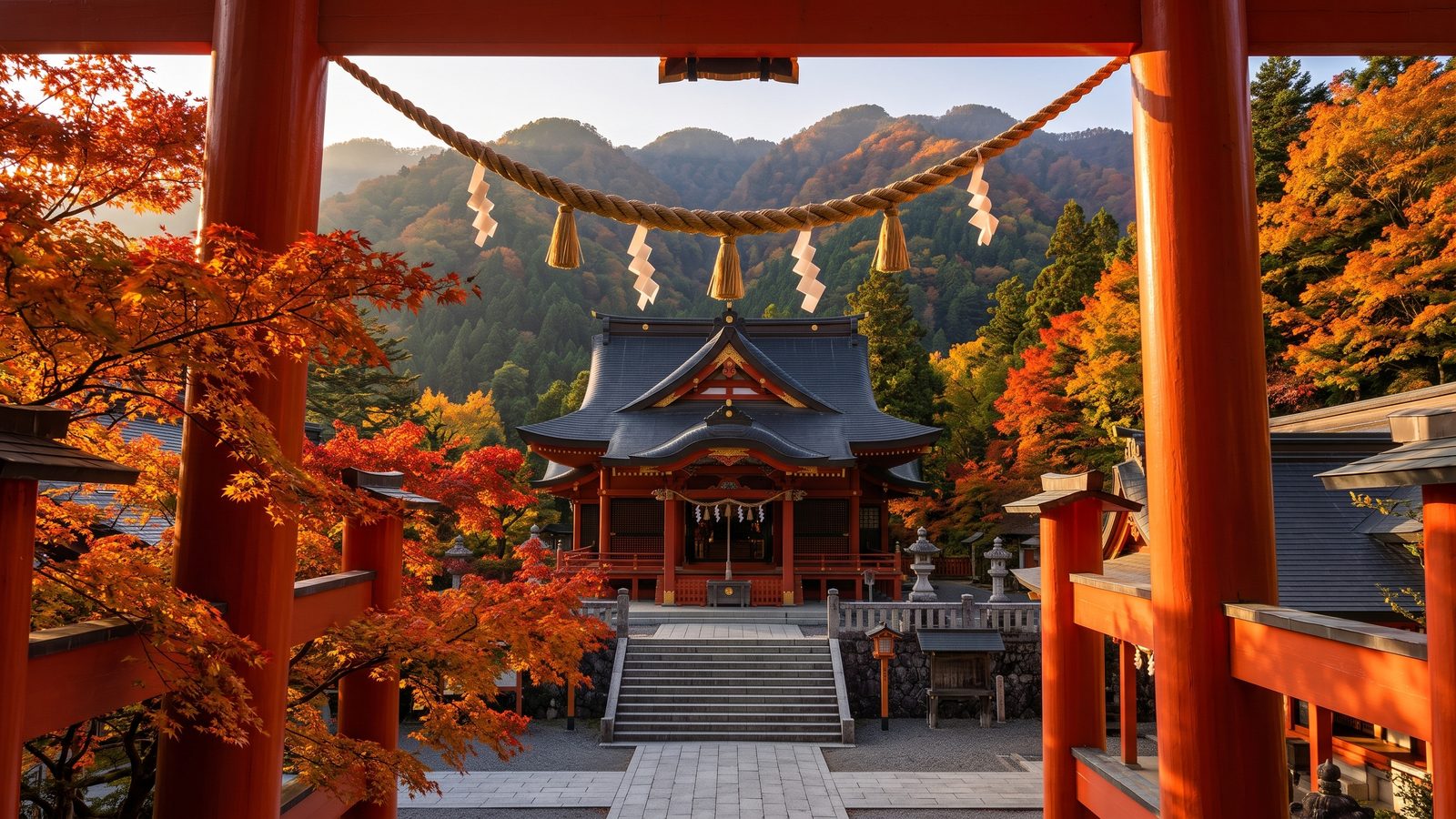
Welcome to Mikuniyama Shrine, a sacred mountain sanctuary tracing its roots back to 800 AD. Nestled deep within lush cedar forests, this venerable site blends historic Shinto craftsmanship with raw natural beauty. As you explore, you will discover ancient wooden halls, moss-covered trails, and living traditions that have drawn pilgrims, samurai, and emissaries for over twelve centuries to experience the divine presence of the mountain kami.
This self-guided audio tour leads you through vermillion torii gates, sacred groves, and high mountain paths. Experience the serene rhythm of ritual purifications, intricate architectural details, and panoramic wilderness views at your own pace while uncovering the enduring history and culture etched into every beam and stone of Mikuniyama Shrine.
What you'll hear on this tour
Stop 1. Stepping Through the Vermillion Torii Gate
You step through the vibrant vermillion torii gate, built of ancient cypress wood that has welcomed centuries of pilgrims. To your right, crystal-clear mountain spring water flows at the temizuya, inviting you to symbolically cleanse your mind and spirit before approaching the sacred grounds. Ahead stands the haiden worship hall, built in traditional nagare-zukuri architecture with rooflines depicting regional flora and fauna. Beyond lies the honden, the ultimate sanctuary enshrining the kami of Mikuni-san, protector of harvests and mountain bounty. Guarding the entrance, weathered stone komainu statues stand vigilant watch. Look closely at the small wooden ema plaques hung nearby, where generations of visitors have written their heartfelt prayers.
Stop 2. Twelve Centuries of Resilience and Devotion
You stand on grounds established in the early Heian period around 800 AD. Legend tells of a revered ascetic who discovered the mountain's potent spiritual energy and built the first modest sanctuary here. Over centuries, Mikuni san Shrine became a vital spiritual center, particularly during the Sengoku period when samurai clans sought divine victory before battles. Powerful lords like Oda Nobunaga even sent emissaries to offer prayers to the formidable kami. Though devastating fires swept through in the 15th and 17th centuries, devout locals meticulously rebuilt the structures each time, blending refined era craftsmanship with ancient style. Later designated a Prefectural Shrine during the Meiji Restoration, this site retains its deep history.
Stop 3. A Masterwork of Natural Harmony
Pause to absorb the breathtaking scenery unfolding around you. The shrine's striking vermillion structures nestle seamlessly into the deep, verdant mountains, creating a vibrant visual contrast. Notice how the multi-tiered rooflines of the main hall gracefully mirror the undulating peaks rising behind them, reflecting the brilliant design of ancient architects. Sunlight filtering through the forest canopy casts shifting patterns of light across mossy stone lanterns and ancient stone pathways. In autumn, the surrounding valley transforms into a fiery tapestry of crimson and gold maples. When gentle mists roll through the upper grounds, the sanctuary appears to float within the clouds, offering a deeply mystical mountain panorama.
Stop 4. Ascending the Path of the Gods
Venturing beyond the main shrine grounds, you explore an intricate network of ancient trails carved by mountain pilgrims. As you climb, the crisp mountain air fills with the refreshing scent of cedar and damp earth. Moss-covered Jizo statues watch over your journey from rocky crevices along the way. Ascending the famous Kami-no-Michi, or Path of the Gods, you experience a rewarding climb through shifting forest zones, moving from broadleaf trees to dense conifers. At the higher elevations, listen for soaring hawks or rustling tanuki. Your effort culminates in sweeping panoramic vistas of the valley below and, on clear days, the shimmering horizon of the distant Sea of Japan.
Stop 5. The Sacred Forest of Chinju no Mori
Step into the cool embrace of the chinju no mori, the sacred grove surrounding the shrine. These ancient woods act as living guardians, sheltering a rich ecosystem infused with spiritual energy. Towering sugi cedars, some centuries old, reach toward the sky with gnarled trunks that have witnessed generations of history. Their dense canopy filters sunlight into ethereal shafts, creating a tranquil, otherworldly atmosphere below. Beneath your feet, dark soil supports delicate carpets of moss, ferns, and seasonal wildflowers. Listen closely to the subtle forest symphony of rustling leaves and chirping birds in this pristine sanctuary where the kami are believed to reside.
Stop 6. Living Traditions and Sacred Rituals
Here you encounter the living pulse of Japanese cultural traditions. Look for omikuji paper fortunes tied to sacred tree branches, expressing hopes for divine guidance, alongside wooden ema tablets filled with personal prayers. Pilgrims present their goshuin books to collect unique calligraphic stamps recording their visits. You might feel the lingering excitement of local matsuri festivals, where community members carry mikoshi portable shrines through the streets with joyous shouts. Even stopping at the temizuya to rinse your hands serves as a meaningful ritual of physical and spiritual purification. Every detail offers a direct window into how generations continuously practice their faith at this spiritual heart.
Planning your visit
- Best time to go
- Autumn for fiery red maple foliage, or early morning year-round for tranquil forest light and misty mountain views.
- Approximate duration
- about 1 to 2 hours
- Where to start
- At the vermillion torii gate entrance near the temizuya purification fountain.
Access and conditions change seasonally — check the official site before you go.
Frequently asked questions
Is Mikuniyama Shrine worth visiting?
Yes, Mikuniyama Shrine is well worth visiting for its rich history dating back to 800 AD, striking vermillion architecture set against verdant mountains, sacred cedar groves, and scenic hiking trails like the Kami-no-Michi offering views of the Sea of Japan.
How long do you need at Mikuniyama Shrine?
Most visitors spend between 1 to 2 hours exploring the main shrine grounds, haiden, and sacred grove, though extra time is recommended if you plan to hike the scenic trails up the mountain.
What is the history of Mikuniyama Shrine?
Founded in the early Heian period around 800 AD by a mountain ascetic, Mikuniyama Shrine grew into a major spiritual center. Samurai clans and lords like Oda Nobunaga sought divine protection here before battles. Rebuilt after 15th and 17th-century fires, it was later designated a Prefectural Shrine during the Meiji Restoration.
Keep exploring
Header image is an AI-generated illustration of Mikuniyama Shrine. AllTours.ai is an AI audio tour guide — point your camera at any landmark and hear its story.