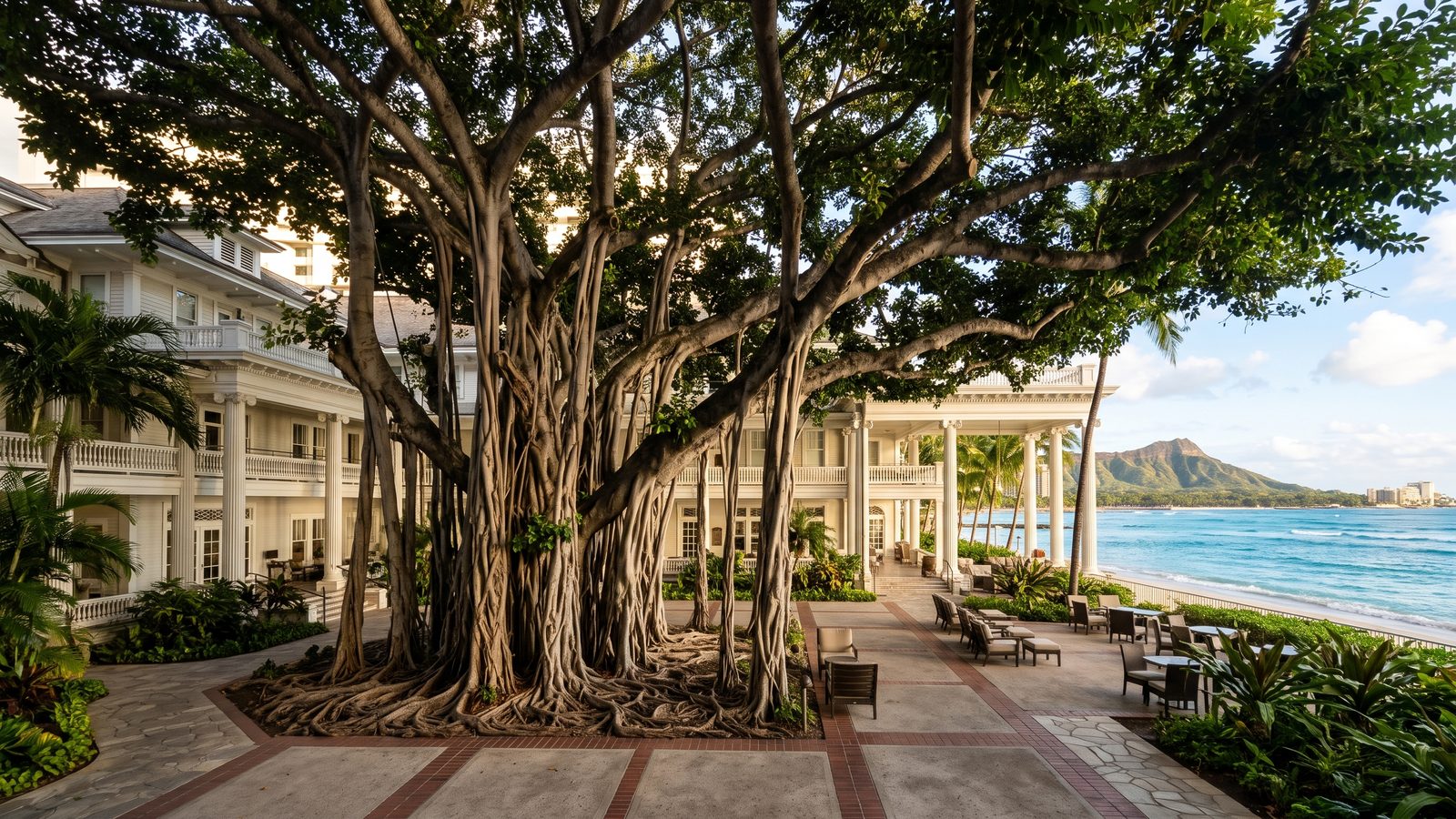
Welcome to the historic courtyard of the Moana Surfrider, home to one of Waikiki's most beloved natural wonders: its colossal Banyan tree. Planted in 1904, this living monument has witnessed over a century of Hawaiian history, from the arrival of luxury steamship travelers to the birth of modern surf culture. As you step into its cooling shade, you enter a tranquil sanctuary framed by elegant historic architecture and turquoise ocean views.
This self-guided audio tour walks you through the tree's fascinating history, rich botanical marvels, artistic heritage, and iconic surroundings. You will discover how a single sapling grew into a vibrant hub for travelers, royalty, and locals alike, right along the world-famous sands of Waikiki Beach.
What you'll hear on this tour
Stop 1. A Century-Old Living Monument
Stand beneath this magnificent Banyan tree, planted in 1904 by Jane Stanford, co-founder of Stanford University. Just three years after the Moana Hotel opened its doors, this single sapling began its transformation into a living archive of Waikiki history. You are witnessing a silent witness to Honolulu's grand opening era, when steamships delivered the island's earliest luxury travelers. Over the decades, this tree watched horse-drawn carriages yield to automobiles along Kalakaua Avenue and swayed to Roaring Twenties jazz. During World War II, it offered quiet solace to servicemen on rest and relaxation. Today, recognized officially as a Honolulu Champion Tree, it stands as an enduring anchor of Hawaii's rich heritage.
Stop 2. Botanical Wonder of Waikiki
Look closely at this impressive Ficus benghalensis to marvel at its incredible growth habit. You are surrounded by countless aerial roots cascading down like ancient stalactites, determinedly stretching toward the rich soil below. As these tendrils reach the earth, they thicken over decades into massive secondary trunks, forming a forest from one single seed. Notice the refreshing drop in temperature beneath its colossal 150-foot canopy, a natural microclimate that offers dense shade and continuous oxygen. High above within the lush emerald leaves, tiny hidden figs sustain local birds, adding a vibrant ecological rhythm. You stand inside a breathing monument that demonstrates nature's boundless power and adaptive design.
Stop 3. The First Lady of Waikiki
Cast your eyes upward beyond the leafy canopy to admire the Moana Surfrider's striking historic architecture. Designed in 1901 by architect Oliver G. Traphagen, the original Banyan Wing represents a masterpiece of Beaux-Arts style beautifully adapted for Hawaii's tropical climate. Notice the broad wrap-around verandas, crafted long before air conditioning to catch the refreshing ocean trade winds. The iconic domed rotunda forms a majestic axis that draws your vision skyward, showcasing exquisite millwork and graceful ground-floor arches. This groundbreaking design blurred the boundaries between lush outdoor landscapes and lavish interiors, earning the hotel its beloved moniker as the First Lady of Waikiki.
Stop 4. Birthplace of Modern Surfing
Step past the cool shade of the Banyan canopy and step directly onto the golden sands of Waikiki Beach. Feel the fine coral sand beneath your feet as you look out over the gentle, inviting turquoise waves. You are standing at the birthplace of modern surfing, where Hawaiian royalty once rode wooden boards and legendary oceanman Duke Kahanamoku introduced visitors to the joys of riding waves. Listen closely to the rhythmic splash of outrigger canoes echoing ancient Polynesian voyages. Today, local beach boys carry on this proud tradition, teaching new generations to surf against the spectacular, iconic backdrop of Diamond Head.
Stop 5. A Muse in Watercolors and Oil
Observe the dramatic contours of this ancient giant, whose cascading aerial roots have inspired generations of artists. Since the early twentieth century, painters like D. Howard Hitchcock have captured its majestic silhouette on canvas, contrasting natural grandeur with resort life. Photographers framed its impressive presence for early postcards that introduced Waikiki's charm to the world. Look around today, and you may still spot local painters setting up easels to capture the shifting sunlight dancing through the canopy. Serving as a living sculpture, this historic tree remains a timeless visual symbol for Honolulu, reproduced endlessly in fine art prints and contemporary graphic designs.
Stop 6. Labyrinth of Living Pillars
Take a moment to explore the intricate pathways carved naturally beneath this vast wooden ceiling. As you wander through its organic labyrinth, notice how dozens of thick aerial roots have anchored into the ground, forming quiet alcoves and natural rooms. Generations of visitors have shared intimate conversations and played among these living pillars, leaving their own invisible memories within the bark. Trace the gnarled textures with your eyes and discover new perspectives from every angle. This living monument invites you to pause, lose yourself in its verdant embrace, and feel a deep, physical connection to the passage of time in Waikiki.
Planning your visit
- Best time to go
- Early morning or late afternoon when light filters through the canopy and the courtyard is calm.
- Approximate duration
- about 45 minutes
- Where to start
- The central courtyard of the Moana Surfrider hotel, directly beneath the Banyan tree.
Access and conditions change seasonally — check the official site before you go.
Frequently asked questions
Is Moana Surfrider Banyan Tree worth visiting?
Yes, visiting the Moana Surfrider Banyan Tree is a highlight of Waikiki. Planted in 1904, this historic Champion Tree offers a serene, shady retreat steeped in Hawaiian history, art, and iconic oceanfront views.
How long do you need at Moana Surfrider Banyan Tree?
Most visitors spend 30 to 45 minutes exploring the tree's aerial roots, admiring the surrounding Beaux-Arts hotel architecture, and relaxing in the historic courtyard near Waikiki Beach.
Who planted the Moana Surfrider Banyan tree and when?
The tree was planted in 1904 by Jane Stanford, co-founder of Stanford University, three years after the historic Moana Hotel opened to guests.
Keep exploring
Header image is an AI-generated illustration of Moana Surfrider Banyan Tree. AllTours.ai is an AI audio tour guide — point your camera at any landmark and hear its story.