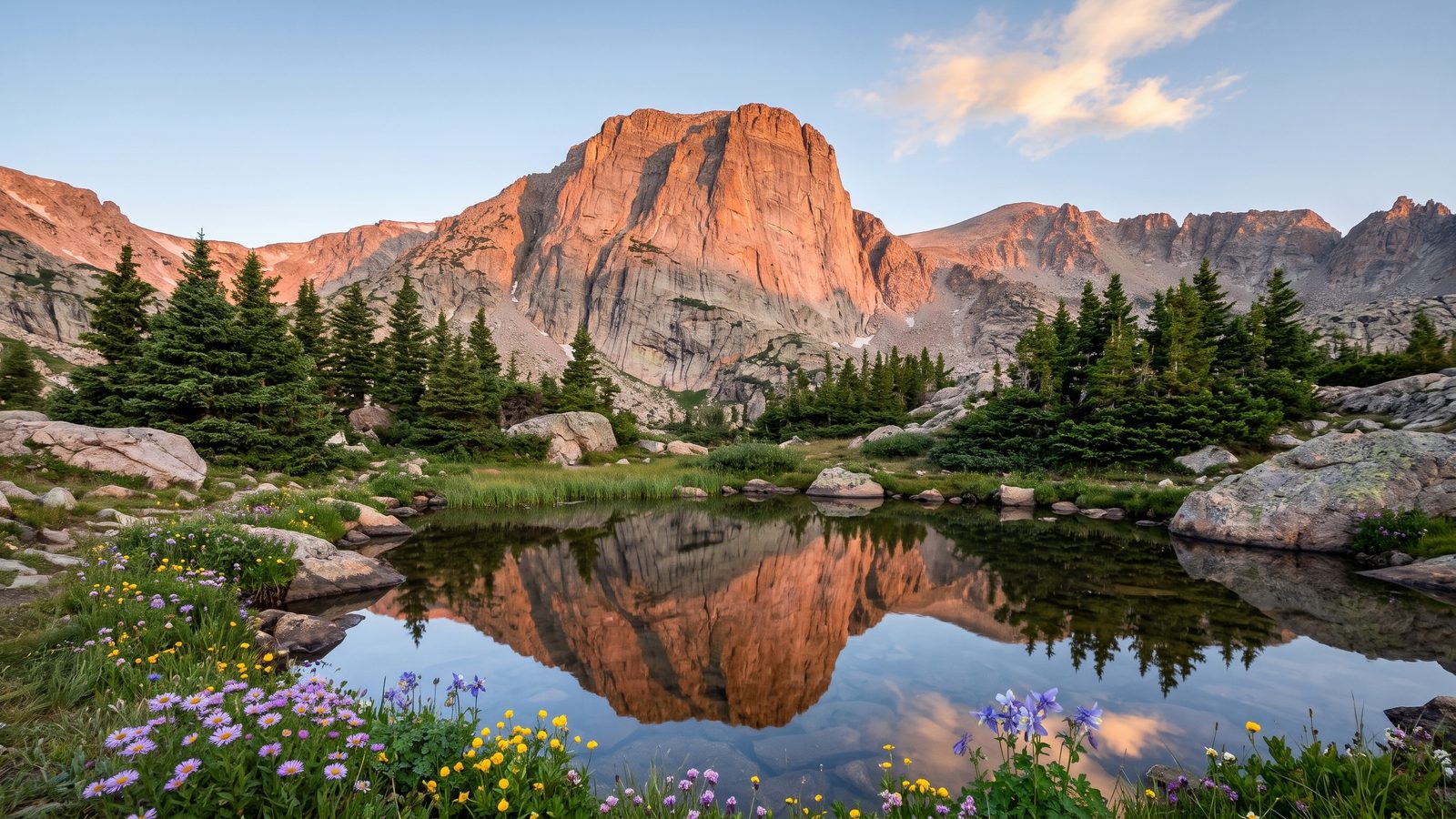
Welcome to Mount Alice, a soaring peak standing over thirteen thousand three hundred feet along the Continental Divide in Rocky Mountain National Park. Named after Alice G. Evans, daughter of a Colorado governor, this majestic wilderness mountain beckons adventurous souls seeking raw alpine grandeur. As you explore its rugged terrain, you witness sweeping glacial valleys, crystalline tarns, and pristine tundra habitats where life thrives against relentless winds and harsh alpine elements.
This self-guided audio tour leads you through the natural history, wildlife adaptations, and dramatic geology of Mount Alice. Journey past ancient granite faces and quiet glacial cirques while enjoying expert tips on capturing the peak's legendary golden alpenglow, spotting alpine wildlife, and navigating its remote, pristine backcountry trails.
Listen to a sample
The opening of this tour, exactly as AllTours narrates it on site.
What you'll hear on this tour
Stop 1. Standing Atop the Continental Divide
You gaze up at the majestic summit of Mount Alice, rising over 13,300 feet into the clear Colorado sky. Named for Alice G. Evans, daughter of a former Colorado governor, this formidable mountain marks a dramatic high point along the Continental Divide. Standing in this remote alpine realm, you behold breathtaking panoramas stretching across Rocky Mountain National Park. Below you, pristine glacial jewels like Alice Lake and Spirit Lake shimmer within deep granite basins. Reaching these heights requires a true wilderness effort, but the reward is unforgettable. You feel the profound majesty and raw beauty of the Rockies resonating through every breathtaking vantage point.
Stop 2. A Panorama of Glacial Cirques
You stand surrounded by an extraordinary alpine tapestry sculpted by ancient glaciers over thousands of years. Beneath your feet, resilient tundra flourishes with sky pilot and alpine forget-me-nots clinging to granite surfaces. Below, the crystal expanse of Alice Lake reflects the imposing ramparts of Powell Peak and Chiefs Head Peak. As your eyes sweep eastward past the Continental Divide, the iconic silhouette of Longs Peak dominates the distant horizon. You look down upon colossal U-shaped valleys carved by ice long ago. When the sun dips low, dramatic shadows deepen across the rocky expanse, transforming this vast wilderness into a soft, ethereal landscape.
Stop 3. Trekking Through Wild Basin Trails
Your expedition begins deep in the Wild Basin, stepping onto paths surrounded by rushing water and tall lodgepole pines. As you ascend, gentle forest trails give way to demanding climbs that test your footwork across granite slabs and loose scree. Pushing above the timberline, you step onto vast tundra where hardy wildflowers defy the harsh mountain elements. You follow cairn-marked routes across ancient talus fields, navigating steep terrain toward the summit. With every upward step, thin alpine air heightens your senses as the untamed wilderness unfolds below. This demanding trek connects you directly to the living heart of the Rocky Mountains.
Stop 4. Resilient Life on Alpine Tundra
You tread carefully upon delicate alpine tundra, a ancient ecosystem shaped by wind, ice, and intense sunlight. Look closely at the ground, where dwarf plants like purple saxifrage and moss campion hug the earth to survive severe gales. Listen for the distinct squeak of a pika gathering vegetation among the rock fields for its winter stores. Above you, bighorn sheep cross sheer slopes with remarkable agility, while white-tailed ptarmigans change their feathers to blend seamlessly with shifting seasons. Every cascading stream of pure snowmelt around you feeds a fragile network of life, showcasing nature’s incredible ability to thrive high above treeline.
Stop 5. Capturing Golden Hour and Alpenglow
You frame your camera to capture Mount Alice as golden hour transforms granite cliffs into a glowing canvas. Wide-angle lenses allow you to encompass dramatic cirques and reflections in pristine waters like Lion Lake or Pear Lake. As twilight settles, you set up a tripod for long exposures, watching wisps of cloud sweep across the sky or framing the Milky Way above jagged silhouettes. You incorporate foreground elements, such as gnarled krummholz pines or vibrant alpine sunflowers, adding essential depth to your composition. Interplaying light and shadow accentuates every crevice, creating dynamic images that showcase the mountain's rugged soul.
Stop 6. Ancient Granite and Shifting Climates
You stand on ancient Precambrian granite and gneiss, thrust skyward during the Laramide Orogeny millions of years ago. Mount Alice forms part of the Continental Divide, a giant spine of rock dictating how water flows across the entire continent. You notice where the timberline abruptly ends, yielding to unforgiving alpine slopes carved by prehistoric glaciers. Neighboring giants like Chiefs Head and Longs Peak frame the horizon, reminding you of immense geological forces. High in this dynamic ecosystem, sudden mountain weather can turn a sunlit morning into an unexpected afternoon blizzard, demanding your constant respect for these ancient, ever-changing peaks.
Planning your visit
- Best time to go
- Summer and early autumn mornings offer optimal weather, clear trail conditions, and lower risks of afternoon thunderstorms.
- Approximate duration
- about 8 to 10 hours
- Where to start
- Bluebird Lake Trailhead in the Wild Basin section of Rocky Mountain National Park
Access and conditions change seasonally — check the official site before you go.
Frequently asked questions
Is Mount Alice worth visiting?
Yes, Mount Alice offers an exceptional backcountry experience for adventure seekers in Rocky Mountain National Park. Hikers enjoy stunning panoramas of Longs Peak, pristine lakes like Alice Lake, and peaceful solitude away from heavily crowded trails.
How long do you need at Mount Alice?
A trip to Mount Alice typically takes 8 to 10 hours round-trip from the Wild Basin trailhead due to its remote location, significant elevation gain, and rugged high-altitude terrain.
How was Mount Alice formed and named?
Mount Alice consists of ancient Precambrian granite thrust upward during the Laramide Orogeny and carved by glaciers. It was named in honor of Alice G. Evans, daughter of a former Colorado governor.
Keep exploring
Header image is an AI-generated illustration of Mount Alice. AllTours.ai is an AI audio tour guide — point your camera at any landmark and hear its story.