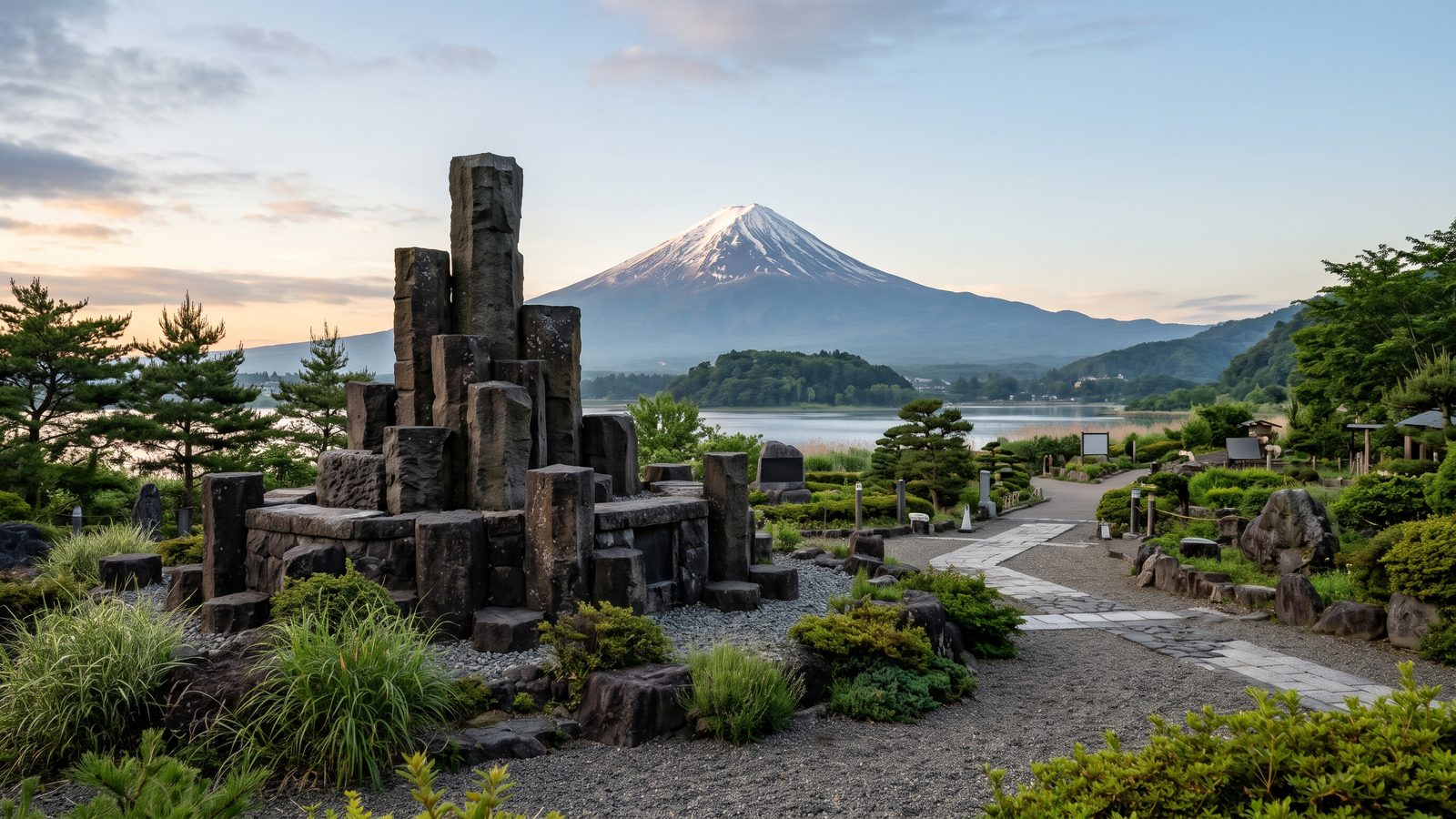
Welcome to the Mount Fuji Gathering Monument in Fujikawaguchiko, a peaceful sanctuary designed to celebrate humanity's enduring spiritual and cultural connection to Japan's most iconic peak. Carved from dark volcanic basalt, this elegant marker stands as a symbol of unity, reflecting Fuji's graceful contours while framing breathtaking views of the symmetrical mountain. Here, centuries of artistic inspiration, Shinto reverence, and pilgrim journeys intersect along thoughtfully designed, stone-paved walkways.
As you explore the tranquil grounds, this self-guided audio tour reveals the deep history, unique volcanic ecology, and artistic traditions surrounding the monument. Follow the winding basalt paths, take in framed panoramic vistas, and discover how this sacred space continues to bring dreamers and travelers together beneath Mount Fuji.
Listen to a sample
The opening of this tour, exactly as AllTours narrates it on site.
What you'll hear on this tour
Stop 1. The Sentinel of Volcanic Basalt
You stand before the Mount Fuji Gathering Monument, a stoic sculpture carved from a single block of dark volcanic basalt. Erected in 1952, this quietly elegant sentinel marks the enduring human connection to Fuji in the post-war era. As you examine its face, notice the delicate calligraphic inscription—a poem by a local priest celebrating unity and human aspiration. The monument's subtle upward taper mirrors the mountain's own majestic rise, guiding your gaze toward the sky. Legend holds that the basalt was selected from a specific ancient lava flow, imbuing the stone with the mountain's living spirit. It stands here quietly, holding the collective hopes of all who pass by.
Stop 2. Framing the Sacred Symmetrical Peak
As you pause at this vantage point, your gaze meets a panoramic masterpiece. The monument's deliberate positioning frames the iconic, symmetrical cone of Mount Fuji, creating an unobstructed vista that feels both intimate and breathtakingly grand. On clear days, the brilliant snow-capped summit stands in stark visual contrast against the dark volcanic slopes below, revealing centuries of dramatic geological history. Verdant forests roll gently toward the horizon in the foreground, grounding the soaring peak above. Even when passing clouds drift across the summit, they enhance the mountain's ethereal mystique, turning the view into a dynamic landscape painting that shifts with every passing breeze.
Stop 3. Walking the Path of Pilgrims
As you step along the path, feel the irregular, hand-laid volcanic basalt stones beneath your feet. Sourced directly from Fuji's ancient lava flows, these stones ground your walk in the mountain's physical history. The walkway meanders intentionally, mimicking the winding trails ancient pilgrims traversed up the sacred slopes. Pay attention to the gentle undulations underfoot, designed to encourage a calm, meditative pace. Look for polished granite slabs set into the path; from these exact spots, the monument's central spire aligns perfectly with Fuji's peak. Meanwhile, rustling bamboo along your left creates a natural, soothing soundtrack, transforming your walk into a thoughtful, personal dialogue with the landscape.
Stop 4. A Cultural Anchor of Shinto Faith
Here, you encounter a profound cultural anchor that embodies Mount Fuji's place in the Japanese soul. This space reflects centuries of spiritual pilgrimage, where seekers journeyed up the sacred slopes for enlightenment and purification. The atmosphere echoes the reverence captured in historic ukiyo-e woodblock prints and classical poetry, where Fuji transcends simple geography to become a divine deity. In Shinto tradition, Fuji represents the ultimate kami, personifying strength and purity. Standing at this gathering point connects you to a shared national identity, joining you with millions of dreamers, artists, and pilgrims who have gazed upon the sacred peak throughout history with profound awe and respect.
Stop 5. Ecosystems Born of Fire and Ice
From this spot, you can observe Mount Fuji's diverse ecological tapestry. Look up toward the tree line, where resilient Japanese larch and hemlock take root in nutrient-poor volcanic soil. Below spreads the dense canopy of Aokigahara, the famous "Sea of Trees" thriving atop ancient lava flows. Notice how dark volcanic rock determines the plant life here, supporting specialized mosses and lichens in shades of green and gray. The crisp air carries scents of pine and damp earth, nourished by snowmelt springs. Thermal currents rising from Fuji shape the passing clouds, while distinct microclimates create habitats for elusive deer and diverse bird species across the slopes.
Stop 6. Where Dreamers and Pilgrims Gather
You are standing at a profound symbol of human connection. The Mount Fuji Gathering Monument serves as both a literal and spiritual meeting place, erected to honor the countless individuals drawn to Fuji-san throughout time. Its thoughtful design subtly mirrors the graceful lines of the mountain, inviting quiet contemplation. For centuries, pilgrims, artists, and dreamers have assembled around this sacred peak, seeking inspiration from its majesty. Whether your journey to the mountain is just beginning or coming to a peaceful close, this location celebrates the shared sense of wonder that brings people together in the presence of Japan's most revered peak.
Planning your visit
- Best time to go
- Early morning on a clear day for unobstructed views of Mount Fuji's summit and peaceful walking paths.
- Approximate duration
- about 30 to 45 minutes
- Where to start
- At the main entrance path facing the Mount Fuji Gathering Monument in Fujikawaguchiko.
Access and conditions change seasonally — check the official site before you go.
Frequently asked questions
Is Mount Fuji Gathering Monument worth visiting?
Yes, it is worth visiting for its peaceful atmosphere, thoughtful design carved from volcanic basalt, and framed panoramic views of Mount Fuji.
How long do you need at Mount Fuji Gathering Monument?
Most visitors spend about 30 to 45 minutes exploring the basalt paths, reading the inscription, and enjoying the view.
When was the Mount Fuji Gathering Monument built and why?
The monument was erected in 1952 out of volcanic basalt to symbolize post-war unity and honor the spiritual connection pilgrims and artists share with Mount Fuji.
Keep exploring
Header image is an AI-generated illustration of Mount Fuji Gathering Monument. AllTours.ai is an AI audio tour guide — point your camera at any landmark and hear its story.