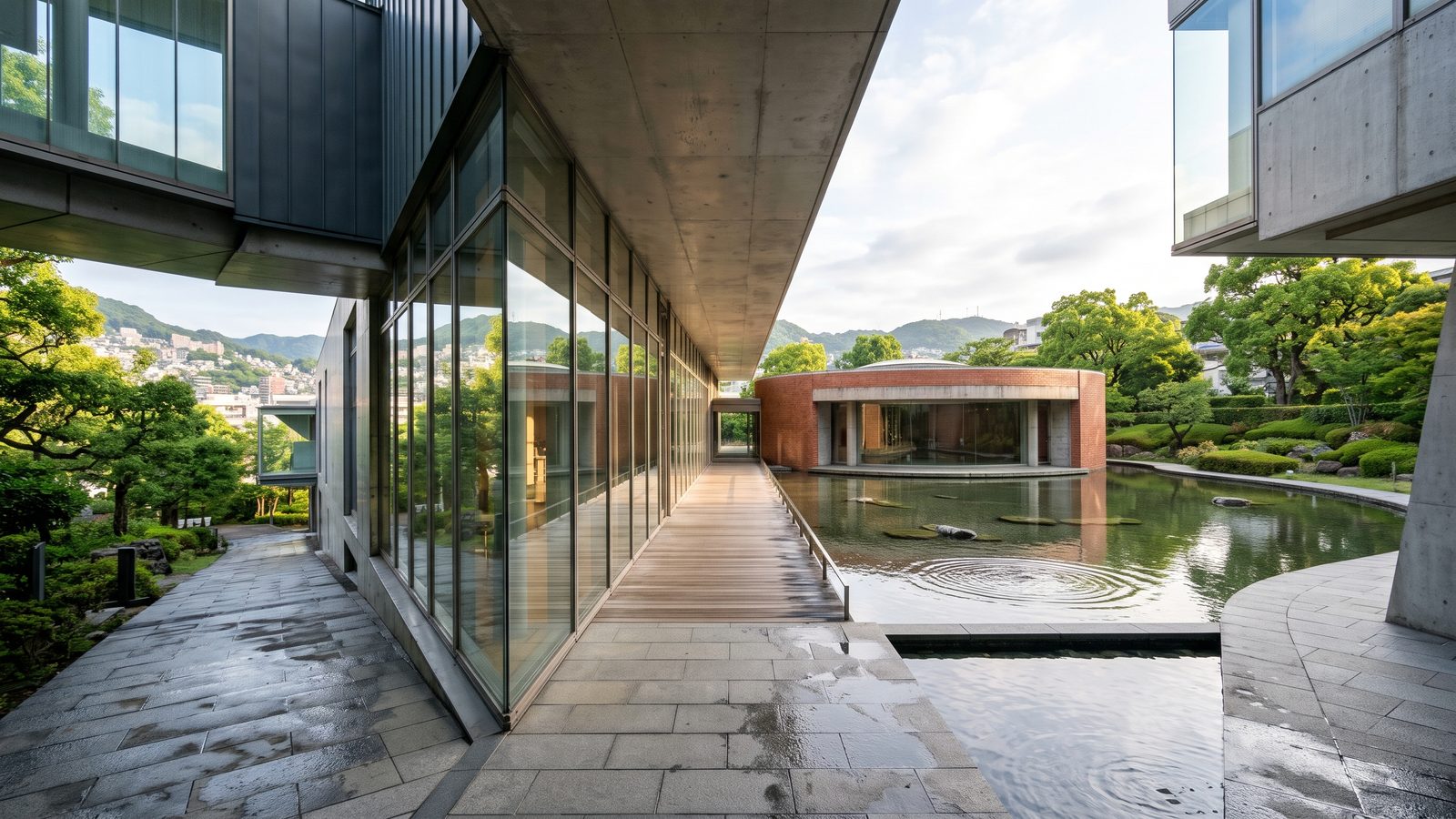
Welcome to the Nagasaki Atomic Bomb Museum, a solemn space dedicated to memory, peace, and human resilience. Standing before its modern, stark architecture, you prepare to enter a repository of profound historical weight. Here, the events of August 9, 1945, are presented not only through historical facts, but through personal stories of loss, survival, and the city's remarkable rebirth from an atomic wasteland.
As you walk through the exhibits with this self-guided audio tour, you will encounter poignant artifacts, witness survivor testimonies, and visit the serene Memorial Hall. This experience invites you to reflect deeply on the devastating human cost of nuclear weapons and Nagasaki's enduring plea for global disarmament.
Listen to a sample
The opening of this tour, exactly as AllTours narrates it on site.
What you'll hear on this tour
Stop 1. Frozen Time and Personal Losses
You step inside the exhibit hall to face stark physical evidence of the atomic blast. Your eyes fix upon a melted clock, its hands permanently frozen at 11:02, marking the exact instant Fat Man detonated over Nagasaki. Nearby, you see twisted steel girders and fused pottery, testifying to the bomb's searing heat. Yet the most striking items are the personal artifacts: a child's charred lunchbox and torn everyday clothing that speak to individual lives cut short. As survivor testimonies echo around you, these preserved objects bridge the past and present, urging you to feel the deep human cost of destruction and reflect on the necessity of peace.
Stop 2. The Quiet Sanctuary of Remembrance
You step into the Memorial Hall for the Atomic Bomb Victims, where a reverent silence envelops you. Etched into the surrounding walls are the names of all known victims, a tragic list that continues to grow. Before you stands a central pillar positioned beside a tranquil, glass-like pool of water. You observe visitors offering water—a deeply symbolic gesture honoring those who perished in excruciating thirst after the explosion. In this sacred space, you are invited to pause, contemplate the immense suffering of August 9, 1945, and hold space for an enduring hope for global harmony.
Stop 3. An Unwavering Voice for Disarmament
You witness how Nagasaki transformed its unimaginable tragedy into a global call for nuclear disarmament. The museum serves as an active platform for peace, carrying forward the collective hope of atomic bomb survivors, known as hibakusha. You hear how these survivors dedicated their remaining years to sharing their testimonies, transforming personal trauma into an urgent warning for humanity. As you move past exhibits advocating for a world free of nuclear weapons, their message strikes a deep chord. You are challenged to carry this legacy forward and consider your own role in building a peaceful future.
Stop 4. August 9, 1945 and its Aftermath
You trace the historical events surrounding the fateful morning of August 9, 1945. You learn how the B-29 bomber Bockscar released the Fat Man plutonium bomb over Nagasaki, bringing sudden and catastrophic devastation to the city. The displays guide you through the complex political and military decisions preceding that moment, as well as the immediate horrors faced by survivors on the ground. Beyond the initial destruction, you follow Nagasaki's arduous journey of rebuilding from a charred atomic wasteland into a thriving city centered on remembrance and international understanding.
Stop 5. Resilience and the Hibakusha Legacy
You discover how Nagasaki's pre-war culture—a unique fusion of Japanese traditions and foreign influences born from its historic international port—was shattered in a single instant. Yet out of the ashes emerged a redefined cultural identity centered entirely on peace. You see how the hibakusha transformed their grief into a powerful cultural act by continuously sharing their memories with visitors from around the world. Through their storytelling, a vibrant community spirit was reborn, ensuring that Nagasaki's tragedy yields a lasting testament to hope, endurance, and global solidarity.
Stop 6. A Dynamic Classroom for Humanity
You engage with exhibits designed not merely to display history, but to serve as a dynamic classroom for future generations. Interactive installations prompt you to examine the ongoing risks of nuclear weaponry and engage in critical thinking about global security. You see how survivor accounts provide firsthand lessons on human vulnerability and ethics, transforming historical trauma into educational tools for global disarmament. By walking through these space, your understanding of collective responsibility expands, asking you to consider how education can actively prevent future conflicts.
Planning your visit
- Best time to go
- Morning or early afternoon for a quiet, contemplative atmosphere.
- Approximate duration
- About 1.5 to 2 hours
- Where to start
- Museum main entrance hall
Access and conditions change seasonally — check the official site before you go.
Frequently asked questions
Is Nagasaki Atomic Bomb Museum worth visiting?
Yes, visiting the Nagasaki Atomic Bomb Museum offers a deeply moving and educational experience. It provides vital historical context on the August 9, 1945 bombing and showcases Nagasaki's inspiring transition into a beacon for global peace and disarmament.
How long do you need at Nagasaki Atomic Bomb Museum?
Most visitors spend between 1.5 and 2 hours exploring the exhibits, reading personal artifact stories, and spending quiet moments in the adjacent Memorial Hall.
What happened at Nagasaki on August 9, 1945?
On August 9, 1945, the U.S. B-29 bomber Bockscar dropped the 'Fat Man' plutonium atomic bomb on Nagasaki, causing immense immediate devastation and altering world history forever.
Keep exploring
Header image is an AI-generated illustration of Nagasaki Atomic Bomb Museum. AllTours.ai is an AI audio tour guide — point your camera at any landmark and hear its story.