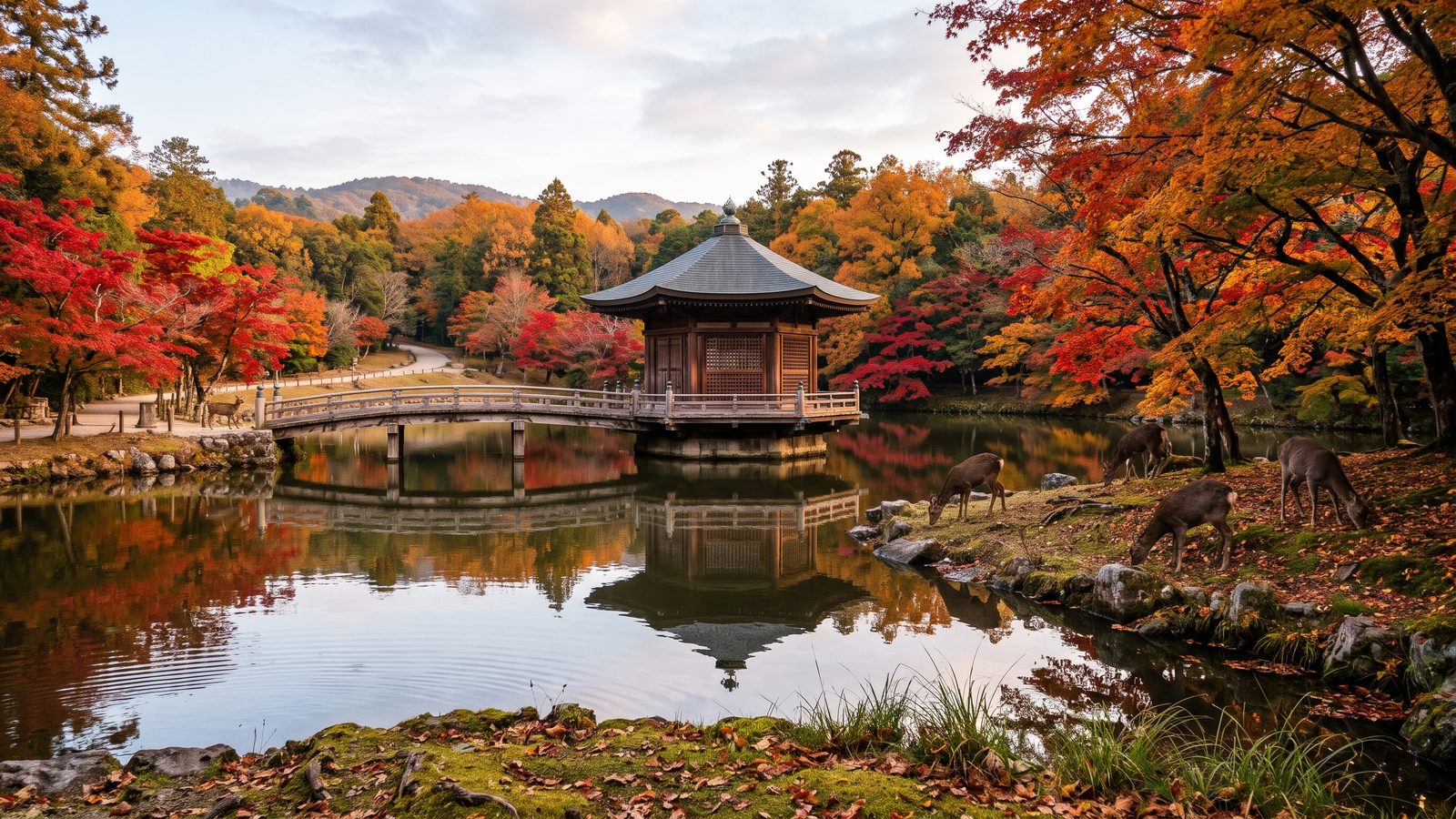
Welcome to Nara Park, an expansive green heart in Nara City established in 1880. Once surrounding the imperial palaces of Japan's first permanent capital, Heijo-kyo, this living sanctuary seamlessly combines sacred history with nature. As you wander through its ancient grounds, you share the peaceful paths with over a thousand wild sika deer, majestic ancient trees, and world-renowned temple structures that shaped the foundation of Japanese culture and Buddhism.
With this self-guided audio tour, you unlock the rich spiritual traditions and architectural heritage woven into the landscape. Hear the stories behind the divine deer messengers, dramatic seasonal scenery, and pristine forests as you explore at your own comfortable pace.
Listen to a sample
The opening of this tour, exactly as AllTours narrates it on site.
What you'll hear on this tour
Stop 1. Sacred Messengers of the Gods
You step onto the paths of Nara Park and instantly encounter its most famous residents, the wild sika deer. Revered as divine messengers of the gods, these sacred animals are descendants of the divine envoy Takemikazuchi-no-mikoto. As you walk among them, you witness a remarkable sight: many deer gently bow their heads to ask for shika senbei crackers, displaying an intelligent, learned behavior unique to this ancient sanctuary. You observe how generations of human interaction have created this harmonious bond. Annually, priests and caretakers carefully cut their antlers in a traditional ceremony that ensures safety for everyone, keeping a vibrant practice alive that dates back through centuries of Japanese tradition.
Stop 2. Echoes of Japan's First Capital
You stand inside a sprawling, verdant expanse that breathes ancient history at every step. Established in 1880, Nara Park occupies the sacred grounds of Heijo-kyo, Japan's very first permanent capital from 710 to 784 AD. As you look across these peaceful lawns, you walk through land that once cradled grand imperial palaces and magnificent Buddhist complexes. Around you, architectural marvels like the soaring pagodas of Kofuku-ji and the colossal wooden structures of Todai-ji showcase the very foundation of ancient Japanese governance, craftsmanship, and spiritual devotion. You share this vast living museum with over a thousand free-roaming deer, feeling the profound weight and tranquility of centuries past.
Stop 3. Harmonious Landscapes and Sacred Waters
You gaze across a stunning landscape where ancient architectural wonders nestle seamlessly into rolling hills and dense woodlands. Look around to see how grand structures like Todai-ji's Great Buddha Hall blend effortlessly with the surrounding nature. Depending on when you visit, delicate cherry blossoms cascade softly over ancient temple roofs in spring, or fiery maple leaves transform the nearby Kasugayama Primeval Forest into a rich autumn tapestry. As you pause by the tranquil waters of Sagi-ike Pond, you watch perfect reflections of historical buildings and lush trees dance across the surface, creating a timeless visual harmony between human spirit and the natural world.
Stop 4. Spiritual Reverence and Sacred Rituals
You experience a deep cultural reverence that defines every interaction across these holy grounds. Here, the free-roaming deer are not treated as ordinary wild animals, but as sacred messengers sent by Takemikazuchi-no-mikoto. As you observe fellow visitors bowing politely to the deer, you witness a living Shinto tradition rooted in deep respect for the divine. Offering special shika senbei rice crackers becomes far more than simply feeding wildlife; it serves as a meaningful ritual of connection between humanity and nature. You feel the enduring spiritual heart of Nara in this shared harmony, where ancient beliefs continue to shape daily life and reverence.
Stop 5. The Living Forest Cathedral
You feel the ancient pulse of nature beneath your feet as you enter the dense woodlands of Nara Park. Colossal camphor and zelkova trees surround you, their massive trunks and sprawling high canopies forming a magnificent living cathedral. Breathe in the subtle, earthy scent carried on the soft breeze, reflecting centuries of undisturbed forest growth. As you walk along moss-covered paths, you watch dappled sunlight filter through the thick green leaves, casting bright glowing patterns on the vibrant undergrowth below. You stand in a pristine natural sanctuary that has flourished untouched for generations, offering quiet serenity away from the busy modern world.
Stop 6. A Designated Monument of Living Heritage
You step into the expansive green heart of Nara, an officially designated Place of Scenic Beauty and Natural Monument. As you walk beneath centuries-old trees whose wide roots intertwine directly with Japan's history, you realize this park is far more than a collection of historic temples. You experience a seamless integration of sacred architecture and untamed nature, where wild deer freely roam as essential custodians of this living heritage. Every path you tread connects ancient imperial history with a thriving natural sanctuary, offering a unique spiritual landscape where nature, faith, and history exist in perpetual balance.
Planning your visit
- Best time to go
- Early morning or late afternoon for pleasant temperatures, serene lighting, and active deer. Spring offers cherry blossoms while autumn brings vivid maples.
- Approximate duration
- About 2 to 3 hours
- Where to start
- Kintetsu-Nara Station or JR Nara Station, entering the park at its western border near Kofuku-ji.
Access and conditions change seasonally — check the official site before you go.
Frequently asked questions
Is Nara Park worth visiting?
Yes, Nara Park is one of Japan's most memorable places, featuring iconic UNESCO World Heritage temple architecture, serene old-growth forests, and over a thousand free-roaming sacred sika deer.
How long do you need at Nara Park?
Most visitors spend between 2 and 4 hours exploring the main areas of the park, including Todai-ji, Kasuga Taisha, Kofuku-ji, and the surrounding scenic trails.
What is the historical significance of Nara Park?
Nara Park occupies the central area of Heijo-kyo, established in 710 AD as Japan's first permanent capital. It served as the birthplace of major Japanese Buddhist traditions and imperial cultural heritage.
Keep exploring
Header image is an AI-generated illustration of Nara Park. AllTours.ai is an AI audio tour guide — point your camera at any landmark and hear its story.