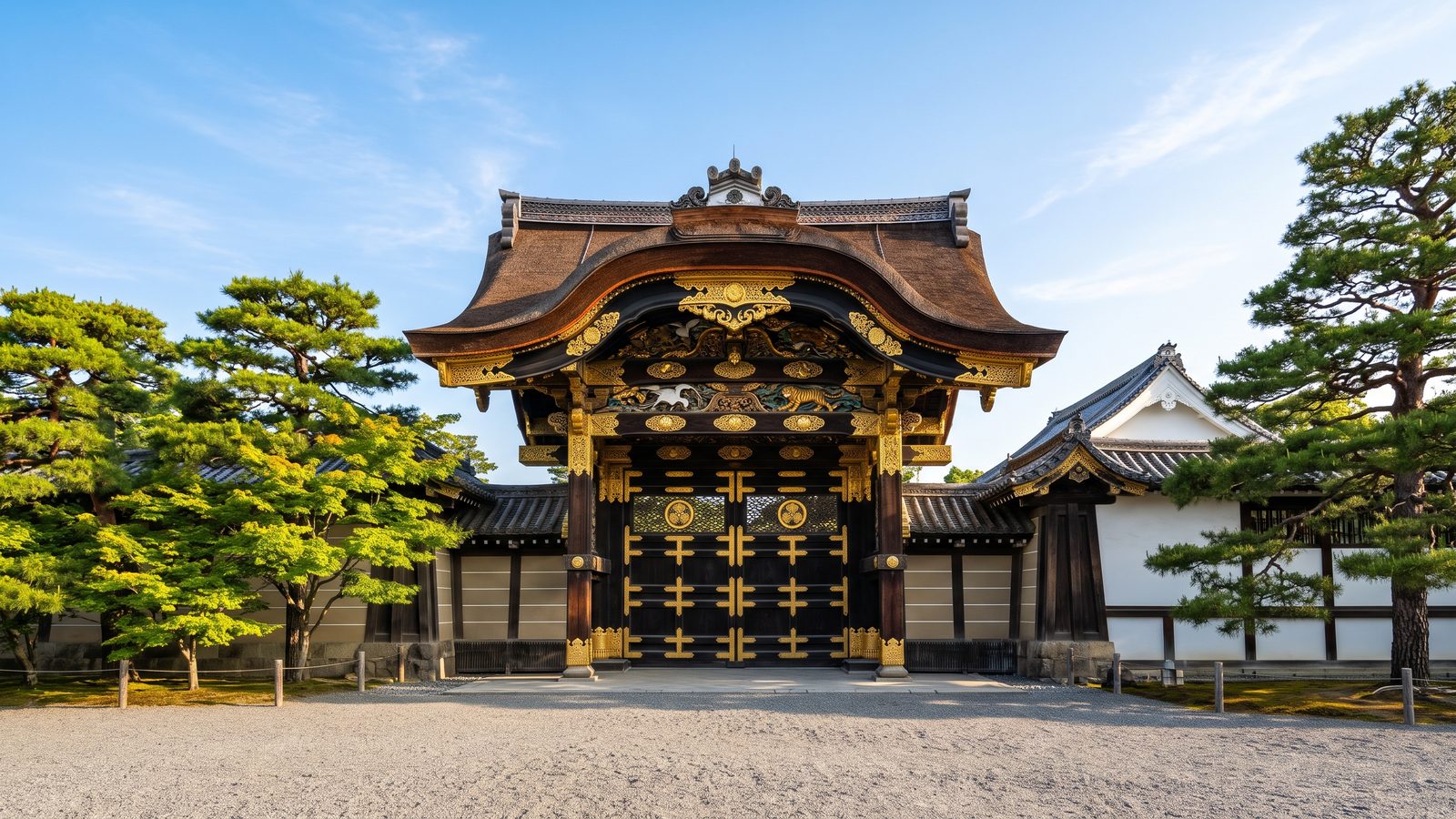
Step into Nijo Castle, the formidable Kyoto seat of the Tokugawa shogunate constructed by Tokugawa Ieyasu in 1603. Surrounded by deep moats and massive stone walls, this UNESCO World Heritage Site blends military intimidation with artistic brilliance. As you walk through its iconic Karamon Gate and grand palaces, you experience the place where feudal Japan's greatest political power was asserted, celebrated, and ultimately surrendered to the Emperor.
This self-guided audio tour reveals the history, architecture, and gardens of Nijo Castle at your own pace. Discover secret nightingale security floors, magnificent Kano school screen paintings, and serene samurai gardens while exploring the very halls where over two centuries of Tokugawa rule came to a dramatic close.
Listen to a sample
The opening of this tour, exactly as AllTours narrates it on site.
What you'll hear on this tour
Stop 1. Inside the Ninomaru Palace
As you step into Ninomaru Palace, your gaze is immediately drawn to sliding doors painted by Kano school masters. In outer waiting rooms, images of fierce tigers and leopards subtly intimidate visiting daimyo. In the Great Hall, or Ōhiroma, you observe the elevated platform where the shogun held formal audiences beneath paintings of grand pines and soaring eagles. Shimmering gold leaf illuminates every surface, reflecting immense wealth even in dim light. Moving deeper, the Black Drawing Room shifts to tranquil cherry blossoms for intimate meetings with trusted retainers, while intricately carved transoms above the doors showcase the shogun's cultivated authority.
Stop 2. Nightingale Floors and Golden Gates
Step onto the famed nightingale floors of Ninomaru Palace and listen to their melodic squeak. Beneath your feet, metal clamps rub against nails whenever floorboards flex, creating an auditory alarm designed to reveal any approaching intruder. This palace represents shoin-zukuri architecture, the peak of samurai residential design. Tatami mats, sliding fusuma doors painted by the Kano school, and carved ranma transoms blend defense with aesthetic refinement. Before entering, you pass through the ornate Karamon Gate, where a cypress bark roof and gold leaf carvings of cranes and phoenixes declare the shogun's supreme power to every visitor.
Stop 3. The Dawn and Dusk of Shogunal Power
You stand on ground where the Tokugawa Shogunate began and met its ultimate end. Tokugawa Ieyasu commissioned this castle in 1603 to project authority over the Imperial Court. Decades later in 1626, his grandson Iemitsu renovated the complex with lavish opulence for an imperial visit, cementing shogunal dominance. Yet history turns within these exact walls. In 1867, inside the Ōhiroma hall, Tokugawa Yoshinobu formally returns governing power to Emperor Meiji during the Taisei Hōkan. This single act ends over 260 years of feudal rule, launching modern Japan and transforming Nijo Castle from a shogunal stronghold into the stage of its surrender.
Stop 4. The Masterpiece of Kobori Enshu
Step into the Ninomaru Garden, a living landscape designed by Kobori Enshu for Shogun Iemitsu. Created in the shoin-zukuri style, this garden is crafted to be viewed from palace verandas like a living painting. Look across the central pond to spot three symbolic islands: Horai-jima, representing eternal youth, flanked by turtle and crane islands signifying longevity. Carefully positioned rocks, miniature waterfalls, and meticulously pruned pines evoke grand natural vistas. As you walk, moss-covered ground and shifting angles reveal new perspectives, demonstrating how samurai rulers tamed the natural world to inspire tranquil contemplation while subtly asserting their absolute authority.
Stop 5. Power Rituals and Kano Artistry
Immerse yourself in the bold Momoyama-style aesthetics of the samurai elite. Golden accents and vibrant colors project absolute shogunal confidence throughout the palace. Notice how sliding door paintings by the Kano school feature strong pines and fierce tigers, functioning as visual metaphors of power that visiting daimyo instantly understand. Inside the Ōhiroma Grand Hall, formal audience rituals reinforce strict societal hierarchies through seating arrangements and decorative motifs. Outside, the Ninomaru Garden offers a serene environment designed for contemplative viewing, reflecting how Edo-period rulers combined political intimidation, strict social decorum, and artistic harmony into a single, carefully choreographed cultural domain.
Stop 6. A UNESCO Living Archive
Explore a UNESCO World Heritage Site recognized as part of the Historic Monuments of Ancient Kyoto. In 1994, international authorities honored Nijo Castle for preserving authentic shoin-zukuri architecture and early Edo-period samurai aesthetics. The original wooden structures and Kano school paintings undergo continuous conservation, protecting delicate pigments and gold leaf for future generations. As you walk through these halls, you encounter a physical archive of Japanese history—the very site where Tokugawa rule officially yielded to the Imperial Restoration in 1867. From shogun residence to imperial villa and public treasure, Nijo Castle endures as an authentic window into Japan's dramatic past.
Planning your visit
- Best time to go
- Early morning at opening or late afternoon to avoid peak crowds and capture soft lighting on the gardens.
- Approximate duration
- About 60 to 90 minutes
- Where to start
- Higashi-Ote-mon Gate (East Main Gate), the principal entrance to Nijo Castle.
Access and conditions change seasonally — check the official site before you go.
Frequently asked questions
Is Nijo Castle worth visiting?
Yes, Nijo Castle is a essential UNESCO World Heritage Site in Kyoto. It features rare surviving samurai palace interiors, famous nightingale floors, Kano school paintings, and the historic hall where the Tokugawa shogunate ended in 1867.
How long do you need at Nijo Castle?
Most visitors spend between 60 to 90 minutes exploring Ninomaru Palace, walking through the Ninomaru Garden, and admiring the massive outer walls and gates.
Why was Nijo Castle built?
Tokugawa Ieyasu commissioned Nijo Castle in 1603 after unifying Japan. It served as his Kyoto residence and a powerful visual symbol of shogunal authority over the Imperial Court and feudal lords.
Keep exploring
Header image is an AI-generated illustration of Nijo Castle. AllTours.ai is an AI audio tour guide — point your camera at any landmark and hear its story.