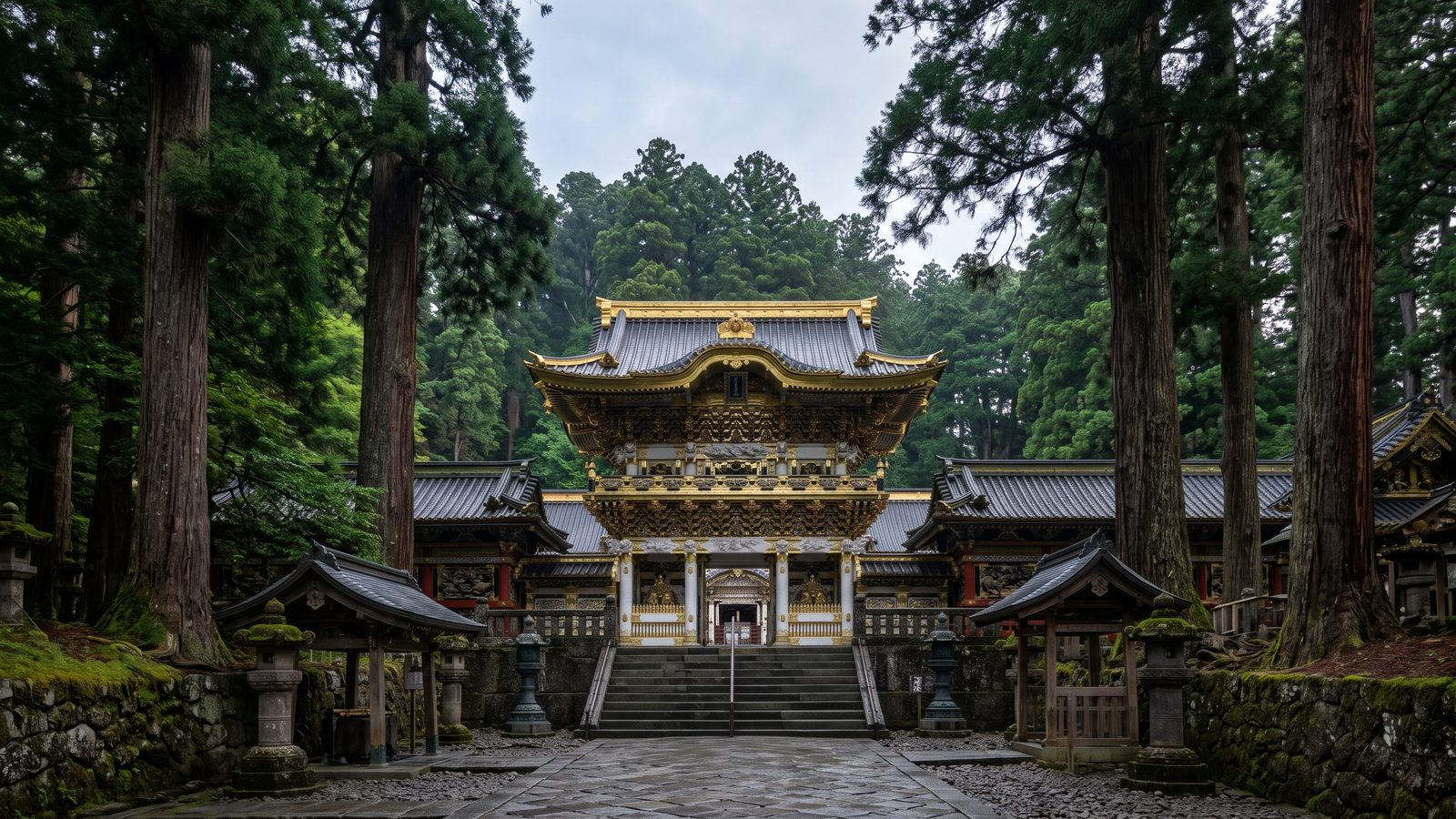
Welcome to Nikko Toshogu Shrine, the final resting place of Tokugawa Ieyasu, the legendary unifier of Japan. Nestled within ancient cryptomeria forests in Tochigi Prefecture, this UNESCO World Heritage site displays unmatched Edo-period craftsmanship. As you explore this opulent complex, you step into a world of vibrant lacquer, intricate gold leaf, and thousands of masterwork carvings designed to honor a deified leader and showcase supreme shogunate power.
This self-guided tour leads you through the shrine's most iconic gates, sanctuaries, and forest paths. Listen closely to unearth the deep spiritual syncretism between Shinto and Buddhism, marvel at historic engineering feats, and discover famous symbolic artwork hidden in plain sight throughout these sacred mountain grounds.
What you'll hear on this tour
Stop 1. The Magnificent Yomeimon Gate
As you step into the sacred precinct, you encounter the breathtaking Yomeimon Gate, often called the Sunset Gate because its elaborate details can captivate you until dusk. Look closely at the 508 intricate carvings depicting dragons, kirin, peonies, and Chinese sages, all adorned in gold leaf and vibrant colors. You can spot a deliberate imperfection on one pillar, the inverted sakashira, placed intentionally to ward off evil spirits by avoiding complete perfection. Beyond this gate stands the Honden, the main sanctuary enshrining the deified spirit of Tokugawa Ieyasu. As you stand before this sacred space, you feel the enduring spiritual energy and master craftsmanship that honor Japan's unifier.
Stop 2. Opulence and Innovation in Wood
You are standing before a masterpiece of Gongen-zukuri architecture, where the main hall, offering hall, and connecting corridor join seamlessly under a single grand roof. Notice how every surface defies traditional Shinto simplicity, bursting with colorful lacquer, gold leaf, and elaborate mythical beast carvings. This lavish display combines Shinto structure with decorative Buddhist ornamentation, reflecting a unique spiritual synthesis. As you admire the complex eaves and the five-story pagoda—engineered with a flexible central pillar to withstand earthquakes—you witness a bold political statement. The Tokugawa Shogunate designed every inch of this grand complex to showcase its absolute authority, wealth, and lasting prestige to all who enter.
Stop 3. Moral Lessons in Sacred Art
Look around the shrine buildings to discover a rich visual encyclopedia of Edo-period values. You see the famous Three Wise Monkeys carved into the wooden walls, teaching the moral ideal of see no evil, hear no evil, speak no evil to encourage discretion and pure thoughts. Nearby, the famous Sleeping Cat carving reflects a cultural desire for peaceful tranquility while symbolically protecting the sacred grounds. Beyond these carvings, the shrine continues its heritage through vibrant festivals like the Grand Procession of a Thousand Warriors. As you walk here, you experience a long tradition where Shinto and Buddhist practices harmoniously blend, connecting you directly to Japan's living history.
Stop 4. The Deified Shogun and Syncretism
You are walking on ground imbued with ancient mountain reverence and profound spiritual synthesis. Following his death, Tokugawa Ieyasu was deified as Toshogu Daigongen, a sacred manifestation where the Medicine Buddha, Yakushi Nyorai, appeared as a Shinto kami. This practice, known as Shinbutsu-shūgō, seamlessly blends indigenous nature worship with Buddhist philosophy. As you navigate these sacred grounds, every carving and pathway invites you toward spiritual purification and mindfulness. The ancient sacred mountains of Nikko enhance this divine energy, creating a sanctuary where earthly power and heavenly grace meet. Take a moment to absorb the quiet reverence that still hums through the surrounding air.
Stop 5. A Monument to Shogunate Power
You are exploring a site born from the final wishes of Tokugawa Ieyasu, who sought to become a divine protector of Japan after his death in 1616. While his son Hidetada built a modest shrine in 1617, his grandson, Shogun Iemitsu, launched a colossal reconstruction in 1634. Completed in just two years by thousands of Japan's finest artisans, this overhaul transformed the mausoleum into an astonishing display of wealth and authority. As you walk among these opulent structures, you see Iemitsu’s deliberate political statement in physical form, designed to immortalize the shogunate's absolute power and secure its divine right to rule Japan for centuries.
Stop 6. Ancient Cryptomeria and Sacred Paths
Step away from the brilliant gilded halls and enter a tranquil forest landscape designed to frame the natural world. Here, towering ancient cryptomeria trees form a green canopy above you, planted centuries ago to guide and purify pilgrims as they ascend. Moss-covered stone lanterns and steps rise organically from the lush earth, offering a peaceful contrast to the shrine's opulent carvings. As you follow the quiet forest walk toward Ieyasu's mausoleum, the Okumiya, light filters gently through the dense foliage. You feel surrounded by the primal, enduring spirit of the sacred mountain, where nature and human reverence exist in timeless harmony.
Planning your visit
- Best time to go
- Early morning on weekdays to avoid crowds, or autumn for vibrant seasonal foliage amidst the forest.
- Approximate duration
- about 2 hours
- Where to start
- The main entrance approach near the stone torii gate and five-story pagoda.
Access and conditions change seasonally — check the official site before you go.
Frequently asked questions
Is Nikko Toshogu Shrine worth visiting?
Yes, Nikko Toshogu Shrine is a UNESCO World Heritage site famed for its extravagant Edo-period architecture, intricate wood carvings like the Three Wise Monkeys, and dramatic setting among ancient cryptomeria trees.
How long do you need at Nikko Toshogu Shrine?
Most visitors spend around 1.5 to 2 hours exploring the main halls, Yomeimon Gate, mausoleum paths, and surrounding sacred forest grounds.
Who built Nikko Toshogu Shrine and why?
Initially built in 1617 by Shogun Hidetada following Tokugawa Ieyasu's death, it was grandly rebuilt in 1636 by his grandson Iemitsu to showcase the Tokugawa Shogunate's immense power and deify Ieyasu as a divine protector.
Keep exploring
Header image is an AI-generated illustration of Nikko Toshogu Shrine. AllTours.ai is an AI audio tour guide — point your camera at any landmark and hear its story.