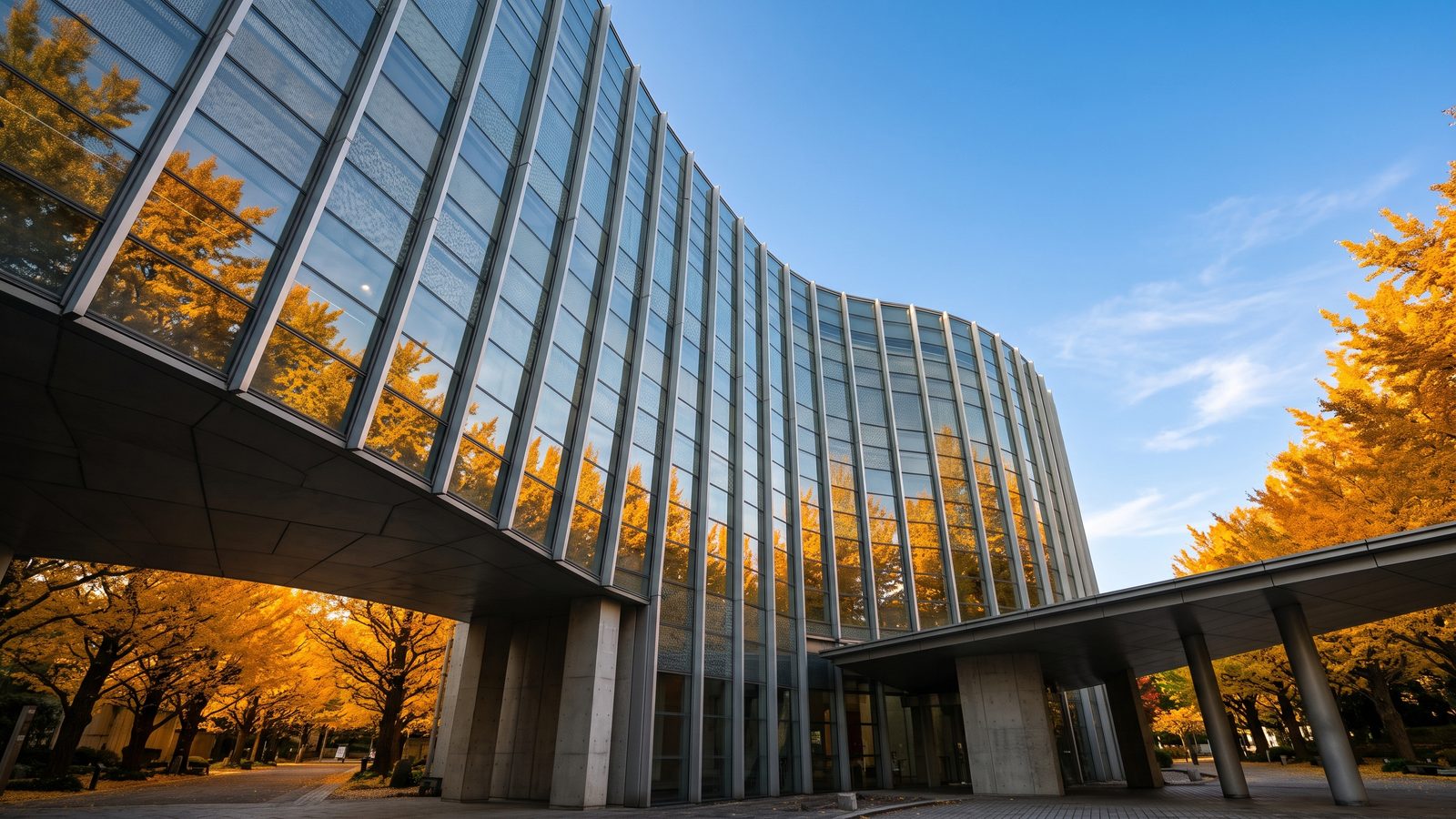
Welcome to Nogizaka, an elegant Tokyo neighborhood where deep historical roots seamlessly blend with vibrant contemporary culture. Named after General Nogi Maresuke, this serene district offers a quiet refuge from the capital's fast-paced energy. Here, sacred shrines shaded by ancient trees share the landscape with world-class art architecture and modern pop culture history, inviting you to explore a unique side of the metropolis at your own relaxed pace.
As you stroll along gentle slopes and tree-lined boulevards, you discover the birthsite of famous idol groups alongside striking wave-like glass facades. Experience Nogizaka's understated luxury, understated prestige, and peaceful atmosphere where every quiet street corner reveals layers of Tokyo's rich, evolving story.
Listen to a sample
The opening of this tour, exactly as AllTours narrates it on site.
What you'll hear on this tour
Stop 1. The Waving Glass of National Art
You stand before the magnificent glass facade of the National Art Center, Tokyo, a striking architectural wave of steel and glass designed by Kisho Kurokawa. As you gaze at its fluid exterior, you notice how it constantly reflects the sky and surrounding cityscape like a dynamic sculpture. Step inside to explore its vast, adaptable spaces dedicated entirely to world-class temporary exhibitions rather than a permanent collection. Towering inverted cones house interior cafes, serving as dramatic sculptural elements that play with perspective and scale. Moving through this light-filled sanctuary transforms your walk into an artistic journey before you even view the extraordinary temporary masterpieces housed within.
Stop 2. Honoring General Nogi and Shizuko
You pause before the commanding bronze statues of General Nogi Maresuke and his wife, Shizuko. You are looking at a profound testament to early twentieth-century loyalty and the bushido spirit. Cast in a stoic, realistic style, the figure of the general displays detailed military dress reflecting his service during the Russo-Japanese War and the Siege of Port Arthur. In 1912, the couple chose to follow Emperor Meiji in death through junshi, a dramatic act of devotion that deeply moved the entire nation. As you reflect beside these silent figures, you feel the solemn weight of duty and personal sacrifice that defined Japan's pivotal transition into modernity.
Stop 3. Ancient Sentinels of the Shrine
You walk beneath the towering canopy of venerable camphor trees that encircle Nogizaka Shrine like a living cathedral. As you look up through gnarled branches, dappled sunlight filters down onto the stone path, bringing an instant sense of tranquility in the heart of the city. These ancient trees embody longevity, resilience, and sacred kami energy, having stood guard for centuries as Tokyo transformed around them. Depending on the season, you might see fiery red maples contrasting against evergreen pines or golden leaves shimmering above. Take a deep breath of the fresh, clean air and appreciate how these majestic sentinels maintain a peaceful urban sanctuary.
Stop 4. Where History Meets Idol Culture
You arrive in Nogizaka, an elegant district whose name translates to Nogi Hill in honor of General Nogi Maresuke. As you explore, you feel a fascinating harmony between quiet history and vibrant modern pop culture. This sacred ground not only shelters the serene Nogizaka Shrine dedicated to the general and his wife, but it also serves as the origin point for the famous idol group Nogizaka46. The group drew direct inspiration from this very neighborhood at the start of their journey. As you walk these historical grounds, you experience the captivating intersection of historic reverence and contemporary Japanese fandom.
Stop 5. Sophisticated Slopes and Ginkgo Trees
You step onto a historic thoroughfare that once connected samurai estates to the bustling Edo city center. Today, you feel its sophisticated blend of quiet prestige and refined tranquility. As you walk along the gentle slope that gives Nogi Hill its name, you notice carefully planted ginkgo trees that burst into brilliant gold during autumn. Discreet art galleries, elegant residences, and exclusive eateries line the route, each facade echoing a subtle legacy of high design. Far from Tokyo's urban clamor, this peaceful street acts as a quiet artery where you can savor the neighborhood's understated luxury and elevated position.
Stop 6. Tranquil Paths and Hidden Discoveries
You set out on a leisurely walk across Nogizaka, where your footsteps echo softly against carefully maintained flagstones. Moving along gentle undulations in the terrain, you catch sudden, unexpected glimpses of Tokyo Tower framed between sleek modern structures. Unhurried exploration leads you to tiny, unassuming shrines tucked behind contemporary buildings, complete with ancient stone lanterns that honor local deities. As you wander down sun-dappled alleys, you uncover hidden gardens and artisan studios tucked away from the main thoroughfares. Walking through these historic paths allows you to fully absorb the rich layers of Edo-era heritage merged with cutting-edge urban design.
Planning your visit
- Best time to go
- Autumn is ideal to view golden ginkgo trees and fiery red maple foliage around the shrine and streets.
- Approximate duration
- about 1 to 1.5 hours
- Where to start
- Nogizaka Station or outside the National Art Center, Tokyo.
Access and conditions change seasonally — check the official site before you go.
Frequently asked questions
Is Nogizaka worth visiting?
Yes, Nogizaka offers a unique combination of modern architectural marvels like the National Art Center, serene historic grounds at Nogizaka Shrine, and connection to Japanese pop culture as the namesake of Nogizaka46.
How long do you need at Nogizaka?
You typically need about 1 to 2 hours to leisurely walk the district, explore Nogizaka Shrine, and admire the striking local architecture.
Who was General Nogi Maresuke and why is Nogizaka named after him?
General Nogi Maresuke was a prominent Meiji-era military officer. Following Emperor Meiji's death in 1912, Nogi and his wife Shizuko committed junshi, after which the hill and district were named Nogizaka in his honor.
Keep exploring
Header image is an AI-generated illustration of Nogizaka. AllTours.ai is an AI audio tour guide — point your camera at any landmark and hear its story.