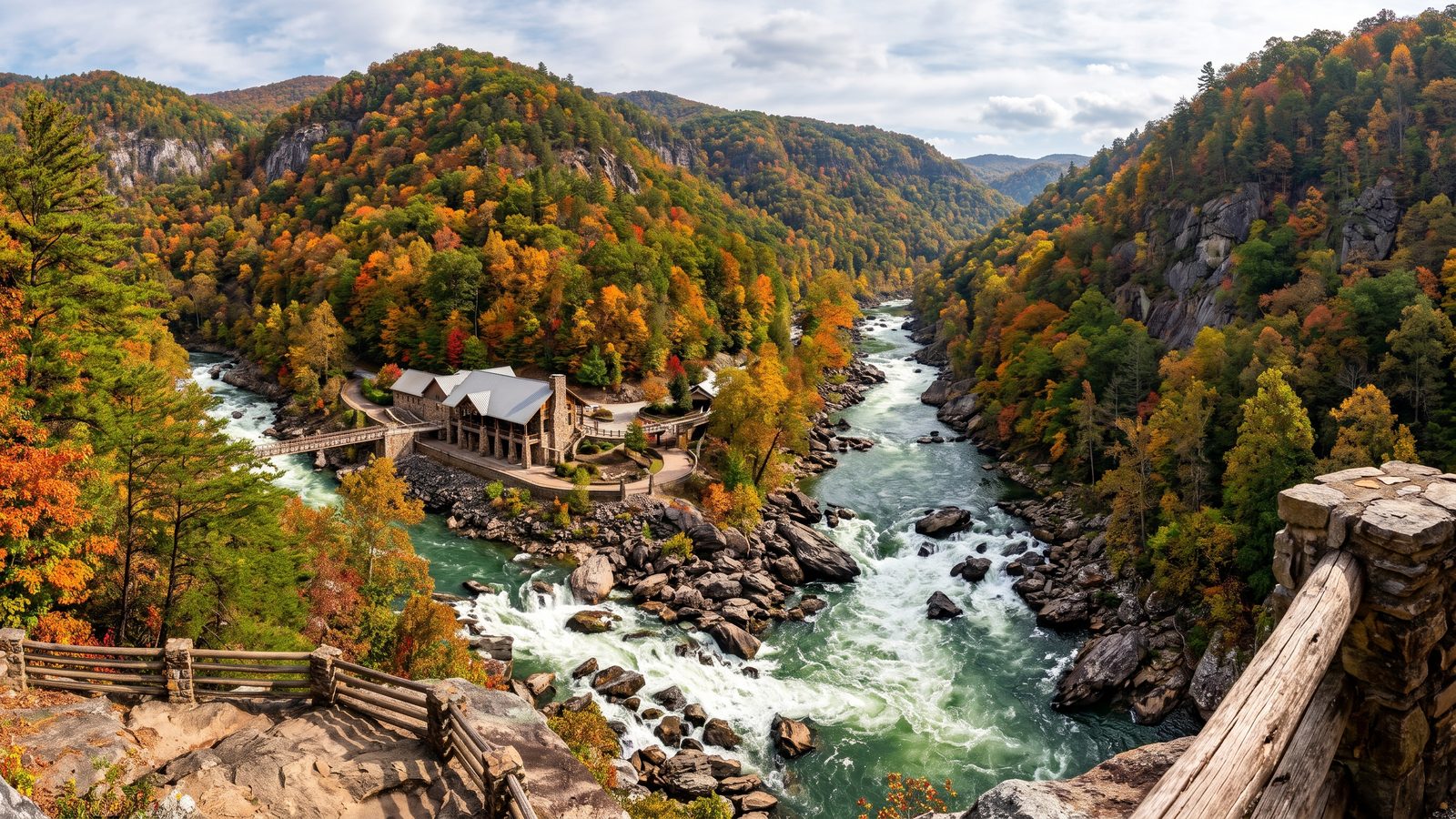
You stand before the roaring currents of the Ocoee River in Benton, Tennessee, surrounded by the ancient Appalachian Mountains. Once the ancestral home of the Cherokee Nation, this iconic waterway evolved from a dry riverbed controlled by hydroelectric dams into a world-famous whitewater destination. Today, it offers a thrilling mix of Olympic history, rugged scenery, and adrenaline-pumping Class III and IV rapids cut deeply through pristine forest gorge.
As you explore along the scenic riverbanks, this self-guided tour guides you through the valley's geological wonders, native wildlife, and hydroelectric legacy. Feel the mist from crashing waves, hear the roar of surging currents, and uncover how passionate conservationists resurrected one of America's premier whitewater rivers.
What you'll hear on this tour
Stop 1. Conquering the Legendary Whitewater Rapids
You feel a surge of pure excitement as you enter the roaring currents of the Ocoee River. You are an active participant here, working in unison with your crew to navigate continuous Class III and IV rapids. As your craft drops into legendary sections like Grumpy and Broken Nose, crashing waves and cold spray surround you. TVA dam releases guarantee consistent, ideal water flow on designated days, preserving conditions that once tested elite athletes during the 1996 Atlanta Summer Olympics. Under the watchful eye of an expert river guide, you paddle hard, feeling the raw, untamed power of the water as you forge through the river's heart.
Stop 2. From Cherokee Homeland to Olympic Legacy
You trace centuries of human transformation along the riverbanks, starting with the Cherokee Nation who originally named the river after the passionflower blooming here. Their deep connection ends tragically during the forced removal on the Trail of Tears in the 1830s. Decades later, early 20th-century construction of the Ocoee No. 1 and No. 2 dams diverts water into massive flumes, leaving the riverbed dry for much of the year. You learn how a late-20th-century grassroots movement of paddlers and environmental advocates successfully petitions for scheduled water releases. This incredible resurrection restores the river's flow and ultimately earns it a spot as a 1996 Olympic venue.
Stop 3. Precision Whitewater Dance on Olympic Waters
You watch agile kayakers navigate a world-renowned whitewater playground with incredible precision and speed. The paddlers merge with their sleek crafts, executing sharp boofs and rolls while carving through formidable Class III and IV currents. You see them tackle notorious features like Broken Nose and Grumpy, where split-second decisions determine whether they hold their line or flip into the churning foam. This dynamic stretch of water hosted the elite slalom kayaking events during the 1996 Atlanta Olympic Games. As you observe from the shore, you witness how kayakers continuously read the river's subtle eddies and hydraulics, transforming raw aquatic energy into a thrilling, controlled performance.
Stop 4. Commanding the Chaos of Grumpy's Ledges
Your journey demands complete focus as you immerse yourself in the Ocoee's relentless adrenaline rush. Navigating challenging stretches like Grumpy's Ledges requires quick thinking and physical endurance, turning your paddle into an extension of your body. You learn to interpret the river's complex hydraulics, anticipating wave trains, boil lines, and hidden rocks before making micro-adjustments in the chaotic spray. This intense engagement is not merely about surviving the current; it is about actively mastering your course through dynamic whitewater. As you lean into each bracing stroke and push through rolling waves, you gain an exhilarating sense of personal accomplishment and an enduring respect for the river's raw power.
Stop 5. Ancient Geology and Vibrant Appalachian Ecosystems
You stand beside ancient Appalachian rock formations carved out over millions of years by relentless rushing water. Look closely at the riverbanks to admire dense groves of Eastern Hemlocks and thickets of rhododendron that burst into vibrant pink and white blooms in late spring. Above the churning foam, you might catch a glimpse of an osprey circling high in the sky before diving for swift, native brook trout swimming beneath the oxygenated surface. Beneath the towering oak and maple trees, complex fungal networks and hidden salamanders thrive in the damp leaf litter. Every plant, bird, and aquatic species weaves into a complex, self-regulating ecosystem along the river gorge.
Stop 6. Shimmering Quartz and Emerald River Vistas
You gaze across the Ocoee River, taking in the vibrant emerald green water flowing through deep, sculpted rock pools. High above, steep Appalachian mountainsides cloak the gorge in an unbroken forest of maple, oak, and hemlock, creating a dazzling display of fiery reds and golds during autumn. Sunlight catches exposed veins of quartz along the riverbanks, revealing the ancient metamorphic forces that shaped this steep valley. As you breathe in the crisp scent of damp earth and fresh mountain air, the constant rumble of whitewater echoes off smooth, water-worn boulders. Unseen songbirds chirp overhead, completing a breathtaking, ever-shifting landscape that completely surrounds you.
Planning your visit
- Best time to go
- Spring through autumn, especially on water release days between May and October.
- Approximate duration
- About 2 to 3 hours
- Where to start
- Ocoee Whitewater Center or Highway 64 river overlooks near Benton, Tennessee.
Access and conditions change seasonally — check the official site before you go.
Frequently asked questions
Is Ocoee River worth visiting?
Yes, the Ocoee River is world-famous for its Class III and IV whitewater rafting, rich hydroelectric history, stunning Appalachian views, and legacy as the 1996 Olympic whitewater venue.
How long do you need at Ocoee River?
You need about 2 to 3 hours to enjoy scenic overlooks along Highway 64, or a full half-day if you plan to go whitewater rafting or explore nearby forest trails.
What is the history of the Ocoee River?
Originally inhabited by the Cherokee who named it for the passionflower, the river was dammed in the early 1900s, leaving it dry until late-20th-century advocacy restored scheduled water releases for recreation and the 1996 Olympics.
Keep exploring
Header image is an AI-generated illustration of Ocoee River. AllTours.ai is an AI audio tour guide — point your camera at any landmark and hear its story.