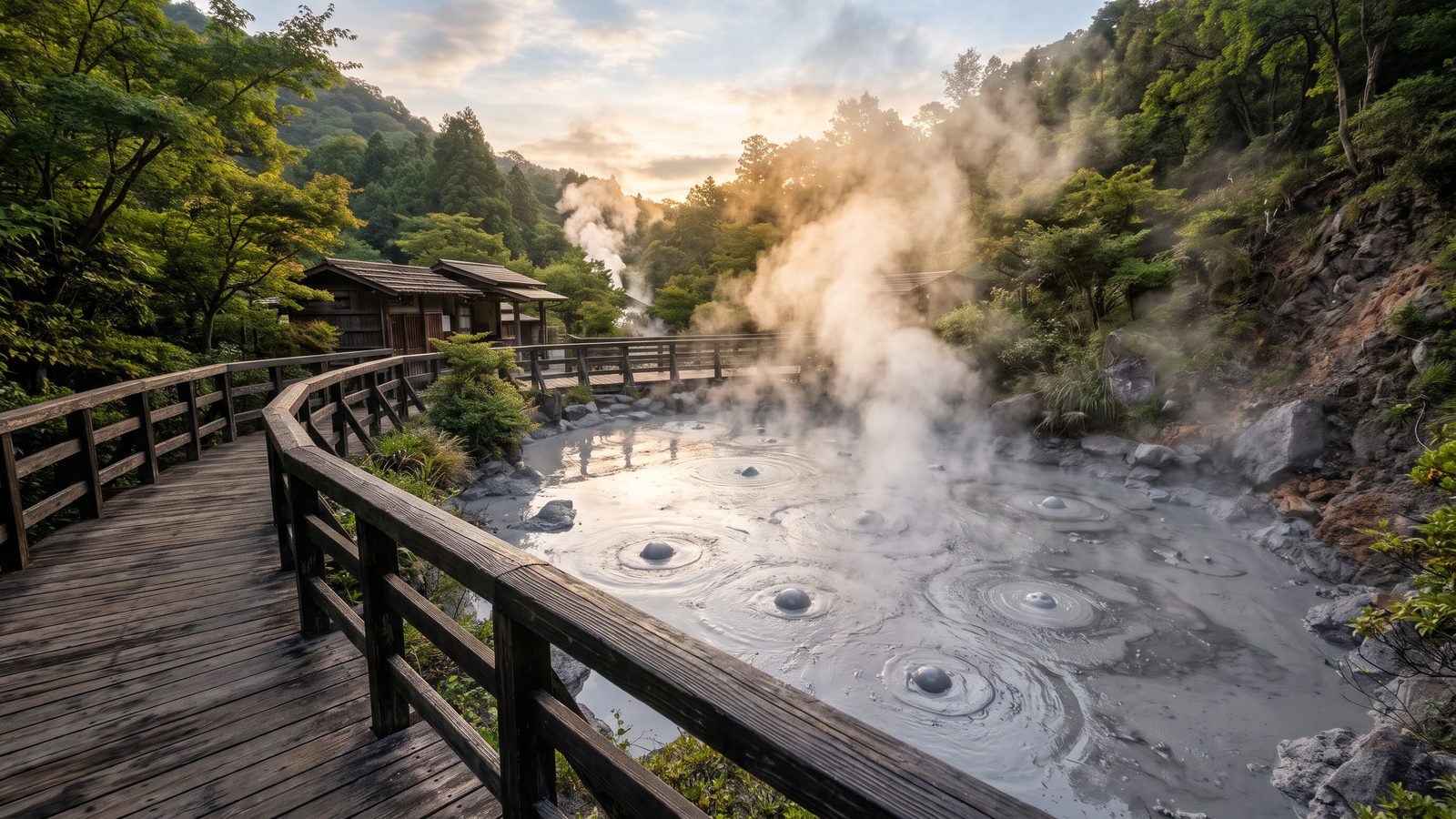
Welcome to Oniishibozu Hell, one of Beppu's most fascinating geothermal 'Jigoku' or hells. As you walk through this volcanic landscape in Oita Prefecture, you will witness grey mud pots churning and bursting in rhythmic patterns that resemble the shaved heads of monks. Fueled by Mount Tsurumi deep below, this living spectacle reveals the raw power of the earth through billows of sulfur-scented steam and scalding mineral waters.
This self-guided audio tour leads you through bubbling clay cauldrons, vibrant mineral deposits, and rich local folklore. Learn how Beppu transformed from a modest fishing village into a world-famous spa resort, while marveling at nature's untamed volcanic energy unfolding right before your eyes.
Listen to a sample
The opening of this tour, exactly as AllTours narrates it on site.
What you'll hear on this tour
Stop 1. The Bald Monk Mud Bubbles
Step up to nature's own pottery studio at Oniishibozu Hell, one of Beppu's famous Jigoku. For centuries, locals watch these hot mud pots churning ceaselessly. The name tells a story: 'Oniishi' means demon stone, while 'bozu' refers to the shaved heads of Buddhist monks. Look closely at the grey mud as smooth bubbles rise and burst, perfectly mimicking bald heads. It is a playful yet striking display of geothermal energy rising beneath your feet. Before you leave, you can pause at a nearby relaxing foot bath to soothe your feet after exploring this boiling landscape.
Stop 2. The Rhythmic Churn of Mud Cauldrons
Turn your gaze toward these mesmerizing grey mudpots, where superheated steam mixes with groundwater to dissolve surrounding volcanic rock into a viscous, mineral-rich slurry. As you listen, you hear a deep gurgling and popping sound as escaping volcanic gases form perfect, dome-like bubbles. Reaching scalding temperatures around 98 degrees Celsius, this clay is far too hot to touch, yet completely spellbinding to watch. Each bursting hemisphere reveals dark volcanic earth tinged with subtle mineral hues. You are observing a living geological cauldron where the consistency changes from thick, slow bubbles to a rapid boil, creating a unique signature of the earth's fiery core.
Stop 3. Mount Tsurumi's Deep Heat Engine
Feel the constant, ancient pulse of the earth right beneath your feet. The dense, billowing steam around you is superheated groundwater forced upward through intricate volcanic rock fissures at temperatures exceeding 100 degrees Celsius. Deep below, the massive magma chamber of Mount Tsurumi acts as a colossal engine, continuously heating subterranean waters and fueling these vents for millennia. You smell hydrogen sulfide—that distinct rotten-egg aroma—confirming active subterranean geology. Dissolved minerals like sulfur and iron paint the surrounding rocks in bold ochres and grays, while resilient extremophile microorganisms thrive in these acidic conditions, demonstrating life's astounding ability to adapt to extreme environments.
Stop 4. Cerulean Pools and Demon Tales
Approach these thermal pools and observe the intense cerulean blue hue of the water, caused by high silica content reflecting the sky. Deceptively serene, this pool churns at a near-boiling 98 degrees Celsius. Rhythmic bubbles rise endlessly, a phenomenon ancient legends liken to the boiling heads of demons, giving these hells their chilling reputation. You smell sulfur in the dense steam plumes, which folklore whispers are the actual breath of subterranean demons escaping into the upper world. Look along the edges to see mineral deposits sculpted over centuries into grotesque rock shapes called 'Oni's Heads,' while a low subterranean rumble echoes beneath you.
Stop 5. Extremophiles and Mineral Canvas
Inhale the air around you, thick with the sharp scent of sulfur rising directly from the planet's core. The ground here is an ever-changing canvas of mineral deposits, where sulfur paints brilliant yellows, iron oxides create rust reds, and silica leaves ghostly white traces across the soil. Superheated steam and acidic waters continuously erode and sculpt the surrounding rocks into strange, writhing shapes. Even in this harsh, acidic environment, life stubbornly takes root. Look closely near the edges of the steaming vents to spot specialized extremophile mosses clinging to warm rocks, their bright green foliage defying the barren, volatile landscape surrounding them.
Stop 6. The Thermal Heart of Beppu
Step back to consider the city surrounding you. Beppu boasts the highest number of hot spring sources and the second largest volume of thermal water on Earth. Transformed during the Meiji era from a modest fishing village into a famous spa destination through new railway connections, the city lives entirely alongside its geothermal energy. You see plumes of steam rising not only from famous tour sites, but from residential chimneys and public bathhouses across town. Local traditions even include 'jigoku mushi,' where residents cook fresh food directly with natural volcanic steam, fully embracing the volcanic heart that fuels their daily lives.
Planning your visit
- Best time to go
- Morning or late afternoon on weekdays to avoid crowds and enjoy cooler air, which highlights the steam plumes.
- Approximate duration
- about 45 minutes
- Where to start
- The main entrance walkway near the central grey mud pots of Oniishibozu Hell.
Access and conditions change seasonally — check the official site before you go.
Frequently asked questions
Is Oniishibozu Hell worth visiting?
Yes, Oniishibozu Hell is famous for its unique bubbling grey mud pots that form smooth spheres resembling monks' shaved heads, offering a distinct geological experience alongside a relaxing foot bath.
How long do you need at Oniishibozu Hell?
Most visitors spend about 30 to 45 minutes exploring the mud pots, viewing the steam vents, and enjoying the foot bath.
What is the history behind Oniishibozu Hell?
The site's name originates from 'Oniishi' (demon stone) and 'bozu' (shaved head of a Buddhist monk), named after the grey mud bubbles that burst like bald heads. Beppu itself grew into a major hot spring resort during the Meiji era as railways expanded.
Keep exploring
Header image is an AI-generated illustration of Oniishibozu Hell. AllTours.ai is an AI audio tour guide — point your camera at any landmark and hear its story.