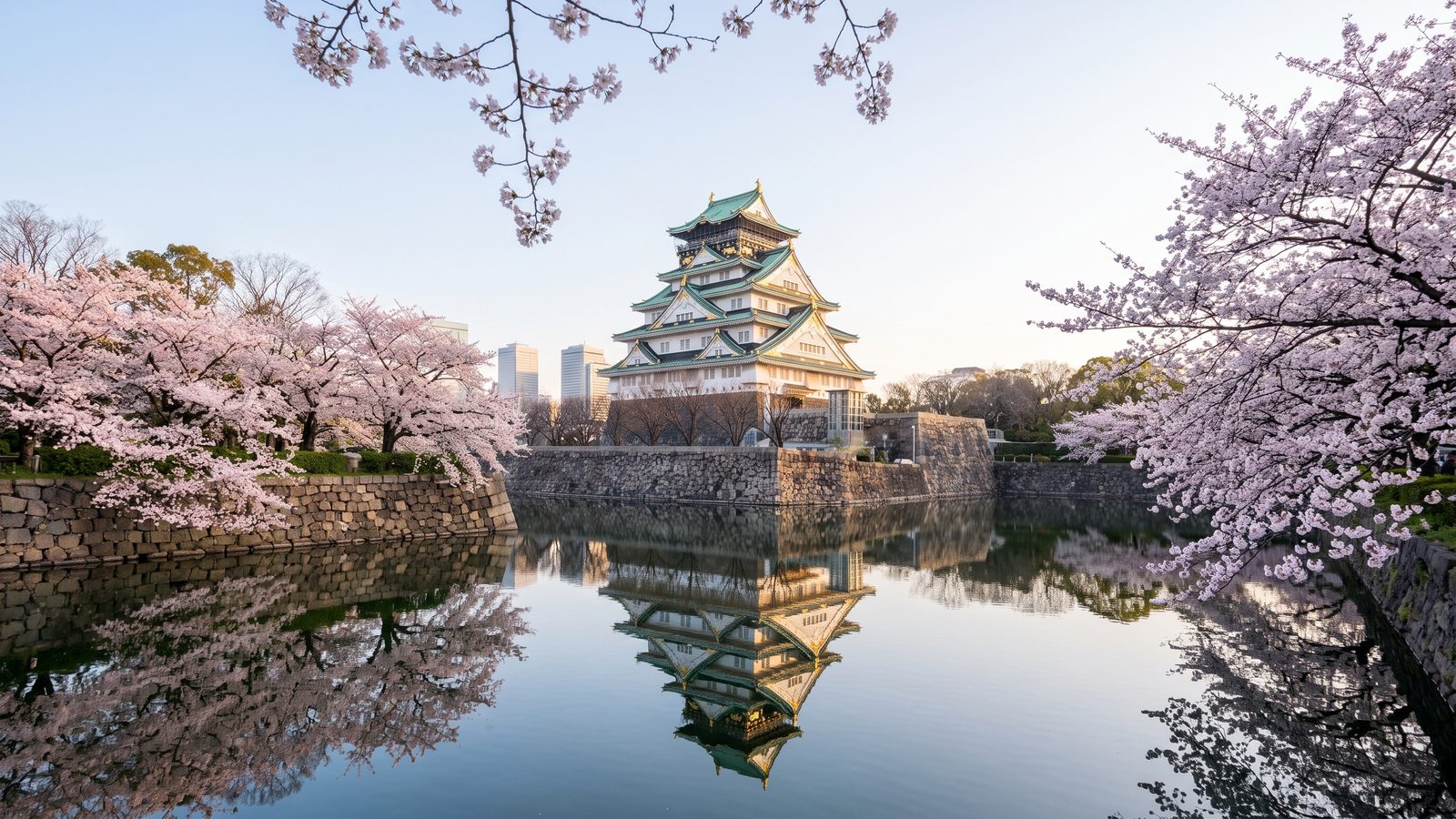
Welcome to the magnificent grounds of Osaka Castle, an iconic landmark built in 1583 by Toyotomi Hideyoshi to unify Japan. Standing before this magnificent fortress, you witness a symbol of resilience that has risen from its ashes time and again. While the current main tower was rebuilt in 1931 with modern concrete, it faithfully restores the splendor of Hideyoshi’s vision, complete with golden tiger ornaments and green roof tiles.
As you walk along the massive stone walls and deep moats, you step directly into an era of shoguns, samurai, and fierce sieges. History breathes through every stone here, connecting the grandeur of the late Momoyama period with the vibrant spirit of modern Osaka.
Listen to a sample
The opening of this tour, exactly as AllTours narrates it on site.
What you'll hear on this tour
Stop 1. Colossal Stones and Defensible Grandeur
Look closely at the colossal ishigaki, the castle stone walls. You stand before massive granite blocks, some weighing over one hundred tons, perfectly fitted together without a drop of mortar. This Edo-period engineering masterpiece creates an impenetrable defensive system alongside the deep inner and outer moats. Above you rises the five-story main keep, or tenshukaku. Notice how its stark white plaster contrasts dramatically with the green roof tiles. Golden tiger and crane ornaments adorn the facade, symbolizing power and protection. Every layer of this design demonstrates strategic brilliance, combining sheer strength with breathtaking aesthetic detail that has defined Osaka's skyline for generations.
Stop 2. Sieges, Ambition, and Erasure
You stand on ground steeped in fierce ambition and conflict. In the late 16th century, Toyotomi Hideyoshi built the original castle to symbolize his unified Japan. However, his vision was short-lived. During the dramatic Sieges of Osaka in 1614 and 1615, Tokugawa Ieyasu's forces completely destroyed the fortress. When the Tokugawa clan later rebuilt the castle, they meticulously buried Hideyoshi’s original stone foundations deep beneath their own. This deliberate architectural act served as a profound statement of absolute power and historical erasure, demonstrating how deeply power struggles shaped the very soil beneath your feet today.
Stop 3. Treasures of Samurai History
Step inside the main keep to explore the museum, a rich repository chronicling the castle's turbulent past. As you ascend through the exhibits, you encounter authentic samurai armor and weaponry, allowing you to feel the physical weight of Japan's warrior history. Marvel at exquisite folding screen paintings depicting the era of Toyotomi Hideyoshi in vivid detail, alongside a detailed replica of his legendary Golden Tea Room. Meticulous displays walk you through the fortress's repeated destructions and remarkable rebuildings. Here, the legendary battles, political intrigue, and cultural triumphs of historical Osaka come alive all around you.
Stop 4. Serene Cherry Trees of Nishinomaru
Enter the tranquil expanse of Nishinomaru Garden, ground that once formed part of Toyotomi Hideyoshi's inner sanctum. Today, this vast green lawn offers a peaceful escape, filled with over 600 cherry trees. If you visit in spring, you see the garden transform into a magnificent cloud of pink blossoms, perfectly capturing the classic Japanese aesthetic of transient beauty. Along its quiet walking paths, you find the elegant Hokoku Shrine tea house, offering a moment of quiet reflection amidst history. From this vantage point across the lawn, you enjoy one of the most iconic views of the main castle tower.
Stop 5. The Golden Age of Momoyama Culture
Immersing yourself in the castle grounds, you experience the cultural peak of the Momoyama period. Imagine Toyotomi Hideyoshi hosting extravagant tea ceremonies inside his legendary golden tea room, showing off his immense power while honoring refined artistic traditions. This tea practice was far more than drinking tea; it was a profound ritual steeped in Zen principles and a subtle appreciation of aesthetics. That commitment to elegance shaped Japanese hospitality and artistic expression for centuries. As you admire the castle’s refined architectural flourishes, you see the lasting spirit of this golden age echoing through its design.
Stop 6. Reflections Across Ancient Moats
Gaze across the vast grounds and observe how the formidable wet moats mirror the castle’s majestic silhouette on their shimmering surface. Beyond the water, Nishinomaru Garden spreads out in a lush green expanse that bursts into pink blossoms during spring. Looking up from the grounds or out from the top of the main keep, you take in a panoramic sweep of modern Osaka. You witness a breathtaking juxtaposition where ancient samurai fortifications meet the sprawling skyline of contemporary urban Japan, reminding you of how this historic stronghold anchors the identity of a bustling modern metropolis.
Planning your visit
- Best time to go
- Spring during cherry blossom season, or early morning to enjoy peaceful views before peak visitor crowds arrive.
- Approximate duration
- About 1.5 to 2 hours
- Where to start
- Outer moat area near the main entrance to the castle park grounds.
Access and conditions change seasonally — check the official site before you go.
Frequently asked questions
Is Osaka Castle worth visiting?
Yes, Osaka Castle is worth visiting for its towering stone walls, extensive museum on samurai history, beautiful surrounding park, and stunning historic architecture.
How long do you need at Osaka Castle?
Most visitors spend between 1.5 and 2 hours exploring the main keep museum, outer walls, moats, and Nishinomaru Garden.
Who originally built Osaka Castle?
Toyotomi Hideyoshi originally constructed Osaka Castle starting in 1583 to demonstrate his power and ambition to unify Japan.
Keep exploring
Header image is an AI-generated illustration of Osaka Castle. AllTours.ai is an AI audio tour guide — point your camera at any landmark and hear its story.