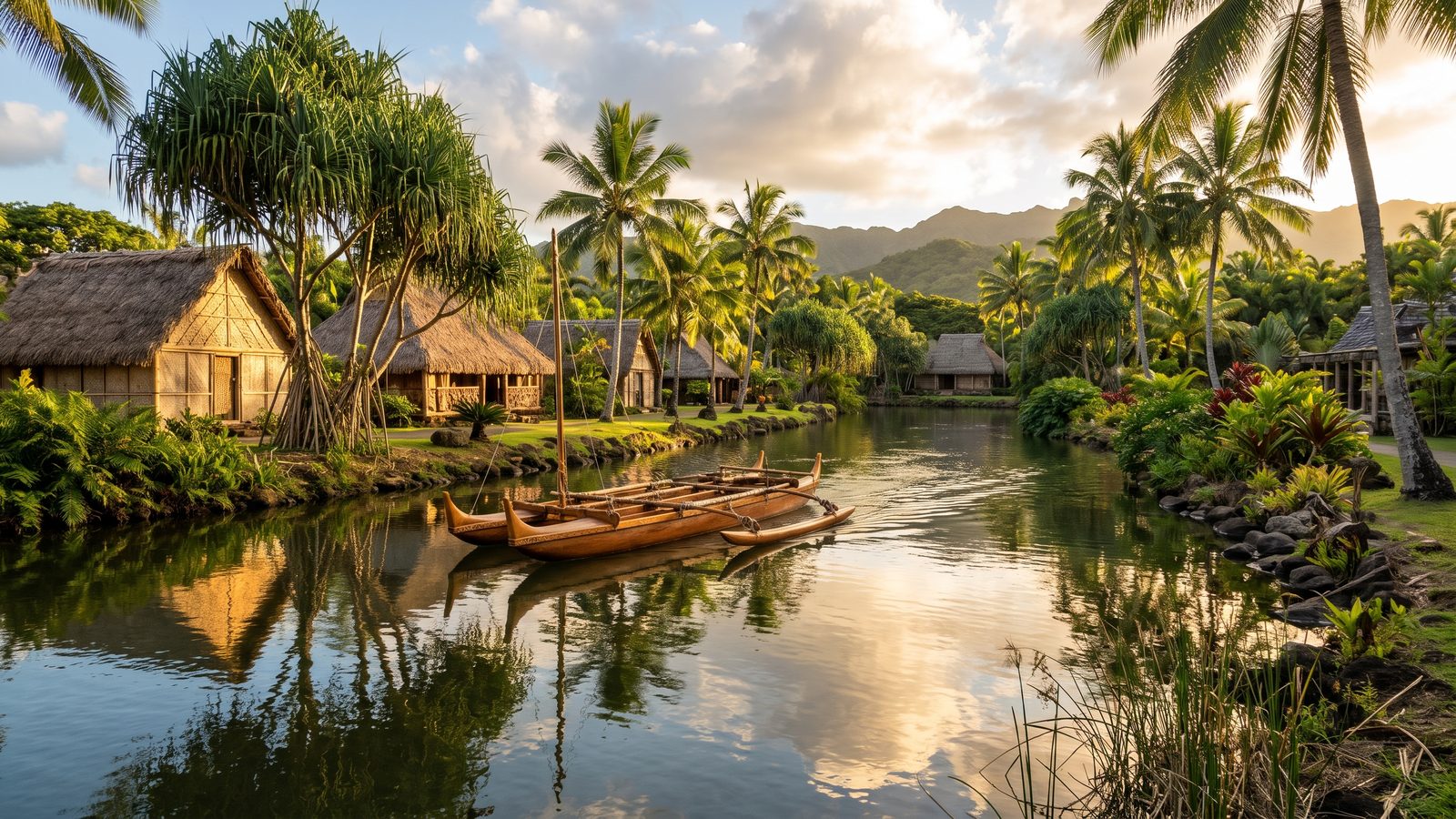
Step into Laie on Oahu's North Shore to experience a living tapestry of Pacific heritage. Established in 1963 by the Church of Jesus Christ of Latter-day Saints, the Polynesian Cultural Center brings together cultural ambassadors from across the Pacific islands. As you walk through these immersive grounds, you encounter authentic island traditions, ancestral arts, and time-honored crafts that continue to preserve the rich, vibrant identities of Polynesia.
This self-guided audio tour leads you through traditional architecture, ocean-going canoes, and living cultural demonstrations. You explore how islanders adapt natural materials for daily life while maintaining a deep spiritual connection to their land and ocean heritage, ensuring these ancient stories continue to thrive for generations to come.
What you'll hear on this tour
Stop 1. Vessels of the Pacific Voyagers
You stand before double-hulled ocean canoes, the vital lifeblood of Polynesian exploration and island connection. Master navigators crafted these floating islands using every part of the coconut palm and local natural resources. As you examine each lashed plank, you appreciate the immense resourcefulness that allowed ancient voyagers to cross thousands of miles of open Pacific Ocean. They navigated using only the wind, stars, and an intimate understanding of ocean currents. These magnificent vessels did not merely carry people; they carried entire cultures, ancestral knowledge, and sacred traditions across vast ocean distances, weaving a shared heritage across the Pacific that you can still feel today.
Stop 2. A Vision Born in Laie
You walk through a vibrant living hub established in 1963 by the Church of Jesus Christ of Latter-day Saints. Before this center existed, Laie was primarily a quiet agricultural corner of Oahu. The ground-breaking vision brought together authentic cultural ambassadors from Samoa, Fiji, Aotearoa, Hawaii, Tahiti, and Tonga. Rather than simple performers, these islanders share their living ancestral traditions, languages, and stories. As you explore, you witness a deliberate, ongoing effort to counteract the erosion of island identities in a rapidly changing world, transforming a former agricultural landscape into a cohesive, thriving tapestry of Pacific heritage.
Stop 3. Stories Hammered into Bark
You admire vibrant tapa cloths adorning traditional structures throughout the village grounds. Artisans meticulously hammer this bark fabric by hand, turning a demanding ancient craft into a visual narrative of lineage, status, and spiritual belief. As you observe the subtle variations in color and design, you see the distinct creative traditions of different island groups, ranging from the bold geometric motifs of Samoa to the delicate floral impressions of Tahiti. These textiles are much more than mere decoration; they are sacred expressions of ancestral wisdom passed down through generations of women who dedicate their lives to preserving this living art form.
Stop 4. Mastery of Natural Engineering
You examine the structural ingenuity of these traditional island dwellings. Ancient builders crafted durable post-and-beam frameworks using natural materials like woven pandanus leaves for roofing, creating natural ventilation that withstands tropical conditions. As you look at the elevated floors, you see a practical environmental adaptation designed to deter pests and protect against flooding. Notice how the very orientation of these structures aligns with prevailing ocean winds and celestial navigation pathways. Without modern building tools, these master builders applied load-bearing principles and deep environmental knowledge to construct shelter perfectly attuned to their lush tropical surroundings.
Stop 5. Living Canopy of Island Botanicals
You breathe in fresh air filtered through lush tropical foliage as you explore the grounds. Towering hala trees drop intricate prop roots that form a natural scaffolding across the landscape. As you listen, you might hear the distinct call of the native ʻapapane honeycreeper flitting through the high canopy, signaling a healthy ecosystem. Look down at the waters around you to see sunlight dappling broad, heart-shaped taro leaves. These vital plants serve as a cornerstone of the traditional Hawaiian diet and a timeless symbol of sustenance, highlighting how islanders carefully cultivate nature's resilience and beauty.
Stop 6. Living Hands of Ancient Masters
You watch skilled artisans shape raw island materials into functional masterpieces using time-honored techniques. Master carvers carefully sculpt wood into intricate designs that evoke ancestral spirits and natural forms. As you feel the texture of hand-woven mats and baskets, you appreciate the immense patience required to transform raw pandanus fibers into durable, beautiful items for daily living. Look at the vibrant, natural dyes extracted directly from local plants, used to paint symbolic patterns onto tapa cloth. Every deliberate movement of these artisans provides a tangible, living connection to ancestral heritage, ensuring ancient crafts flourish today.
Planning your visit
- Best time to go
- Afternoon to early evening offers ideal lighting and pleasant temperatures on Oahu's Windward Coast.
- Approximate duration
- about 3 to 4 hours
- Where to start
- Begin at the main entrance plaza near the central lagoon in Laie.
Access and conditions change seasonally — check the official site before you go.
Frequently asked questions
Is Polynesian Cultural Center worth visiting?
Yes, it offers a unique, immersive opportunity to learn about six distinct Pacific island cultures through authentic architectural villages, traditional crafts, and living cultural demonstrations.
How long do you need at Polynesian Cultural Center?
Visitors typically spend between three and five hours exploring the various island villages, viewing canoe demonstrations, and interacting with cultural ambassadors.
When was the Polynesian Cultural Center founded?
The Polynesian Cultural Center was established in 1963 by the Church of Jesus Christ of Latter-day Saints to preserve Pacific island traditions and share ancestral cultures.
Keep exploring
Header image is an AI-generated illustration of Polynesian Cultural Center. AllTours.ai is an AI audio tour guide — point your camera at any landmark and hear its story.