Welcome to the Rocky Mountains, a majestic North American mountain range shaped over tens of millions of years by tectonic forces and ancient glaciers. Standing amidst towering summits like Longs Peak, you enter an untamed landscape of pristine alpine lakes, dense evergreen forests, and fragile tundra. From ancient indigenous trails to historic Gold Rush routes, these peaks carry a deep human legacy alongside their wild beauty.
This self-guided audio tour leads you through dramatic elevation zones and incredible ecosystems. Experience crisp mountain air, spot resilient wildlife like elk and bighorn sheep, and marvel at turquoise waters cradled in glacial valleys as you explore at your own pace.
Listen to a sample
The opening of this tour, exactly as AllTours narrates it on site.
What you'll hear on this tour
Stop 1. A Tectonic Marvel and Living Legacy
You stand amidst the majestic Rocky Mountains, a colossal range formed tens of millions of years ago through the slow dance of tectonic plates. Ancient indigenous trails whisper stories of survival across these heights, while later explorers and Gold Rush dreamers left their mark on the landscape. As you look around, towering summits like Longs Peak rise above pristine alpine lakes and vast pine forests. This expansive wilderness serves as a vital watershed feeding distant rivers and a home to elk, bighorn sheep, and bears. Every sweeping vista reveals a profound history of geological time, human resilience, and untamed natural beauty.
Stop 2. Masters of the Extreme High Altitude
You enter the domain of North America's most resilient wildlife as you scan the mountain valleys. Watch cliff faces closely for bighorn sheep, whose remarkable agility lets them navigate nearly impossible vertical rock slopes. In autumn, you might hear the haunting bugle of a bull elk echoing through the crisp air during the ancient ritual of the rut. Listen for the distinct high-pitched call of the tiny pika, diligently stockpiling hay among the scree slopes to survive harsh winters. From soaring golden eagles to elusive grizzly bears, each creature plays a vital role in this delicate ecosystem, thriving in an environment defined by untamed endurance.
Stop 3. Life Across Shifting Elevation Zones
As you travel upward, you witness how plant life dramatically shifts with every change in elevation. You start in montane forests of ponderosa pine and shimmering golden aspens before ascending into subalpine groves of lodgepole pine, Engelmann spruce, and subalpine fir. Near the treeline, you see krummholz trees—twisted and stunted by fierce winds—clinging stubbornly to the rock. Beyond this boundary lies the delicate alpine tundra, a vibrant summer carpet of resilient wildflowers and low-growing cushion plants. In this living laboratory of adaptation, every drop of melting snow recharges vast continental watersheds, sustaining complex ecosystems far down below these towering peaks.
Stop 4. Footsteps Through Glacial History
You feel the thin, crisp air fill your lungs as your feet trace paths carved by ancient glaciers, indigenous peoples, and early explorers. Hiking here takes you past scented pine forests into stark, open alpine tundra. You traverse ancient glacial cirques where distant marmot whistles break the quiet, or push your limits toward soaring 'fourteeners' like Longs Peak for panoramas across the Continental Divide. Serene trails lead you to hidden sapphire lakes reflecting sharp mountain ridges. Along these routes, resilient bristlecone pines—some thousands of years old—stand as silent witnesses to centuries of human passage across this challenging, rewarding wilderness.
Stop 5. Sculpted Granite Peaks and Glacial Lakes
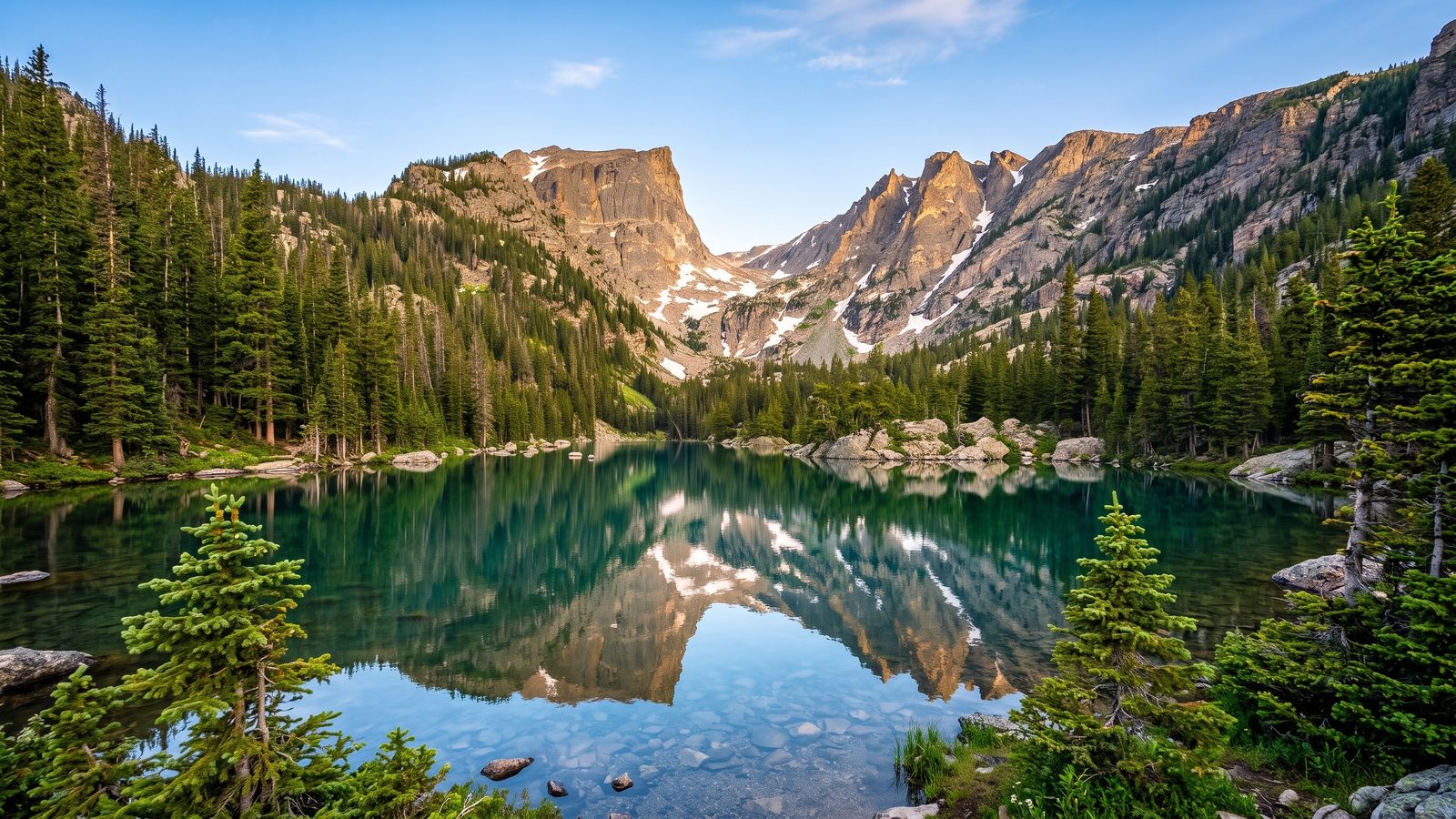
Gazing across the panorama, you see how ancient tectonic uplift and glacial erosion carved these jagged granite and metamorphic peaks. Massive ice sheets scooped out U-shaped valleys, leaving clear turquoise alpine lakes that mirror the deep blue sky. Sharp arêtes pierce the clouds, holding snowfields even through the height of summer. You observe the dramatic timberline, where dense subalpine firs give way to exposed tundra filled with seasonal wildflower displays. This striking contrast between dark evergreen forests, sheer vertical rock faces, and fragile high-altitude meadows encapsulates the raw, untamed beauty that makes the Rocky Mountains so profoundly awe-inspiring.
Stop 6. Resilient Trees of the Mountain Slopes
Step into the forest and discover a masterclass in nature's adaptability. Straight lodgepole pines dominate areas recovering from wildfire, relying on intense heat to open their cones and release seeds. Higher up, Engelmann spruces and subalpine firs form dark spires designed to shed heavy snow and shelter wintering wildlife. Pale aspen groves stand out in striking contrast, operating as massive clonal colonies where an entire stand shares a single underground root system. Indigenous peoples historically gathered sustenance, medicine, and tools from these woods. Today, millions of evergreen needles filter the crisp mountain air, creating a vital breathing lung for the continent.
Planning your visit
- Best time to go
- Summer to early autumn for snow-free high-altitude hiking and vibrant wildflower displays, or early fall for golden aspen foliage and elk bugling.
- Approximate duration
- About 3 to 5 hours
- Where to start
- Estes Park or Grand Lake, the primary gateway access points for exploring the mountain trails and scenic drives.
Access and conditions change seasonally — check the official site before you go.
Frequently asked questions
Is Rocky Mountains National Park worth visiting?
Yes, the Rocky Mountains offer spectacular high-alpine scenery, iconic fourteeners like Longs Peak, pristine glacial lakes, and rich opportunities to view wildlife like elk and bighorn sheep in their natural habitats.
How long do you need at Rocky Mountains?
A half-day to full-day drive allows you to experience major scenic viewpoints and shorter forest trails, while two to three days permit extensive high-altitude hiking and wildlife watching across different elevation zones.
How were the Rocky Mountains formed?
The Rocky Mountains began forming tens of millions of years ago through powerful tectonic plate activity that uplifted granite and metamorphic rock, followed by extensive glacial erosion that carved U-shaped valleys and sharp peaks.
Keep exploring
Header image is an AI-generated illustration of Rocky Mountains. AllTours.ai is an AI audio tour guide — point your camera at any landmark and hear its story.