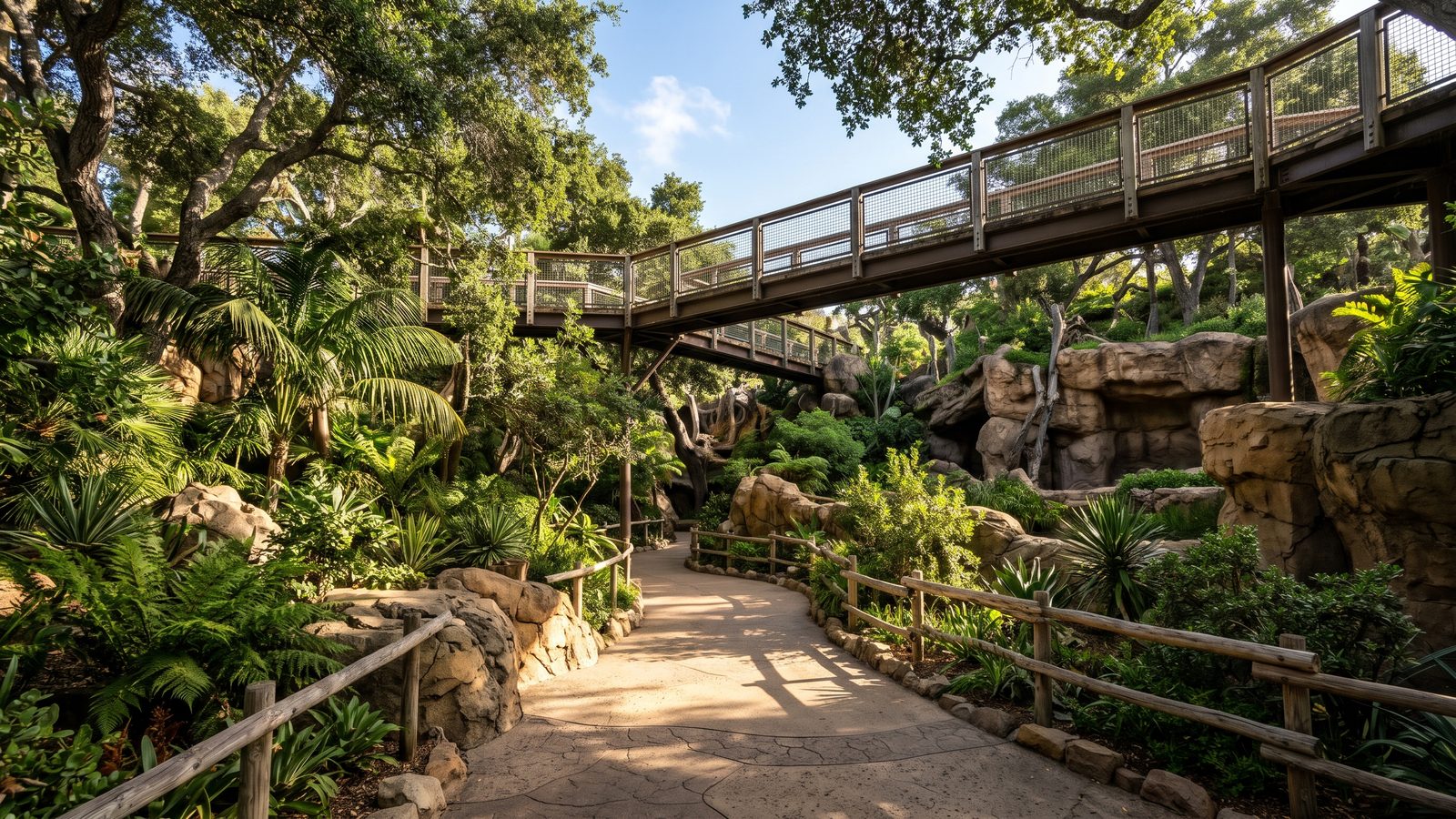
Welcome to San Diego Zoo, a world-famous 100-acre sanctuary founded in 1916 by Dr. Harry Wegeforth. Known worldwide for pioneering cage-free, open-air enclosures, this living haven houses over 3,500 animals across diverse, carefully recreated global habitats. As you wander through lush foliage, ancient forests, and arid deserts, this self-guided audio tour brings you face-to-face with remarkable wildlife while revealing the zoo's rich heritage of conservation, exploration, and education.
From canopy walkways floating above vibrant greenery to groundbreaking species recovery programs like the California condor, every step offers a new adventure. Immerse yourself in authentic naturalistic settings and experience a century of animal welfare innovation as you discover how a small collection of exposition animals grew into a global wildlife sanctuary.
Listen to a sample
The opening of this tour, exactly as AllTours narrates it on site.
What you'll hear on this tour
Stop 1. Dr. Wegeforth's Vision of Sanctuary
You stand on ground first envisioned in 1916 by Dr. Harry Wegeforth, an ear specialist who dreams of a zoological garden free from restrictive cages. His bold initiative begins with just a handful of animals left over from the Panama-California Exposition, including a lion and a bear. Early acquisitions, such as creatures from the famed Hagenbeck animal training menagerie, quickly expand the collection. You witness the results of a dedicated team working tirelessly to build an authentic sanctuary rather than a simple exhibit. Every habitat you see is meticulously planned as a scientific institution, carefully mimicking natural wild environments and marking a dramatic departure from the sterile cages of the past.
Stop 2. Triumphs of California Condor Recovery
You look closely at this dedicated habitat for the California condor, where you witness a dramatic triumph of wildlife conservation. Decades ago, these magnificent birds face near extinction, their global numbers reduced to just a tiny handful. Through intensive captive breeding programs managed directly at this sanctuary, dedicated teams bring them back from the absolute brink. As you observe their immense wingspan, you see living proof of successful reintroduction efforts that release these powerful fliers back into their wild, natural skies. You are not just viewing an extraordinary bird; you are experiencing the vital restoration of a crucial ecological role that preserves our natural world for future generations.
Stop 3. Canopy Walkways and Jungle Thrills
You step into the heart of pure adventure as static displays fade away around you. Feeling an adrenaline rush, you navigate suspended canopy walkways set high within vibrant greenery, mimicking the exhilarating freedom of a gibbon swinging effortlessly through the treetops. These carefully curated environments put you directly in the paws, fins, or wings of the animals, offering an immersive perspective on survival, strategic hunting, and adaptation. You do not simply observe wildlife from a distance; you actively participate in a thrilling, real-time expedition into the wild that ignites your inner explorer and reveals the dynamic realities of life in the jungle canopy.
Stop 4. Expeditions Recreated in Living Dioramas
As you inspect this extraordinary habitat, you realize it is far more than an enclosure—it is a gateway born from the intrepid spirit of global exploration. Imagine zoologists charting remote, uncharted territories around the globe to study species in their natural habitats. Every detail you see here, from dramatic volcanic rock formations mimicking ancient lava flows to carefully selected native plants, transports you directly to those wild landscapes. You stand before a living diorama, the direct result of historical expeditions that expanded human knowledge and successfully brought the fascinating wonders of far-off wild places closer to home.
Stop 5. Pioneering the Art of Wildlife Photography
You discover the rich history of wildlife photography that developed across these grounds long before digital cameras existed. In the early days, capturing animals demands tremendous patience and skill due to heavy equipment, slow film speeds, and unpredictable animal movements. Photographers use massive flashbulbs, firing blinding bursts that briefly illuminate scenes to create stark, high-contrast portraits. As you imagine those pioneering visual storytellers carefully composing each shot, you gain a deep appreciation for their dedication. These historical images serve as dramatic visual records, capturing the very essence of magnificent creatures for an eager world that could previously only dream of seeing them.
Stop 6. A Living Classroom for Future Generations
You find yourself standing inside a vibrant living classroom designed to ignite lifelong curiosity about the natural world. Programs like Junior Zookeepers give young minds direct, hands-on experience in responsible animal care while instilling fundamental scientific principles and critical thinking. Beyond these grounds, community outreach initiatives bring vital lessons on biodiversity and ecosystem protection straight into local classrooms. As you explore the park, carefully crafted interpretive signage guides your journey, telling compelling stories about animal behaviors, unique physical adaptations, and ecological niches. Every encounter along your path presents an inspiring opportunity to learn, discover, and protect planet Earth.
Planning your visit
- Best time to go
- Mornings right at opening are ideal, as animals are most active and temperatures in Balboa Park remain comfortable.
- Approximate duration
- about 3 to 4 hours
- Where to start
- Begin at the Main Entrance plaza near the Balboa Park central walkway.
Access and conditions change seasonally — check the official site before you go.
Frequently asked questions
Is San Diego Zoo worth visiting?
Yes, San Diego Zoo is world-renowned for its pioneering open-air, cage-free habitats spanning 100 acres in Balboa Park. With over 3,500 animals and historic conservation triumphs like the California condor program, it offers an unmissable experience for nature lovers.
How long do you need at San Diego Zoo?
Plan to spend between 3 and 5 hours to fully explore the zoo's diverse habitats, canopy walkways, and educational exhibits at a comfortable pace.
How was San Diego Zoo founded?
San Diego Zoo was established in 1916 by Dr. Harry Wegeforth. It started with a small collection of animals left over from the Panama-California Exposition, evolving into a world leader in naturalistic habitat design.
Keep exploring
Header image is an AI-generated illustration of San Diego Zoo. AllTours.ai is an AI audio tour guide — point your camera at any landmark and hear its story.