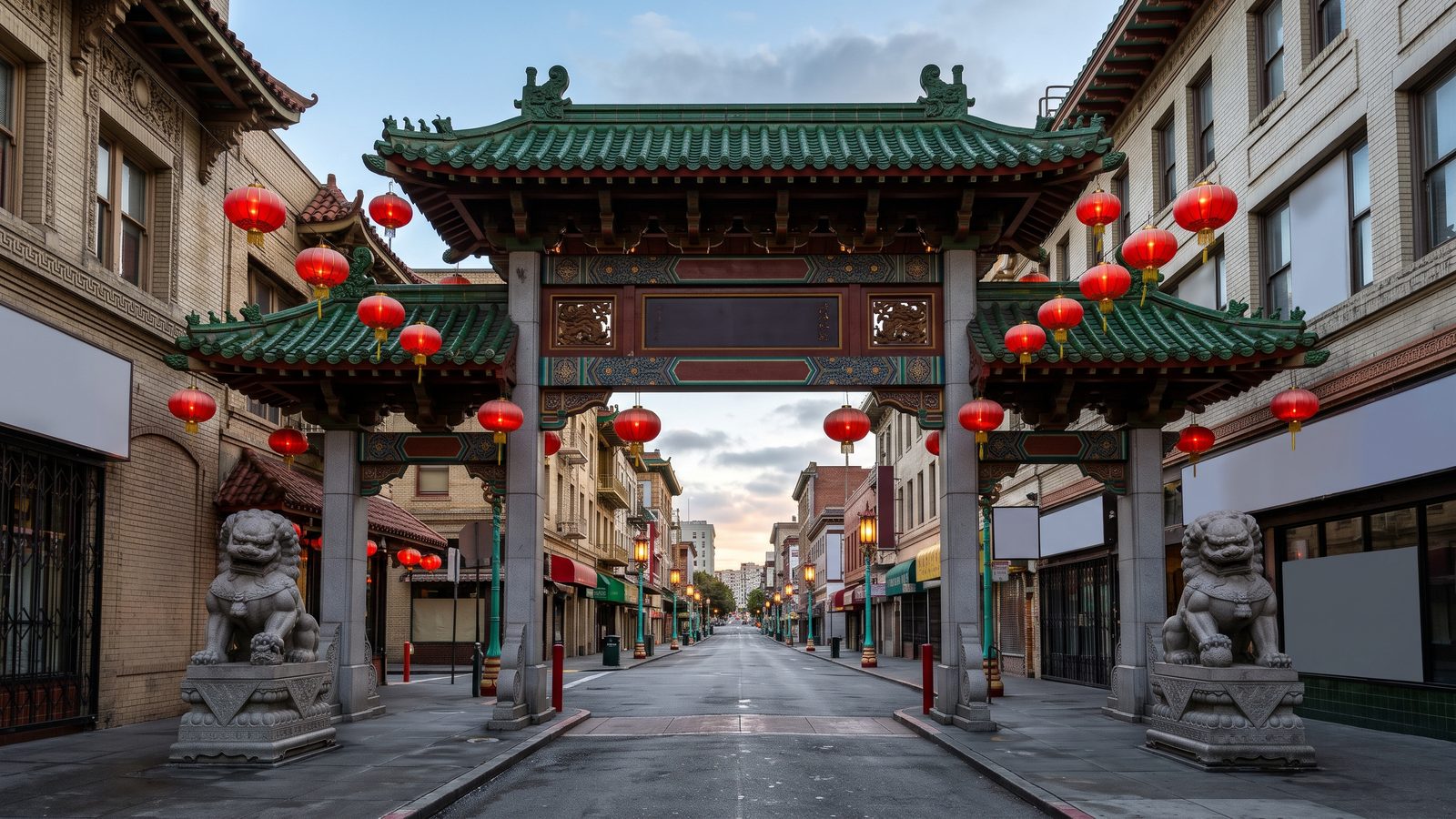
Step into North America's oldest Chinatown, a resilient district born during the 1840s California Gold Rush. Passing through the iconic Dragon Gate, you enter a vibrant world of green pagoda roofs, historic alleyways, and deep-seated traditions. Rebuilt after the 1906 earthquake, this iconic neighborhood stands as an enduring symbol of community pride, cultural preservation, and triumph over hardship, welcoming visitors to experience its living heritage today.
As you wander past aromatic bakeries and bustling markets, Cantonese conversations echo through the streets. From hidden upper-floor temples along Waverly Place to artisan fortune cookie makers in Ross Alley, this self-guided tour leads you through the sights, sounds, and flavors that define San Francisco's Chinatown.
Listen to a sample
The opening of this tour, exactly as AllTours narrates it on site.
What you'll hear on this tour
Stop 1. Pagodas, Dragons, and Sacred Gates
As you walk through the iconic Dragon Gate on Grant Avenue, notice its guardian lions and traditional archway constructed in 1969. Looking upward, you see a deliberate architectural landscape created after the 1906 earthquake. Green pagoda-style roofs feature upturned eaves that evoke ancient temples, while vibrant red and gold facades symbolize good fortune. Elaborate ironwork balustrades display stylized dragons and phoenixes representing strength and prosperity. Geometric fenestration frames the windows, inviting glimpses into hidden courtyards. Every intricate detail turned simple brick and mortar into a vivid declaration of cultural heritage.
Stop 2. Resilience Built from Gold Mountain
You stand in a neighborhood forged by intense determination starting in the 1840s, when Chinese immigrants arrived seeking 'Gum Shan' or Gold Mountain. Despite facing severe discrimination and the 1882 Chinese Exclusion Act, the community built a self-sufficient world with its own social and economic network. When the 1906 earthquake and fire destroyed Chinatown, residents defiantly rebuilt both physically and culturally. They forged new identities through paper sons and daughters to navigate restrictive immigration laws. Today, as you walk these streets, you witness a monumental reconstruction that cemented Chinatown as a lasting symbol of Chinese American resilience.
Stop 3. Cantonese Flavors and Iconic Traditions
Your senses awaken as you explore an authentic Cantonese culinary landscape rooted in early immigration from Guangdong province. You discover world-renowned dim sum traditions, where delicate dumplings and flaky pastries served from carts turn dining into a communal ritual. As you pass fragrant teahouses and bakeries offering warm egg tarts, remember that San Francisco's Chinatown also popularized the fortune cookie. Gaze into barbecue shop windows lined with glistening roasted ducks. Every bite here reveals a story of culinary heritage, adaptation, and an enduring passion for rich flavors passed down through generations.
Stop 4. Hidden Alleys and Handcrafted Secrets
You venture beyond the main thoroughfares into labyrinthine side streets where Chinatown’s hidden heart resides. Walking down Waverly Place, ornate balconies lead your gaze to upper-floor spiritual sanctuaries tucked high above the street noise. In historic Ross Alley, you hear the rhythmic clatter of mahjong through open windows and encounter artisans hand-folding fortune cookies. Looking up reveals red and gold cornices adorned with dragon carvings, showing how traditional craftsmanship adapted to American urban life. Exploring these intimate side paths rewards you with glimpses of quiet public art and family businesses thriving for generations.
Stop 5. Dragon Dances and Glowing Lanterns
You experience the neighborhood at its most electric during major seasonal celebrations. During Lunar New Year, hundreds of thousands of exploding firecrackers chase away evil spirits while hundred-foot-long illuminated dragons undulate down the street, navigated by dedicated performers. Families exchange red lai see envelopes carrying blessings of prosperity. In autumn, the Mid-Autumn Festival brings a quieter beauty as paper lanterns cast a soft glow along Stockton Street. Gathering under the full moon, families share traditional mooncakes in a gesture of unity and gratitude, affirming their cultural identity while sharing ancient customs with the world.
Stop 6. Living Heritage and Daily Traditions
You immerse yourself in a vibrant living heritage where Cantonese remains the predominant spoken language across local markets and bakeries. In herbal medicine shops, practitioners offer holistic remedies based on generations of family knowledge. You witness dynamic lion dances performing spiritual blessings during neighborhood gatherings. Outside sacred temples, the aroma of burning joss paper signals continuous ancestral veneration, keeping the past intimately connected to present life. Even sharing dim sum becomes a meaningful ritual strengthening family bonds. Around every corner, you feel the authentic pulse of a community dedicated to honoring its ancestors and preserving its lineage.
Planning your visit
- Best time to go
- Mornings or early afternoons year-round offer lively market scenes and pleasant walking conditions.
- Approximate duration
- About 1.5 to 2 hours
- Where to start
- The Dragon Gate at Grant Avenue and Bush Street.
Access and conditions change seasonally — check the official site before you go.
Frequently asked questions
Is San Francisco Chinatown worth visiting?
Yes, as the oldest Chinatown in North America, it offers a rich blend of historic architecture, authentic Cantonese cuisine, vibrant cultural festivals, and unique alleyways to explore.
How long do you need at San Francisco Chinatown?
Plan for 1.5 to 2 hours for a self-guided walking tour, though spending extra time to enjoy dim sum or browse herbal shops can easily extend your visit.
Why was San Francisco Chinatown rebuilt after the 1906 earthquake?
After the 1906 earthquake destroyed the district, the community rebuilt it with pagoda roofs and traditional motifs to establish a strong cultural identity and cement Chinese American resilience.
Keep exploring
Header image is an AI-generated illustration of San Francisco Chinatown. AllTours.ai is an AI audio tour guide — point your camera at any landmark and hear its story.