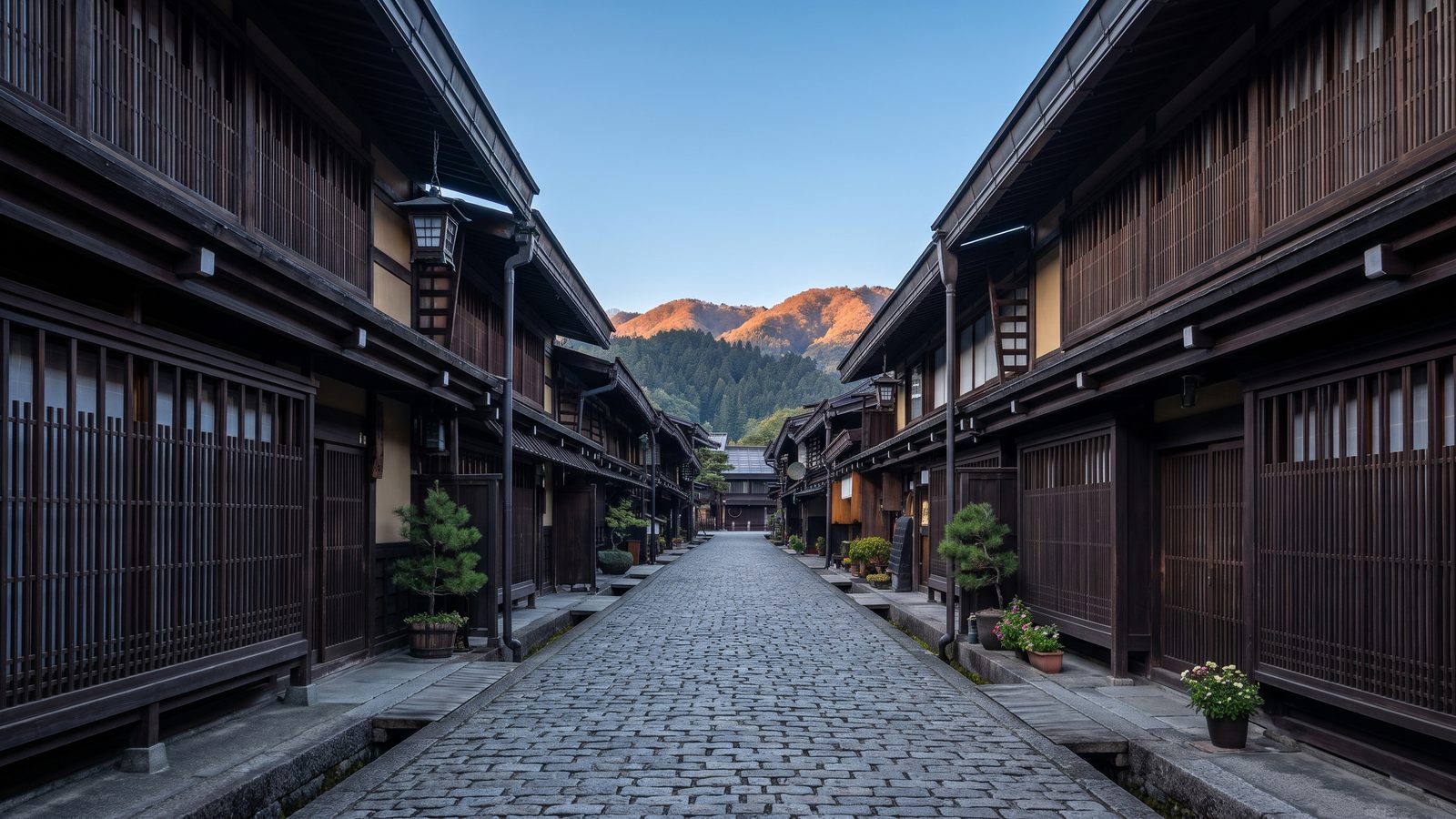
Step back into Japan's Edo period as you explore Sanmachi Suji, Takayama's beautifully preserved merchant district. Tucked away in the scenic Hida Mountains, these narrow cobbled lanes feature dark timber machiya, historic sake breweries, and traditional artisan workshops. Under direct shogunate rule during the feudal era, the town developed a rich culture of carpentry, cuisine, and commerce that remains vibrant and welcoming to travelers today.
This self-guided audio walking tour leads you through the history, unique architecture, and enduring crafts of Takayama's old town. Immerse yourself in the sights, smells, and stories of centuries-old shopfronts, from delicate lacquerware and savory street food to the architectural mastery of Hida's legendary carpenters.
Listen to a sample
The opening of this tour, exactly as AllTours narrates it on site.
What you'll hear on this tour
Stop 1. Genius of the Edo Townhouses
You stand before exquisite Edo-period machiya, traditional wooden townhouses that reveal brilliant architectural secrets. Look at the narrow entrances stretching deep into long plots, a clever design conceived to bypass historic land taxes based on street frontage. Notice the fine koshi lattice windows, which subtly communicate each building's identity: delicate vertical slats indicate merchant residences, while broader horizontal patterns signify sake or miso shops. Overhanging hisashi eaves extend outward to safeguard the white plaster walls from rain and heavy winter snow. Inside, dark cedar timber beams locked together with nail-less joinery showcase enduring craftsmanship alongside serene inner courtyards.
Stop 2. Shogun Rule in the Mountains
You walk through a merchant district whose roots reach back to the late sixteenth century, when the Kanamori clan established Takayama's commercial heart. In 1692, the Tokugawa Shogunate seized direct control of the town to secure Hida's rich timber reserves and the skills of its renowned carpenters. For over 170 years, direct shogunate administration maintained strict architectural standards and urban planning. Tax policies taxed street frontage, inspiring the deep, narrow property plots you see today. Enclosed by the surrounding Hida Mountains, Takayama remained isolated from modern urban expansion, preserving this remarkably intact Edo-period streetscape as a living time capsule.
Stop 3. Flavors of the Hida Valley
You follow rich aromas through the lanes to discover the celebrated flavors of Takayama. Here, highly prized Hida beef takes center stage, famed for its delicate marbling nurtured by the surrounding alpine environment. You sample it as melt-in-your-mouth nigiri or watch it sizzle on a hoba dried magnolia leaf over earthy miso and wild mushrooms. Nearby, vendors grill skewered mitarashi dango rice cakes, brushing them with a comforting savory soy glaze. The region's pristine mountain snowmelt water enhances everything you taste, from crisp local produce and hearty soba noodles to crystal-clear regional sake crafted in historic neighborhood breweries.
Stop 4. Master Artisans and Sacred Treasures
As you explore the historic shops, you discover world-famous artisan traditions born in these mountain valleys. Look for Hida Shunkei lacquerware, famous for translucent golden-yellow and vermilion coatings that highlight the natural grain of cypress and zelkova wood beneath. You also encounter master woodcrafts shaped by the legendary Hida no Takumi, master carpenters known for intricate joinery created entirely without nails. Do not miss the charming Sarubobo dolls displayed throughout the village—faceless red fabric figures traditionally hand-stitched by grandmothers to bring good fortune, ward off evil spirits, and wish safety for expectant mothers.
Stop 5. Living Traditions of Hida
You sense a profound cultural heritage woven into everyday life across Sanmachi Suji. The legendary skill of Hida no Takumi carpenters lives on through sashimono joinery, securing entire wooden structures without metal fasteners. This same spirit of precision enriches delicate handmade wagashi sweets and exquisite seasonal lacquerware. As you stroll, notice the tall wooden storehouses built to house yatai, the magnificent festival floats paraded during the famous Takayama Matsuri. These intricate floats feature mechanical karakuri dolls, marvels of Edo-period engineering meticulously maintained by local families who preserve these living traditions across generations.
Stop 6. Shaped by Alpine Wilderness
You feel the crisp mountain air flowing down from the surrounding Northern Japan Alps, reminding you of the natural forces that shaped Takayama. Dense alpine forests supplied the sturdy zelkova and cypress wood used to construct these traditional townhouses. Nearby, the clear Miyagawa River carries pure snowmelt water essential for local life, traditional crafts, and world-class sake brewing. You notice steeply pitched roofs engineered specifically to shed heavy winter snowfalls and preserve the wooden structures for centuries. Even the delicate moss clinging to courtyard stones reflects the humid, high-altitude ecosystem thriving around this preserved historic enclave.
Planning your visit
- Best time to go
- Morning or early afternoon to visit active merchant shops and sake breweries before evening closing.
- Approximate duration
- About 1 to 1.5 hours
- Where to start
- Sanmachi Suji historic district near the Miyagawa River in central Takayama.
Access and conditions change seasonally — check the official site before you go.
Frequently asked questions
Is Sanmachi Suji worth visiting?
Yes, Sanmachi Suji is widely considered one of Japan's best-preserved Edo-period merchant districts, famous for its historic wooden machiya, sake tasting, regional crafts, and rich mountain culture.
How long do you need at Sanmachi Suji?
Most visitors spend 1 to 2 hours wandering the narrow lanes, exploring shopfronts, sampling Hida beef and local sake, and appreciating the traditional architecture.
Why is Sanmachi Suji so well preserved?
Sanmachi Suji was placed under direct control of the Tokugawa Shogunate in 1692 due to its timber wealth. Its geographic isolation in the Hida Mountains protected it from modern urban redevelopment.
Keep exploring
Header image is an AI-generated illustration of Sanmachi Suji. AllTours.ai is an AI audio tour guide — point your camera at any landmark and hear its story.