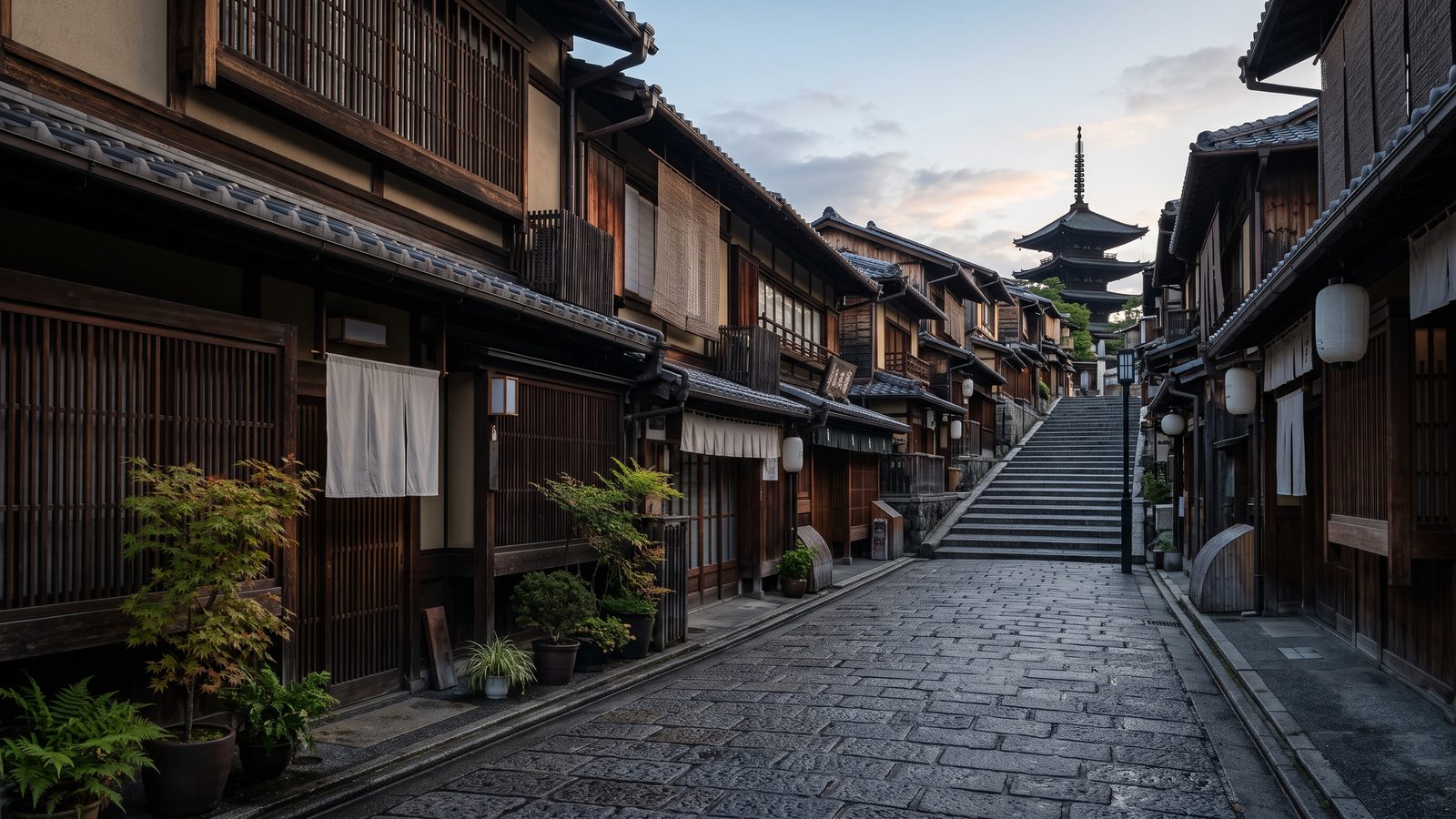
You step onto stone-paved lanes that lead toward Kiyomizu-dera Temple, surrounded by meticulously preserved wooden machiya townhouses. Constructed in the early Heian period to guide pilgrims, Sannenzaka and Ninenzaka offer a living window into ancient Kyoto. As you wander past traditional tiled roofs, lattice windows, and artisan workshops, you tread pathways that have connected travelers, merchants, and devotees for well over a thousand years.
This audio tour guides you through historic architecture, rich local lore, regional delicacies, and centuries-old crafts. You will experience the vibrant commercial and spiritual atmosphere of Edo and Meiji-era streetscapes while soaking in the timeless atmosphere of Kyoto's most picturesque stone slopes.
Listen to a sample
The opening of this tour, exactly as AllTours narrates it on site.
What you'll hear on this tour
Stop 1. Pilgrims and Superstitions of Eight-Hundred-Seven
You tread upon stone paths dating back to 807 AD, originally built as Sanneizaka to guide devout pilgrims to Kiyomizu-dera Temple. Ninenzaka followed shortly after in 808 AD, extending the route toward Kodai-ji Temple and forming an interconnected web of sacred approaches. As you walk past Edo and Meiji-period machiya houses that once served endless crowds of travelers, you step into a living ecosystem of merchants and artisans. Keep your footing carefully: an ancient superstition warns that slipping on Sannenzaka, or Three-Year Slope, might shorten your life by three years, adding a playful layer of historic intrigue to your walk.
Stop 2. Eel Beds and Wooden Lattice Windows
You stand surrounded by traditional Kyoto machiya townhouses, where narrow street frontages reveal deep "eel's bed" layouts created in response to historical land taxes. Notice the dark wooden lattice screens, or koshi, which grant privacy while letting light and fresh air filter through. Above you, gracefully curved kawara tile roofs in the irimoya-zukuri style protect these wooden structures against the elements. Look up at the upper stories to spot mushiko-mado, insect-cage windows designed for discreet ventilation. Every plaster wall and carved timber showcases delicate craftsmanship, turning these preserved Edo and Meiji-era slopes into a functional, open-air gallery of historical urban architecture.
Stop 3. Centuries of Craftsmanship and Keepsakes
As you wander down these historic cobblestone slopes, every restored machiya offers an invitation into Kyoto's rich artisan traditions. You discover delicate Kiyomizu-yaki pottery displaying hand-painted glazes, where you can feel the smooth ceramic surfaces crafted by local masters. Further along, sweet aromas draw you into confectionary shops selling fresh yatsuhashi mochi. Browse displays of hand-painted kyo-sensu folding fans depicting seasonal landscapes, or examine intricate silk and metal kanzashi hair ornaments. These shops are not mere souvenir stands; they are active workshops where skilled artisans preserve generations of heritage, offering you a tangible connection to the spiritual mementos long sought by temple pilgrims.
Stop 4. Sweet Treats and Grilled Street Delicacies
Your senses awaken as enticing aromas waft from traditional wooden storefronts lining the slope. You can sample rich matcha soft-serve ice cream, offering a bittersweet refreshment, alongside delicate seasonal wagashi confections. Be sure to try nama yatsuhashi, Kyoto's signature triangular mochi filled with sweet red bean paste or seasonal ingredients. Warm, steaming stalls tempt you with mitarashi dango—charcoal-grilled rice dumplings glazed in a savory-sweet soy sauce coating. Each traditional snack provides a delicious window into the culinary traditions that have sustained pilgrims and travelers along these atmospheric stone pathways for centuries.
Stop 5. Geiko Encounters and Tea Traditions
You feel a deep cultural rhythm embedded within every machiya on these stone slopes. Traditional crafts flourish here alongside the enduring spirit of omiyage, the customary gift-giving that shares travel experiences with loved ones. If you are fortunate, you might spot a geiko or maiko gliding gracefully past in a vibrant seasonal kimono, embodying Kyoto’s living arts. Behind unassuming teahouse facades, refined rituals of the tea ceremony continue as they have for generations. Pausing for a bowl of whisked matcha or a seasonal sweet connects you directly to chado—the art of tea—inviting quiet reflection amidst the historic beauty surrounding you.
Stop 6. Mindful Steps Along Worn Cobblestones
Feel the worn stone paving beneath your feet as you descend Sannenzaka. Each cobble, smoothed by centuries of pilgrims, merchants, and geisha, invites a slower, more deliberate pace. Your steps echo the historic clatter of wooden geta footwear that once filled these lanes. Remember the old local lore that warns a slip brings three years of bad luck, encouraging you to stay attentive and savor the journey. As you transition onto the slightly gentler slope of Ninenzaka, the narrow path draws you deeper into a tranquil, contemplative stroll wrapped in the subtle scents of burning incense and warm green tea.
Planning your visit
- Best time to go
- Early morning or late afternoon to enjoy quieter stone slopes and softer light on the wooden machiya.
- Approximate duration
- about 1 to 1.5 hours
- Where to start
- At the base of Ninenzaka near Kodai-ji Temple, ascending toward Sannenzaka and Kiyomizu-dera Temple.
Access and conditions change seasonally — check the official site before you go.
Frequently asked questions
Is Sannenzaka and Ninenzaka worth visiting?
Yes, Sannenzaka and Ninenzaka are among Kyoto's most iconic and beautifully preserved historic streets. Lined with traditional wooden machiya townhouses, craft shops, and teahouses, they offer an unmissable walk that feels like stepping into an Edo-period scene on the approach to Kiyomizu-dera Temple.
How long do you need at Sannenzaka and Ninenzaka?
Most visitors spend between 1 and 2 hours strolling the two stone slopes, browsing artisan shops, tasting traditional snacks like yatsuhashi, and taking photos of the historic architecture.
What is the history behind Sannenzaka and Ninenzaka?
Sannenzaka was built around 807 AD and Ninenzaka in 808 AD during the Heian period as sacred pilgrimage approaches to Kiyomizu-dera Temple. Over the centuries, merchants and teahouses filled the surrounding machiya townhouses, creating the preserved historic district seen today.
Keep exploring
Header image is an AI-generated illustration of Sannenzaka and Ninenzaka. AllTours.ai is an AI audio tour guide — point your camera at any landmark and hear its story.