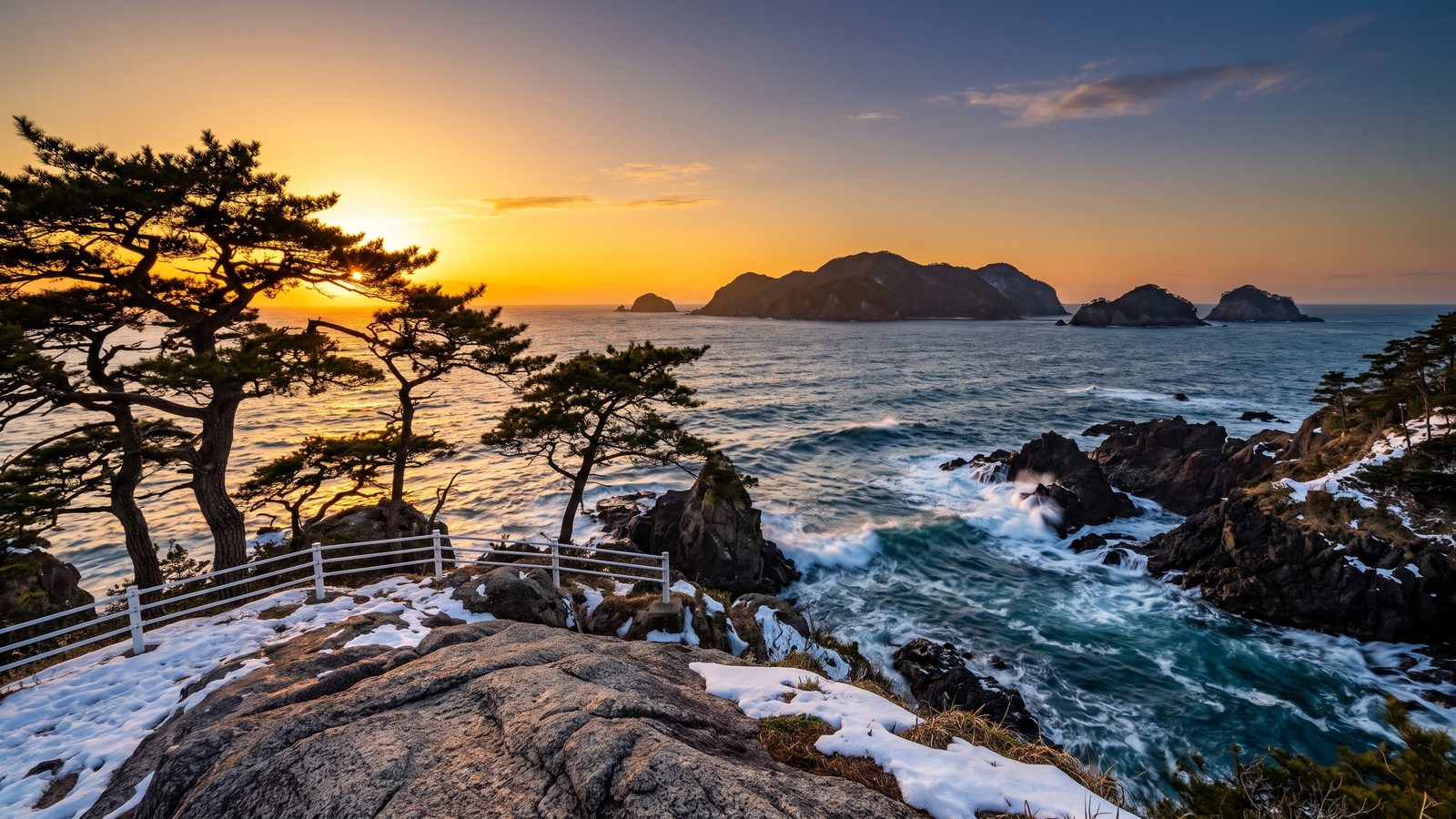
Welcome to the dramatic Sea of Japan coastline near Tsuruga, a historic maritime gateway where verdant mountains plunge directly into deep blue waters. For centuries, this strategic hub connected Japan with the Asian continent, serving as a vital port for international trade and a sanctuary during times of global crisis. As you explore, you will discover sculpted volcanic rock formations, resilient pine forests, and breathtaking oceanic vistas.
This self-guided audio tour reveals the natural power, rich maritime heritage, and deep human stories embedded along Fukui's coast. From ancient mountain ascetics to courageous wartime refugees, the shores of Tsuruga offer an unforgettable journey through history, wild scenery, and local seafood tradition.
Listen to a sample
The opening of this tour, exactly as AllTours narrates it on site.
What you'll hear on this tour
Stop 1. The Gateway of Hope and History
You stand along a vibrant coastline that doubles as a living canvas of human history. Tsuruga's bustling port has served as a vital maritime gateway for centuries, connecting Japan to the Asian continent through rich trade in goods and ideas. Yet, the most profound chapter unfolds during World War II, when this shore earns its reputation as the Port of Humanity. Here, thousands of Jewish refugees fleeing European persecution land after long journeys, finding safe passage and hope. As you look across the azure waters meeting rugged cliffs, you feel the quiet echoes of those courageous arrivals while taking in the fresh sea breeze that still promises legendary coastal seafood.
Stop 2. Granite Cliffs and Volcanic Sands
Gazing across the Sea of Japan, you witness a wild, untamed coastline where deep indigo waters shift into vibrant jade under shifting light. Dramatic granite cliffs, weathered by millennia of salt spray and gale-force winds, stand guard over secluded coves of smooth, dark volcanic sand. Iconic Japanese black pines cling tenaciously to rocky outcrops, casting ancient silhouettes against an expansive sky. The crisp air brings an invigorating mix of sea salt and evergreen scent. When late afternoon arrives, you watch the western sky burst into a spectacular palette of fiery orange and purple, casting a glowing reflection across the water as the horizon fades into a dreamlike canvas.
Stop 3. Sculpted Columns and Hidden Caves
Look down at the stark shoreline where dense green slopes plunge directly into crashing waves. The coastline features dramatic columnar jointing inside ancient volcanic cliffs, formed when ancient lava flows cooled rapidly and contracted. These natural forces carve out sea caves, overhangs, and clean rock pools teeming with marine life. For generations, local fishermen have navigated these treacherous inlets, using sheltered coves to escape sudden maritime storms. As jade-green water collides with dark, jagged rock, dramatic plumes of white spray launch skyward. You are standing at a historic maritime crossroads where the sheer power of northern ocean currents continually reshapes the wild edge of Fukui.
Stop 4. Guardians of the Mackerel Road
Turn your eyes inland to behold the western ridge of the Ryōhaku Mountains, a steep branch of the Japanese Alps towering directly over Tsuruga Bay. These imposing peaks once acted as natural fortresses protecting ancient capitals, while also isolating local communities to cultivate distinct traditions. Dense cedar and cypress forests cover the slopes where yamabushi mountain ascetics historically sought spiritual enlightenment amidst misty waterfalls and sacred mountain spirits. Beneath the craggy summits, deep valleys carved out historic trade routes like the famous Saba Kaido, or Mackerel Road. This vital trail transported abundant seafood from Tsuruga's coast straight to inland cities, securing the port's role as a major trade nexus.
Stop 5. Wild Air and Resilient Pines
Breathe in the crisp, invigorating coastal air, carried across the sea by powerful Siberian winter winds. These relentless gales sculpt the landscape around you, driving snow across coastal mountains and feeding clear rivers that empty into the sea. Notice how gnarled Japanese black pines anchor themselves firmly into rocky ledges, showcasing remarkable resilience against salt spray. Beneath the ocean surface, the warm Tsushima Current drives a rich marine ecosystem teeming with fish and crustaceans. Look toward the sky and you might spot a majestic osprey plunging into the water for a catch, thriving in this nutrient-rich environment where untamed winds and persistent tides shape every creature.
Stop 6. Waves and Snow of the Back Country
As winter takes hold, you witness an elemental transformation along the Sea of Japan. The ocean turns into a grey, tempestuous expanse where massive winter waves, known as fuyu no nami, crash against the shore with ground-shaking force. Heavy snow blankets the rugged terrain meters deep, silhouetting dark pines against soft, diffused winter light. This quiet, snow-bound period reflects the true spirit of urajapan, or back Japan, when coastal communities turn inward, mending nets around warm hearths while nature asserts its quiet dominance. You feel the biting chill in the air, framed by the thunderous roar of winter surf reminding you of nature's raw power.
Planning your visit
- Best time to go
- Spring through autumn for mild weather and vibrant sunsets, or winter to experience dramatic snowy coastlines and wild ocean waves.
- Approximate duration
- About 2 to 3 hours
- Where to start
- Tsuruga Port coastal promenade, near the historic waterfront in Tsuruga, Fukui Prefecture.
Access and conditions change seasonally — check the official site before you go.
Frequently asked questions
Is Sea of Japan Coast near Tsuruga worth visiting?
Yes, the Tsuruga coast offers a captivating blend of dramatic geological rock formations, rich maritime history as World War II's 'Port of Humanity,' scenic mountain backdrops, and world-class fresh seafood.
How long do you need at Sea of Japan Coast near Tsuruga?
Plan to spend between 2 to 4 hours exploring the coastline, taking in key viewpoints, learning about the historic port heritage, and enjoying local coastal cuisine.
Why is Tsuruga known as the Port of Humanity?
Tsuruga earned this title during World War II when its port served as a crucial safe haven and transit point for thousands of Jewish refugees fleeing persecution in Europe, welcomed by the local community upon arrival in Japan.
Keep exploring
Header image is an AI-generated illustration of Sea of Japan Coast near Tsuruga. AllTours.ai is an AI audio tour guide — point your camera at any landmark and hear its story.