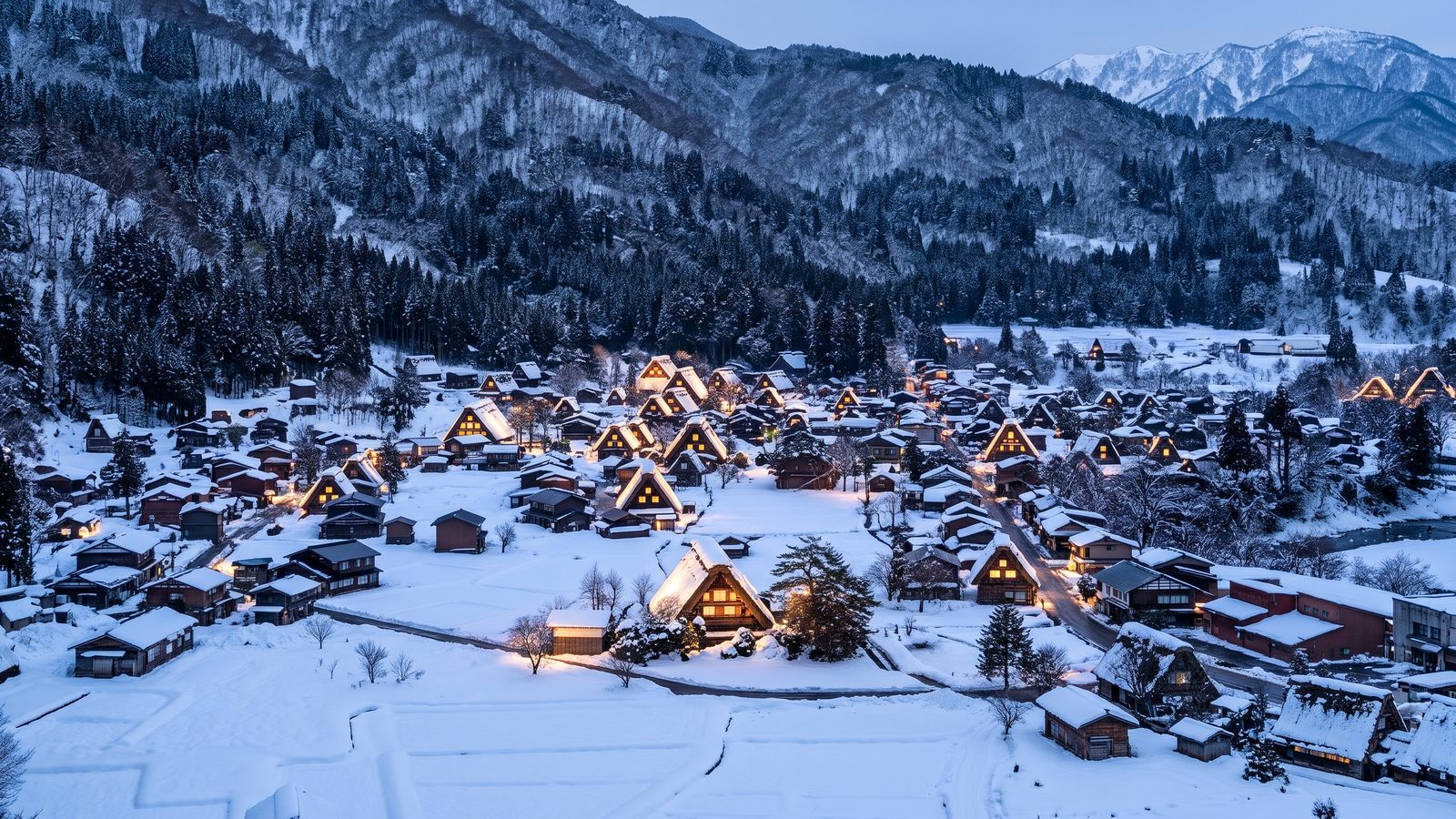
Step into a secluded mountain valley where time seems to stand still among the steep, thatched roofs of Shirakawa-go. Nestled in the dramatic Hida Mountains of Gifu Prefecture, this UNESCO World Heritage site showcases the extraordinary gassho-zukuri farmhouses. Built entirely without nails to withstand heavy winter snow, these iconic homes reflect centuries of communal living, ingenious engineering, and an unbroken connection to Japan's rural heritage.
As you walk through the village, you will discover how mountain isolation fostered a unique way of life centered on sericulture and mutual aid. Listen closely to the rustle of susuki grass thatch and the murmur of the Shogawa River, unlocking the stories preserved in every wooden timber and glowing hearth.
Listen to a sample
The opening of this tour, exactly as AllTours narrates it on site.
Watch the 20-second tour
What you'll hear on this tour
Stop 1. Nail-Free Engineering and Flexible Timbers
Look up at the massive wooden skeleton supporting this gassho-zukuri farmhouse. You are standing before a masterclass in traditional engineering, crafted from sturdy chestnut and zelkova timber bound together entirely by straw ropes and flexible vines. Notice how the structure lacks a single nail, allowing it to flex under immense winter snow and seismic shifts. The thick thatched roof of susuki grass stretches over a meter deep, insulating the interior across seasons. As smoke rises from the central irori hearth inside, it naturally cures the thatch, deterring insects and extending the roof's lifespan. Elevated stone foundations protect the main living spaces from deep mountain snowdrifts.
Stop 2. Centuries of Isolation and Sericulture
Step back into the late Edo period as you consider how this distinct architectural style evolved over two and a half centuries. Deep snow and geography kept this valley isolated until well into the twentieth century, allowing a self-sufficient culture to flourish untouched by the outside world. Look up toward the sprawling attic levels beneath the steeply pitched roof; here, families meticulously cultivated silkworms, driving the village's primary historic economy. When modern developments like the Miboro Dam threatened these communities in the 1960s, villagers united to preserve their ancestral home, eventually earning UNESCO World Heritage recognition in 1995.
Stop 3. The Warmth of Yui and the Central Hearth
You are experiencing the spirit of "yui," an enduring system of communal mutual aid that defines daily life in Shirakawa-go. Imagine dozens of villagers gathering on a single roof, working in harmony without exchanging money to replace the massive thatch before winter arrives. Beyond roof maintenance, this deep interdependence guides shared farming tasks and joyful seasonal festivals. Inside the home, turn your attention to the central irori hearth. This sacred gathering space serves as the cultural heart of the household, where generations sit together around the glowing fire to share meals, pass down ancestral wisdom, and strengthen the bonds of family and community.
Stop 4. The Forested Cradle of the Hida Mountains
Take a deep breath of crisp air filtered by the surrounding cedar and cypress forests of the towering Hida Mountains. This steep landscape creates a unique microclimate that shelters the valley while supplying essential timber for the village's sturdy farmhouses. Listen to the soothing murmur of the snowmelt-fed Shogawa River as it flows past terraced rice paddies that glow emerald green in summer. During winter, meters of heavy snow blanket the terrain, turning thatched roofs into extensions of the mountains themselves. From lush green moss on ancient stones to rushing river waters, nature continuously shapes the rhythm of village life.
Stop 5. A Living Landscape of Thatch and Reflection
Gaze across the valley floor and admire how the iconic gassho-zukuri farmhouses mirror the triangular silhouettes of the surrounding mountain peaks. In winter, pristine snow covers the thatched roofs, transforming the settlement into an ethereal white wonderland against dark evergreen trees. During warmer months, vibrant rice fields and carefully tended crops frame the dark timber walls in a lush tapestry of green and gold. As you watch the Shogawa River wind through the village, you perceive a perfect, timeless harmony between human ingenuity and the natural world, offering panoramic views that feel like a living painting.
Stop 6. Preserving Ancestral Crafts and Re-Thatching
Feel the quiet rhythm of history in a place where ancient traditions remain vital to daily survival. Every few decades, the entire community mobilizes for the monumental task of re-thatching a farmhouse roof, passing down precise straw-layering techniques from elders to youth. This collective effort keeps ancestral craftsmanship alive while reinforcing community ties. Inside these multi-story attics, the legacy of silkworm farming still echoes, reminding you of an industrious past governed by seasonal cycles. As you walk through the village, you witness a living culture where shared heritage and mutual assistance continue to thrive without interruption.
Planning your visit
- Best time to go
- Early morning or late afternoon to avoid peak crowds, or during winter to see snow-covered thatched roofs.
- Approximate duration
- about 2 hours
- Where to start
- Ogimachi Village main entrance area near the Shogawa River bus stop.
Access and conditions change seasonally — check the official site before you go.
Frequently asked questions
Is Shirakawa-go worth visiting?
Yes, Shirakawa-go is a UNESCO World Heritage site celebrated for its uniquely preserved gassho-zukuri thatched farmhouses set against the picturesque Hida Mountains.
How long do you need at Shirakawa-go?
Most visitors spend about two to three hours walking through Ogimachi village, viewing the thatched architecture, and taking in viewpoints.
Why were gassho-zukuri houses built with such steep thatched roofs?
The steeply pitched roofs were designed over centuries to shed heavy winter snow while creating spacious attics for silkworm cultivation.
Keep exploring
Header image is an AI-generated illustration of Shirakawa-go. AllTours.ai is an AI audio tour guide — point your camera at any landmark and hear its story.