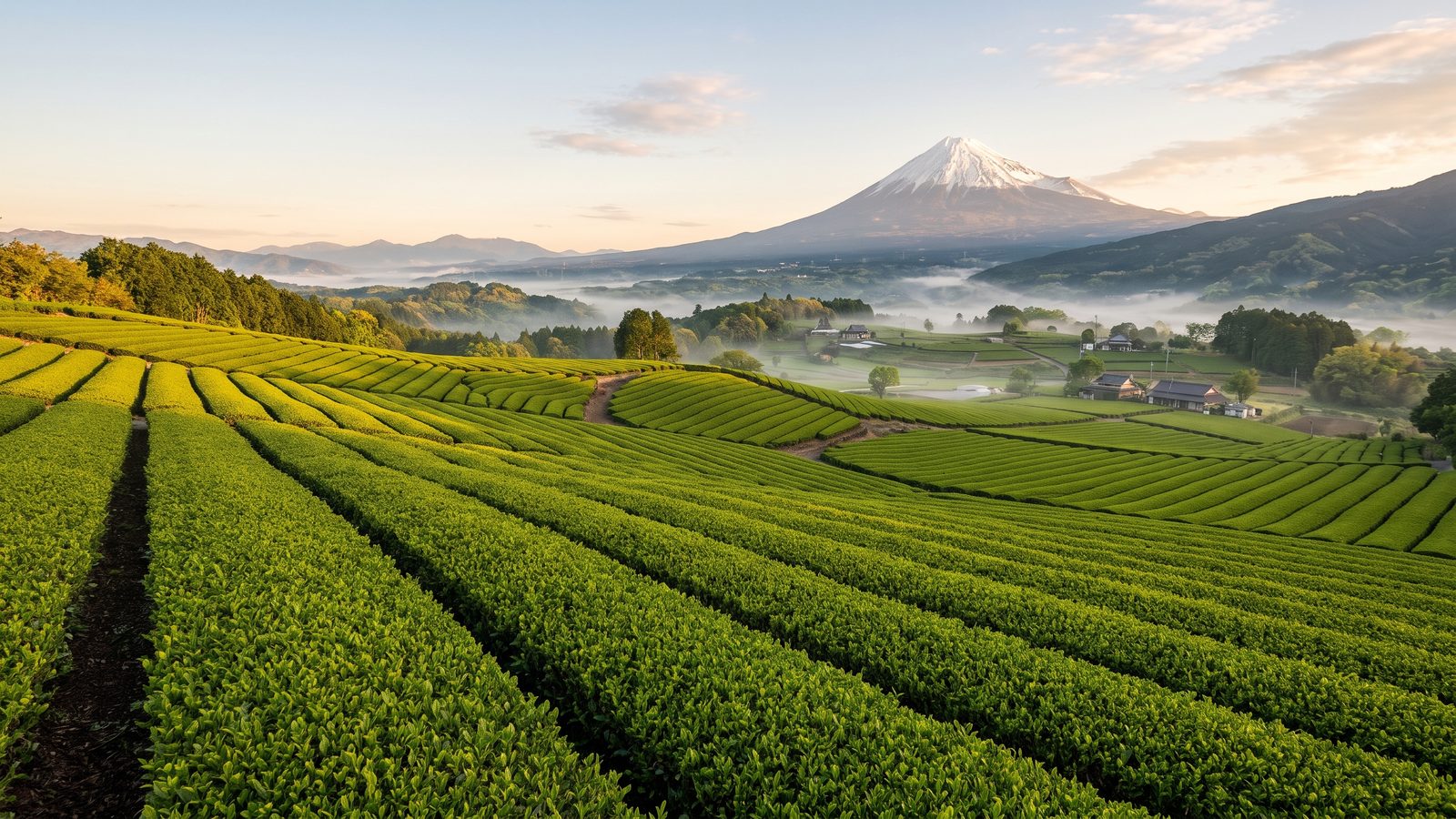
Welcome to the lush tea fields of Shizuoka, the vibrant heartland responsible for nearly half of Japan's green tea production. As you walk among meticulously pruned terraced rows, you step into a landscape shaped over centuries of dedicated agricultural craftsmanship. Here, deep volcanic soil, ocean mists, and clear mountain snowmelt create the ultimate environment for growing world-renowned Sencha. Prepare to experience an enduring connection between nature, culture, and flavor.
This self-guided audio tour leads you along undulating emerald hills under the majestic backdrop of Mount Fuji. You will discover how organic farming traditions, unique mountain microclimates, and precise steaming methods preserve the vibrant color and rich umami notes of Japan’s most celebrated green tea leaves.
Listen to a sample
The opening of this tour, exactly as AllTours narrates it on site.
What you'll hear on this tour
Stop 1. Emerald Terraces and Sacred Mountain Views
You stand before meticulously sculpted emerald terraces that ripple gracefully across rolling hills, following the natural contours of the land. Lifting your gaze, you see majestic Mount Fuji framed perfectly by these vibrant tea slopes, its snow-capped peak providing a breathtaking backdrop. Cool, clean air carries an earthy aroma as daylight dances across the undulating terrain, illuminating shades of green from bright spring shoots to mature leaves. This iconic view, where human art and natural grandeur meet, inspired famous ukiyo-e artists and poets. As morning mists recede or golden evening light paints the scene in warm amber hues, you experience the timeless essence of Japan's deep connection to its land.
Stop 2. The Art and Craft of Sencha
You look closely at the glossy Camellia sinensis leaves that fuel Japan's green tea passion. Unlike teas processed elsewhere, harvesters steam these leaves immediately after picking, halting oxidation and preserving their vivid green color and fresh, grassy notes. This critical step locks in high levels of L-theanine, the amino acid responsible for the smooth umami richness and soothing clarity you taste in every cup. You walk through the historic birthplace of Sencha during the coveted ichibancha, or first flush harvest in spring, when farmers gather the most delicate shoots. Later harvests yield bolder flavors, showcasing how skilled tea masters turn simple leaves into a deeply revered daily ritual.
Stop 3. Generations of Masterful Farming Craft
You observe steep volcanic slopes carved into precision terracing by generations of dedicated farmers. Look closely at the ground to see the traditional chagusaba system, where growers spread wild grasses around bushes as natural fertilizer to enrich the soil and prevent weeds organically. Distinct rows of the resilient Yabukita cultivar thrive here, chosen for its robust flavor and adaptability. Nearby, black kabuse nets shade select fields to slow photosynthesis, boosting the leaves' vibrant green color and savory umami notes. During harvest, skilled hands pick the tenderest shoots, carrying on a labor-intensive tradition that balances human care with the unique demands of this mountainous landscape.
Stop 4. Volcanic Soils and Ethereal Ocean Mists
You feel the rich volcanic earth beneath you, full of minerals from ancient eruptions that grant excellent drainage and key nutrients to the tea plants. Gentle slopes allow morning sunlight to power photosynthesis while offering shaded relief during warm afternoons, preventing bitterness in the leaves. A soft mist often rolls in from the Pacific Ocean or mountain peaks, wrapping the fields in a moist blanket. This natural humidity slows plant growth and concentrates calming L-theanine amino acids, creating the coveted umami profile. Pure mountain snowmelt flows through layers of porous rock to hydrate the tea bushes, filling the air with a clean, woodland fragrance.
Stop 5. The Akaishi Sentinels and Microclimates
You look toward the imposing peaks of the Akaishi Mountains, Japan’s Southern Alps, which act as master architects of Shizuoka's microclimate. Their high elevation creates frequent mists that filter harsh sunlight, encouraging tea plants to grow slowly and develop deep sweet notes. Mineral-rich volcanic runoff and pure snowmelt cascade down these slopes to nourish terraced fields below while the mountain ridge protects delicate leaves from strong coastal winds. Farmers meticulously terrace these gradients to capture every agricultural advantage. Without these towering natural sentinels shaping the temperature, moisture, and airflow, Shizuoka's world-famous mountain sencha simply could not exist in its celebrated form.
Stop 6. The Heartland of Japanese Green Tea
You take in the sweeping emerald panorama that defines Shizuoka, an agricultural heartland cultivating nearly half of Japan's tea. Legends trace cultivation here back to the 13th century, though production expanded dramatically during the Edo period under the patronage of shogun Tokugawa Ieyasu. As you gaze across the terraced landscape, you see rows of tea bushes aligned precisely to catch the sunlight and capture mountain moisture. Each field reflects generations of human dedication and harmony with nature. Take a deep breath of the subtle, fragrant breeze around you and appreciate this living canvas, where ancient cultural traditions remain vibrant in every single leaf.
Planning your visit
- Best time to go
- Spring (April–May) during the first flush (ichibancha) harvest for vibrant green leaves, or clear early mornings year-round for views of Mount Fuji.
- Approximate duration
- about 1.5 to 2 hours
- Where to start
- Nihondaira Plateau or scenic tea plantation trails in Shizuoka City.
Access and conditions change seasonally — check the official site before you go.
Frequently asked questions
Is Shizuoka Tea Plantations worth visiting?
Yes. Shizuoka produces nearly half of Japan's green tea, offering visitor breathtaking views of terraced fields against Mount Fuji, immersive nature walks, and insights into authentic Japanese tea culture.
How long do you need at Shizuoka Tea Plantations?
Most visitors spend around 1.5 to 2 hours walking through the plantation fields, enjoying the scenery, taking photos, and listening to the self-guided audio tour.
What is the history of tea cultivation in Shizuoka?
Tea cultivation in Shizuoka traces back to legends from the 13th century. It expanded dramatically during the Edo period under the patronage of Shogun Tokugawa Ieyasu, growing into Japan's primary green tea region.
Keep exploring
Header image is an AI-generated illustration of Shizuoka Tea Plantations. AllTours.ai is an AI audio tour guide — point your camera at any landmark and hear its story.