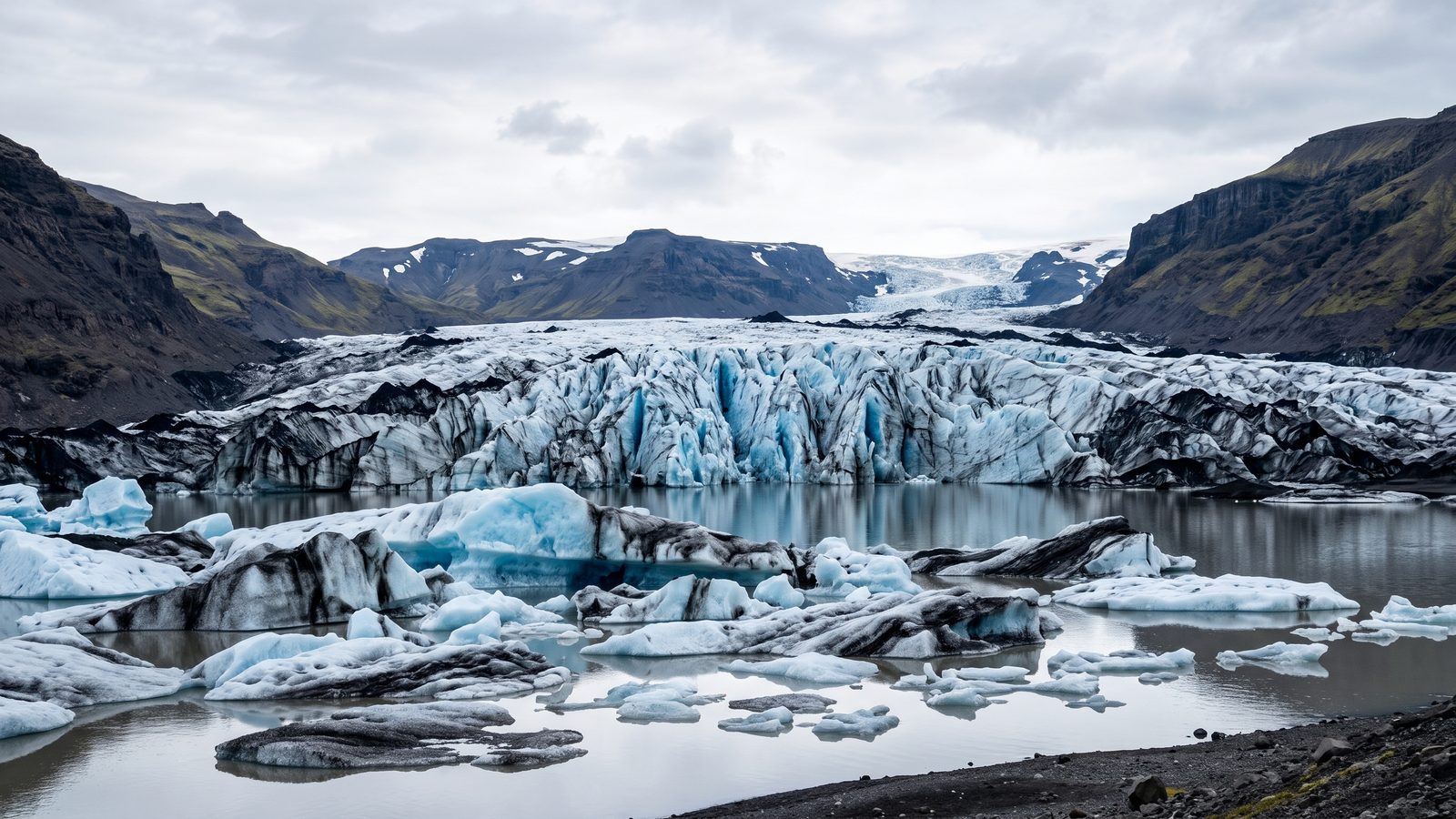
Welcome to Sólheimajökull, a striking outlet glacier branching from Mýrdalsjökull in southern Iceland. As you stand before this frozen titan, you witness a landscape actively shaped by primal forces. Ice compressed over centuries collides with dark volcanic ash, creating a dynamic terrain of deep blue crevasses, seracs, and meltwater channels. This self-guided audio tour guides you along the glacier's edge, highlighting its rich geological history and changing face.
Feel the subarctic wind as you explore a frozen archive of volcanic eruptions and glacial flow. From its retreating edges to its intricate icy textures, Sólheimajökull offers an immersive connection to Iceland's raw nature. Step forward to discover how fire and ice continuously craft this breathtaking frozen river.
Listen to a sample
The opening of this tour, exactly as AllTours narrates it on site.
What you'll hear on this tour
Stop 1. Step Onto the Living Ice
Crisp subarctic air bites at your cheeks as you step toward Sólheimajökull's icy expanse. You stand at the threshold of a true Icelandic wilderness where metal crampons bite into ancient ice beneath your feet. Around you, deep sapphire-blue crevasses cut across the surface, marking immense pressure and shifting weight over time. Navigating this sculpted landscape reveals the sheer power of a living glacier that dwarfs human scale. You feel the thrill of ice walls rising around you, testing your agility against pure frozen energy. Every step along these dynamic ridges offers a humbling glimpse into an untamed world continuously reshaped by raw natural forces.
Stop 2. A Tapestry of Ash and Sapphire
Look closely beneath your boots to see a dense, granular mosaic of ancient water compressed over centuries. Sólheimajökull is not a static block of ice; it is a slow-moving river carved by intense internal pressure. As you gaze across the surface, dynamic crevasses, moulins, and seracs reveal the relentless flow of this frozen entity. Subtle creaks and groans echo as the glacier shifts against underlying bedrock. Black ribbons of ash embedded in the ice tell stories of centuries-old volcanic eruptions, striking against pristine white snow and deep sapphire blues. You are standing on a frozen library of Iceland's fiery past, evolving right before your eyes.
Stop 3. Framing Light, Shadow, and Time
Raise your camera to capture an ever-changing interplay of light and dense crystalline structures. As you peer through the viewfinder, notice how dense ice absorbs longer red wavelengths, reflecting ethereal blues in deep fissures. Low angles highlight the sheer scale of the glacier's icy walls, while higher vantage points reveal intricate meltwater streams winding like veins across its surface. You choose whether to smooth running water with long exposures or freeze every textured detail of the ancient ice with a fast shutter speed. Each frame isolates a fleeting moment in a landscape carved by time, following in the footsteps of early landscape photography pioneers.
Stop 4. Witnessing a Changing Front Line
A biting wind whips across the ice sheet, offering a direct taste of Iceland's subarctic environment. Long winters and cool summers allow this outlet glacier to persist, fed by consistent frigid temperatures and heavy snowfall. As you look at the brilliant white snow fading into intense blue ice, you observe direct evidence of compressed air and extreme pressure over time. However, Sólheimajökull sits on the front line of global change, retreating significantly since 1881. The subtle shift in atmospheric temperature impacts its size year after year. Standing here connects you directly to a delicate climate balance, where warming trends visibly reshape the landscape.
Stop 5. Primal Artistry of Ice and Earth
Take in the dramatic scenery where raw ice collides with rugged volcanic rock. You observe intricate ridges, fissures, and sculpted surfaces carved by the sheer weight of the glacier pushing against the earth. Light glints off crystalline edges before plunging into dark shadows, crafting a shifting panorama in every direction. The contrast between dark volcanic ash and brilliant blue ice forms a striking visual landscape shaped by relentless wind and weather. Even as you stand here, subtle wind gusts carve fresh details into the frozen canvas. You witness a continuous dialogue between ancient volcanic fire and ice, capturing the raw essence of southern Iceland.
Stop 6. Footsteps of Early Glacial Pioneers
Consider the intrepid pioneers who first set foot on this frozen titan without modern equipment or detailed maps. Armed only with grit and basic tools, early explorers ventured onto Sólheimajökull to chart its unpredictable labyrinth of crevasses and ice ridges. You imagine their awe as they navigated shifting ice formations, relying purely on instinct and close observation of the bedrock. Their daring journeys laid the groundwork for modern glaciology and our understanding of dynamic ice flow. As you look out over the frozen expanse, you follow in the tracks of those who pushed human boundaries to unravel the secrets of this formidable Icelandic wonder.
Planning your visit
- Best time to go
- Daylight hours year-round; summer offers longer daylight and milder conditions, while winter brings dramatic ice lighting.
- Approximate duration
- About 1 to 2 hours
- Where to start
- Sólheimajökull Parking Lot, near the glacier lagoon path.
Access and conditions change seasonally — check the official site before you go.
Frequently asked questions
Is Sólheimajökull Glacier worth visiting?
Yes, Sólheimajökull is highly worth visiting due to its accessible walking paths, striking blue ice, black volcanic ash layers, and dramatic evidence of glacial retreat.
How long do you need at Sólheimajökull Glacier?
Most visitors spend between 1 and 2 hours for a self-guided walk along the lagoon and glacier view paths.
What is the history of Sólheimajökull Glacier's retreat?
Sólheimajökull was significantly larger in 1881, but warm climate trends have caused it to visibly retreat over recent decades, exposing a growing glacial lagoon.
Keep exploring
Header image is an AI-generated illustration of Sólheimajökull Glacier. AllTours.ai is an AI audio tour guide — point your camera at any landmark and hear its story.