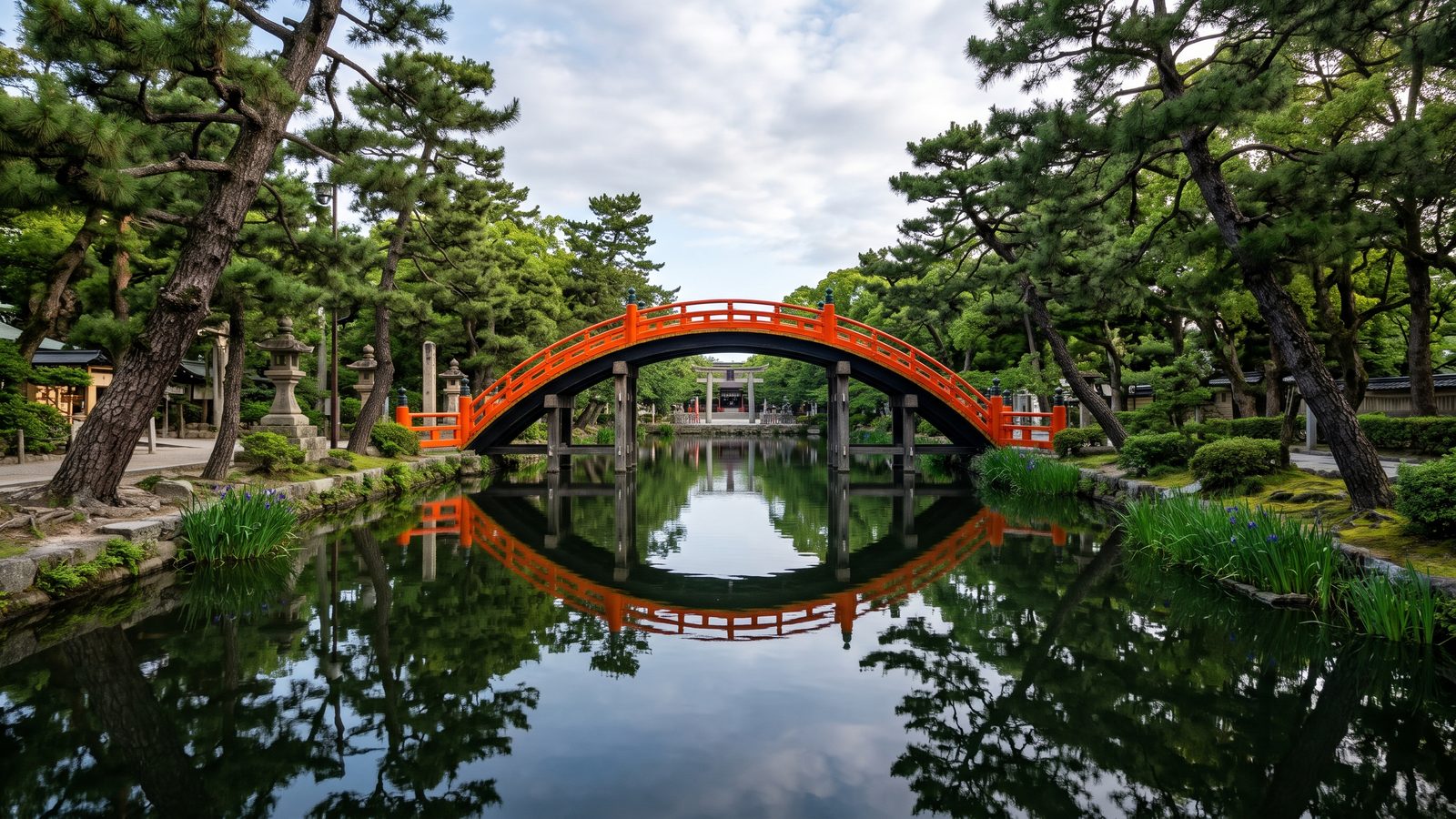
Step back into ancient Japan at Sumiyoshi Taisha, the revered head shrine of all Sumiyoshi sanctuaries across the nation. Founded in the 3rd century, this sacred ground predates the arrival of Buddhism in Japan, preserving pure Shinto traditions. As you explore its peaceful atmosphere, you will encounter rare architectural styles, serene gravel gardens, and deep-rooted spiritual connections to the sea that have guarded travelers and seafarers for centuries.
With this audio tour, you set your own pace while uncovering the legends, ancient rituals, and unique design features of Osaka's most historic sanctuary. Experience an authentic journey through indigenous Japanese heritage, walking amidst grand pine trees, stone lanterns, and timeless consecrated halls.
Listen to a sample
The opening of this tour, exactly as AllTours narrates it on site.
What you'll hear on this tour
Stop 1. Pure Indigenous Shrine Architecture
As you stand before the grand structures, you are looking at Sumiyoshi-zukuri, Japan's oldest unadulterated shrine architectural style. Observe the stark, straight, uncurved gabled roofs that deliberately depart from later Buddhist influences. This unpainted timber design highlights a pure aesthetic from pre-Buddhist Japan. Notice the prominent decorative logs called katsuogi laying across the roof ridge and the crisscrossing chigi extending beyond the gables. Look closely at the striking contrast between the vermilion pillars and pristine white walls. Uniquely, the main hall features a rare south-facing entrance that does not align parallel to the inner sanctuary, offering you a direct window into early Japanese sacred design.
Stop 2. Legends of Empress Jingu
You are walking on consecrated ground established in the 3rd century, making Sumiyoshi Taisha one of Japan's most ancient active shrines. According to history and legend, Empress Jingu established this sanctuary following her victorious return from Korea. Guided by divine sea spirits, she consecrated this site to honor the kami who protected her journey. Because it was founded long before Buddhism took root in Japan, the shrine maintains an exceptionally rare glimpse into early indigenous spiritual customs. As you move through the complex, remember that you are treading the very path where imperial history and ancient Shinto faith intersected nearly two millennia ago.
Stop 3. The Four Aligned Sanctuaries
Approach the sacred main sanctuaries to experience a truly remarkable arrangement found almost nowhere else in Japan. Here, four distinct main halls, known as honden, are uniquely aligned in a straight line from front to back, pointing directly toward the sea. Each hall is built in the pristine Sumiyoshi-zukuri style, featuring straight gables and unadorned simplicity devoid of decorative eaves. These sanctuaries are dedicated to the kami of the sea and safe maritime voyages. As you gaze down this spiritual axis, you can feel how the ancient layout reflects a direct connection to the ocean currents and the divine guardians who watch over all seafarers.
Stop 4. Symbolic Waves and Ancient Pines
Step into the tranquil shrine gardens where every natural element carries a deeper spiritual purpose. As you look across the grounds, notice the meticulously raked gravel beneath your feet. This white gravel does not merely serve as decoration; it symbolically represents the ocean's purifying waves, echoing the maritime domain of the Sumiyoshi deities. Look around at the ancient, gnarled pine trees standing as living testaments to longevity and resilience. Moss-covered stone lanterns and deliberately placed rocks line your path, creating a serene environment designed to clear your mind, invite quiet contemplation, and guide your spirit toward inner peace.
Stop 5. Guardians of the Ocean Realm
Pause and feel the profound spiritual presence radiating from the main sanctuaries. Enshrined within these sacred halls are the three Sumiyoshi Okami, powerful sea deities who grant divine protection to sailors, merchants, and travelers. Their sacred energy fills the air, offering visitors a reassuring sense of guardianship and safe passage through life's journeys. The austere, unadorned Sumiyoshi-zukuri architecture enhances this elemental connection between humanity and the kami. As you stand in this quiet space, you enter a timeless dialogue with forces that have been venerated here for over seventeen centuries.
Stop 6. Living Heritage of Pre-Buddhist Aesthetics
Take a moment to absorb the cultural essence of Sumiyoshi Taisha, a living testament to Japan's earliest aesthetic principles. The pure Sumiyoshi-zukuri style showcases an indigenous Japanese identity untouched by continental artistic traditions. With its straight, unpainted timber and south-facing gabled roofs, the architecture embodies a profound connection to nature and a deep reverence for simplicity. This minimalist harmony reflects the fundamental values of early Shinto worship. As you explore, you witness how ancient traditions continue to thrive in modern Osaka, preserving the unadulterated soul of Japanese culture for future generations.
Planning your visit
- Best time to go
- Early morning on weekdays for peaceful reflection before crowds arrive, especially during spring or autumn.
- Approximate duration
- about 1 to 1.5 hours
- Where to start
- Main entrance torii gate near Sumiyoshi-taisha Station.
Access and conditions change seasonally — check the official site before you go.
Frequently asked questions
Is Sumiyoshi Taisha Shrine worth visiting?
Yes, Sumiyoshi Taisha is one of Japan's oldest Shinto shrines and offers a rare look at pure, pre-Buddhist Sumiyoshi-zukuri architecture, making it a peaceful and historic highlight of Osaka.
How long do you need at Sumiyoshi Taisha Shrine?
Most visitors spend between 1 to 1.5 hours exploring the four main halls, walking over the iconic Sorihashi Bridge, and strolling through the surrounding pine gardens.
What is the history behind Sumiyoshi Taisha Shrine?
Founded in the 3rd century by Empress Jingu, Sumiyoshi Taisha was built to honor the three Sumiyoshi Okami sea deities who protected her maritime voyage, predating the introduction of Buddhism to Japan.
Keep exploring
Header image is an AI-generated illustration of Sumiyoshi Taisha Shrine. AllTours.ai is an AI audio tour guide — point your camera at any landmark and hear its story.