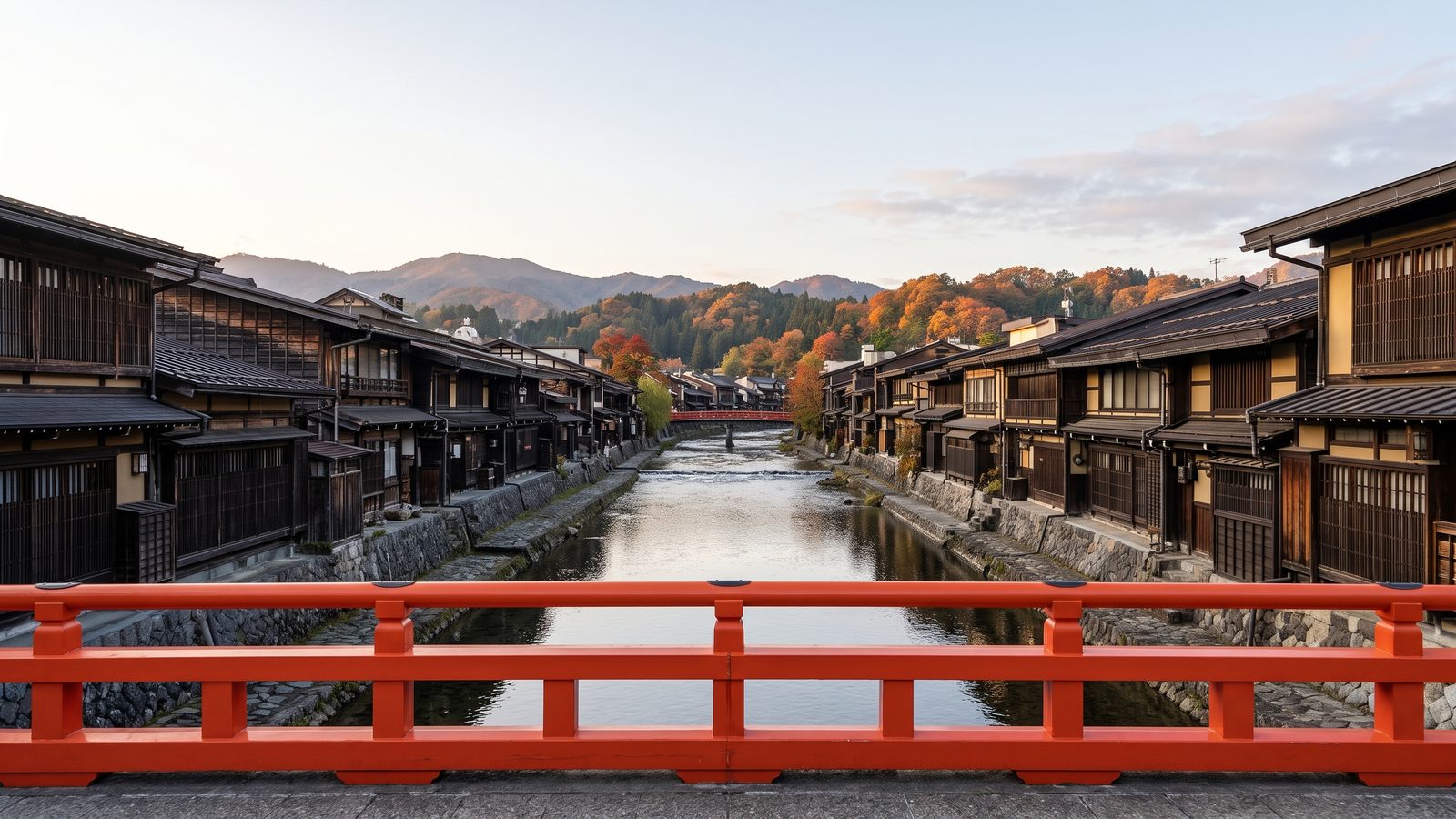
Welcome to Takayama, a beautifully preserved historic jewel nestled in the mountains of Japan's Hida region. As you walk through Sanmachi Suji, you step directly into the Edo period, surrounded by dark wooden merchant houses and traditional sake breweries. Shaped by centuries of legendary craftsmanship and direct shogunal governance, this atmospheric town offers an unforgettable journey into authentic Japanese tradition, vibrant local markets, and world-renowned culinary heritage.
This self-guided audio tour leads you through the narrow historic streets of Takayama, highlighting intricate architectural details, centuries-old crafting techniques, and rich festival lore. Immerse yourself in the captivating stories of master carpenters, shogunal history, and world-famous regional cuisine at your own relaxed pace.
Listen to a sample
The opening of this tour, exactly as AllTours narrates it on site.
What you'll hear on this tour
Stop 1. Grand Floats and Mechanical Puppets
You step into the heart of Takayama's famed festival traditions, celebrated during spring's Sanno Matsuri and autumn's Hachiman Matsuri. As you look around, imagine these narrow streets filled with towering yatai floats rising up to eight meters high, intricate masterpieces of metalwork, woodcarving, and lacquer. You witness Karakuri mechanical puppets performing mythological scenes, operated seamlessly by hidden puppeteers manipulating dozens of strings. At dusk, hundreds of paper lanterns illuminate the cobblestones while traditional flute and drum music fills the air. These magnificent processions reveal centuries of neighborhood guild devotion and master craftsmanship, showcasing a living theatrical heritage passed down across generations.
Stop 2. Machiya Facades and Snow-Resistant Roofs
You stand before traditional machiya merchant houses, observing their long, narrow layouts and dark timber frames made from cypress wood. Notice how the stark white plaster walls offer crucial fire deterrence and winter insulation. Look closely at the exquisitely carved wooden lattice windows, or kosshi, which subtly filter light while revealing the merchant's trade. Above, gently curved tiled roofs feature raised udatsu firewalls between adjacent properties, symbolizing prosperity alongside safety. Deep overhanging eaves shield paper screens from mountain rainfall while creating welcoming shaded walkways. Every exposed joint connects without nails, showcasing a building tradition where natural materials and profound human skill achieve enduring structural elegance.
Stop 3. Hida Beef and Hoba Miso Delicacies
You indulge your senses in Takayama’s distinctive culinary landscape. The star attraction is world-famous Hida beef, celebrated for exquisite marbling that melts effortlessly across your palate whether served as seared nigiri or grilled over a hoba leaf. You observe savory hoba miso paste slowly simmering over small braziers on dried magnolia leaves, releasing fragrant herbal aromas alongside mushrooms and local vegetables. Further down the street, vendors grill skewered mitarashi dango rice dumplings until charred before dipping them in a savory soy glaze, giving them a delightful smoky crispness. Each traditional dish reflects pristine mountain water, local agricultural devotion, and centuries of regional culinary heritage.
Stop 4. Unpainted Carvings and Sarubobo Amulets
You discover a deep reverence for natural materials in Takayama's unique craft traditions. Local artisans practice Ichii Ittobori, sculpting single blocks of native yew wood with precise chisels without applying any paint, leaving the natural grain and hue as the finished artwork. You also admire Hida Shunkei Nuri lacquerware, where clear amber or vermilion sap reveals the exquisite underlying cypress grain. Look for the red, faceless Sarubobo dolls displayed in shop windows. Meaning "monkey baby," grandmothers traditionally handcraft these red figures as protective charms for safe travel, good fortune, and healthy childbirth, embodying the enduring family bonds and deep spiritual heritage of the Hida region.
Stop 5. Shogunal Rule and Mountain Autonomy
You trace the roots of Takayama to the late sixteenth century, when feudal lord Kanamori Nagachika meticulously laid out this castle town in a defensive grid pattern. In 1692, the Tokugawa Shogunate assumed direct control of the town to secure Hida's valuable timber reserves and skilled carpenters. Governed directly by shogunal magistrates called daikan, Takayama enjoyed an unusual degree of stability and administrative autonomy for nearly two centuries. This direct federal oversight shielded the town from regional feudal turmoil, allowing local merchants to prosper. Today, you walk through a perfectly preserved urban layout that remains a pristine, intact window into Japan's Edo period.
Stop 6. Legacy of the Master Carpenters
As you wander through these historic lanes, you experience the living legacy of the Hida no Takumi, master woodworkers whose skills were famous across ancient Japan. These artisan ancestors were so highly esteemed that they paid imperial taxes in skilled labor rather than rice, constructing temples and palaces in distant capitals. You observe their meticulous spirit in the seamless joinery of every town residence and the gleaming hand-painted lacquerware inside neighborhood shops. This communal devotion to precision craftsmanship permeates every corner of Takayama, sustained through generations of dedicated local guilds who maintain the town's architectural identity and world-famous festival floats.
Planning your visit
- Best time to go
- Spring (April) or Autumn (October) for mild weather and festival season; early morning (around 8:00–9:00 AM) to beat the crowds along Sanmachi Suji.
- Approximate duration
- about 2 hours
- Where to start
- Sanmachi Suji historic district (near Nakabashi Bridge / Takayama Station).
Access and conditions change seasonally — check the official site before you go.
Frequently asked questions
Is Takayama Old Town worth visiting?
Yes, Takayama Old Town is widely considered one of Japan's best-preserved Edo-period districts. It offers a rare look at traditional machiya merchant houses, sake breweries, master woodworking, and exquisite Hida beef cuisine set against a scenic mountain backdrop.
How long do you need at Takayama Old Town?
Most visitors spend 2 to 4 hours exploring the core historic streets of Sanmachi Suji, visiting preserved merchant houses, sampling local foods, and browsing craft shops. A self-guided tour allows a relaxed pace with time for lunch.
Why was Takayama Old Town directly controlled by the Tokugawa Shogunate?
In 1692, the Tokugawa Shogunate placed Takayama under direct shogunal control to secure the region's valuable timber reserves and highly skilled Hida no Takumi carpenters, granting the town unique administrative autonomy and long-term stability.
Keep exploring
Header image is an AI-generated illustration of Takayama Old Town. AllTours.ai is an AI audio tour guide — point your camera at any landmark and hear its story.