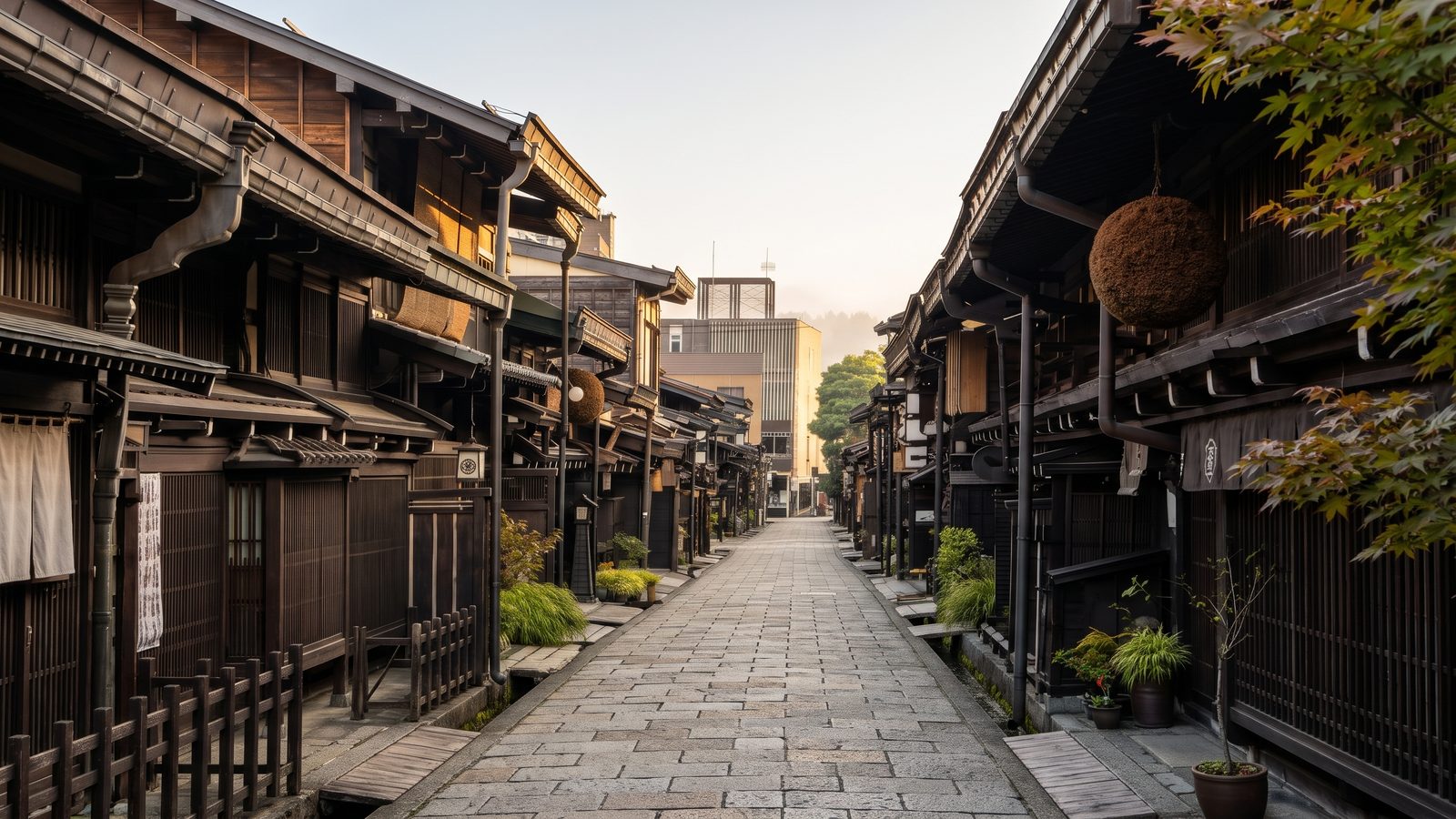
Welcome to Takayama Sanmachi Suji, a remarkably preserved district where dark wooden facades and narrow lanes transport you directly into Japan's Edo Period. As you walk along these historic streets, you are following in the footsteps of 17th-century merchants, artisans, and sake brewers. Notice the exquisite mashikogoshi latticework gracing windows, showcasing the legendary skill of Hida carpenters. Enjoy this immersive walk through centuries of enduring cultural heritage.
Lined with traditional machiya houses, historic breweries, and artisanal shops, Sanmachi Suji offers an authentic window into merchant life under direct Shogunate rule. From the aroma of grilling Hida beef to cedar balls hanging outside sake houses, every detail tells a story of craftsmanship and vibrant local tradition.
Listen to a sample
The opening of this tour, exactly as AllTours narrates it on site.
What you'll hear on this tour
Stop 1. Cedar Balls and Pure Mountain Brews
As you stroll past historic breweries, look up to see the sugitama, a large round cedar ball hanging outside. It begins bright green and turns brown as the sake ages, signaling to locals that a fresh brew is ready. You are walking through a region famed for kan-zukuri, a slow winter fermentation process made possible by Takayama's snowy climate. Master brewers, or toji, rely on pristine meltwater from the Northern Alps to craft clean, smooth junmai sake with no added alcohol. You can spot local rice varieties like Hida Homare featured in these brews. Step inside a traditional kura to sample this refined liquid artistry.
Stop 2. Eel's Beds and Interlocking Carpentry
Look closely at the machiya houses around you to spot the unagi no nedoko, or eel's bed, layout. Because Edo-period property taxes were calculated based on street frontage, merchants built narrow facades extending deep backward into serene hidden courtyards. Observe the koshi-do, or wooden lattice windows, whose intricate patterns like itagoshi or shitomigoshi once indicated the owner's trade while providing privacy and airflow. Every dark, persimmon-tannin-treated beam showcases the extraordinary precision of Hida carpenters. They constructed these durable timber framed structures using sophisticated interlocking joinery without using a single nail, capped with elegant kawara roof tiles built to endure centuries of mountain weather.
Stop 3. Street Snacks and Grilled Delicacies
Let your senses guide you through the irresistible aromas wafting through the street. You smell the rich marbling of Hida-gyu beef searing over flames, served as delicate street-side nigiri or perfectly charred skewers. Nearby, vendors grill mitarashi dango, savory rice dumplings brushed with a warm, sweet soy glaze. You also encounter gohei mochi, flattened rice cakes roasted with a fragrant walnut-miso paste that delivers a satisfying chewy crunch. Along these historic lanes, historic sake breweries utilize pure mountain water to produce exceptional drinks to accompany your meal. Each dish reflects centuries of mountain-born culinary traditions, turning humble seasonal ingredients into exquisite local treasures.
Stop 4. Masterful Woodwork and Red Charms
Step inside local workshops to experience a living museum of Hida craftsmanship. Century-old traditions run so deep here that imperial Kyoto once exempted local carpenters from taxes in exchange for their building expertise. Browse exquisite Shunkei-nuri lacquerware, famous for its translucent amber or deep red finish that lets natural wood grain gleam through each handmade tray or bowl. You will also spot Sarubobo dolls, the faceless red cloth charms traditionally stitched by grandmothers to bring good fortune in marriage and childbirth. From sturdy nail-less tansu chests to delicate lacquerware, every handcrafted piece showcases inherited techniques passed down through generations of dedicated artisans.
Stop 5. Castle Towns and Direct Shogunate Rule
Step back to the late sixteenth century when feudal lord Kanamori Nagachika meticulously planned Takayama as a castle town. His strategic grid layout, which you walk today, was deliberately designed for defense and bustling commerce. A crucial turn occurred in 1692 when Takayama came under direct Shogunate control, becoming a Tenryo territory governed directly from Edo. The Shogunate prized Hida's rich timber reserves and unmatched artisan skills, establishing a remarkably stable environment. Because local merchant families accumulated lasting wealth under direct imperial oversight, they could build and meticulously preserve these dark timber machiya houses, leaving behind the timeless streetscape you explore today.
Stop 6. Festival Floats and Local Hospitality
Feel the enduring community spirit that animates Sanmachi Suji, especially during the famous Takayama Festival. Intricate yatai floats, hand-carved by generations of Hida craftsmen, serve as mobile masterpieces owned and cherished by individual neighborhood districts. Many floats feature complex karakuri mechanical dolls, combining brilliant engineering with artistic traditions passed from father to son. This shared pride and collective devotion shapes every aspect of daily life here. You experience it directly through omotenashi, the warm and thoughtful hospitality extended by local merchant families who deeply value both refined aesthetics and genuine human connection as you explore their historic streets.
Planning your visit
- Best time to go
- Early morning or late afternoon to avoid crowds and enjoy soft light on the wooden facades.
- Approximate duration
- About 1.5 to 2 hours
- Where to start
- Sanmachi Suji historic district entrance, near the Miyagawa River in Takayama.
Access and conditions change seasonally — check the official site before you go.
Frequently asked questions
Is Takayama Sanmachi Suji worth visiting?
Yes, Takayama Sanmachi Suji is widely considered one of Japan's best-preserved Edo-period merchant districts, offering authentic timber architecture, historic sake breweries, craft shops, and local culinary street food.
How long do you need at Takayama Sanmachi Suji?
Most visitors spend about 1 to 2 hours exploring the historic streets, tasting street food like Hida beef, visiting sake breweries, and browsing craft stores.
What is the history of Takayama Sanmachi Suji?
Laid out in the late 16th century as a castle town by lord Kanamori Nagachika, Sanmachi Suji became a direct Shogunate territory (Tenryo) in 1692, enabling merchant families to prosper and preserve their traditional machiya architecture.
Keep exploring
Header image is an AI-generated illustration of Takayama Sanmachi Suji. AllTours.ai is an AI audio tour guide — point your camera at any landmark and hear its story.