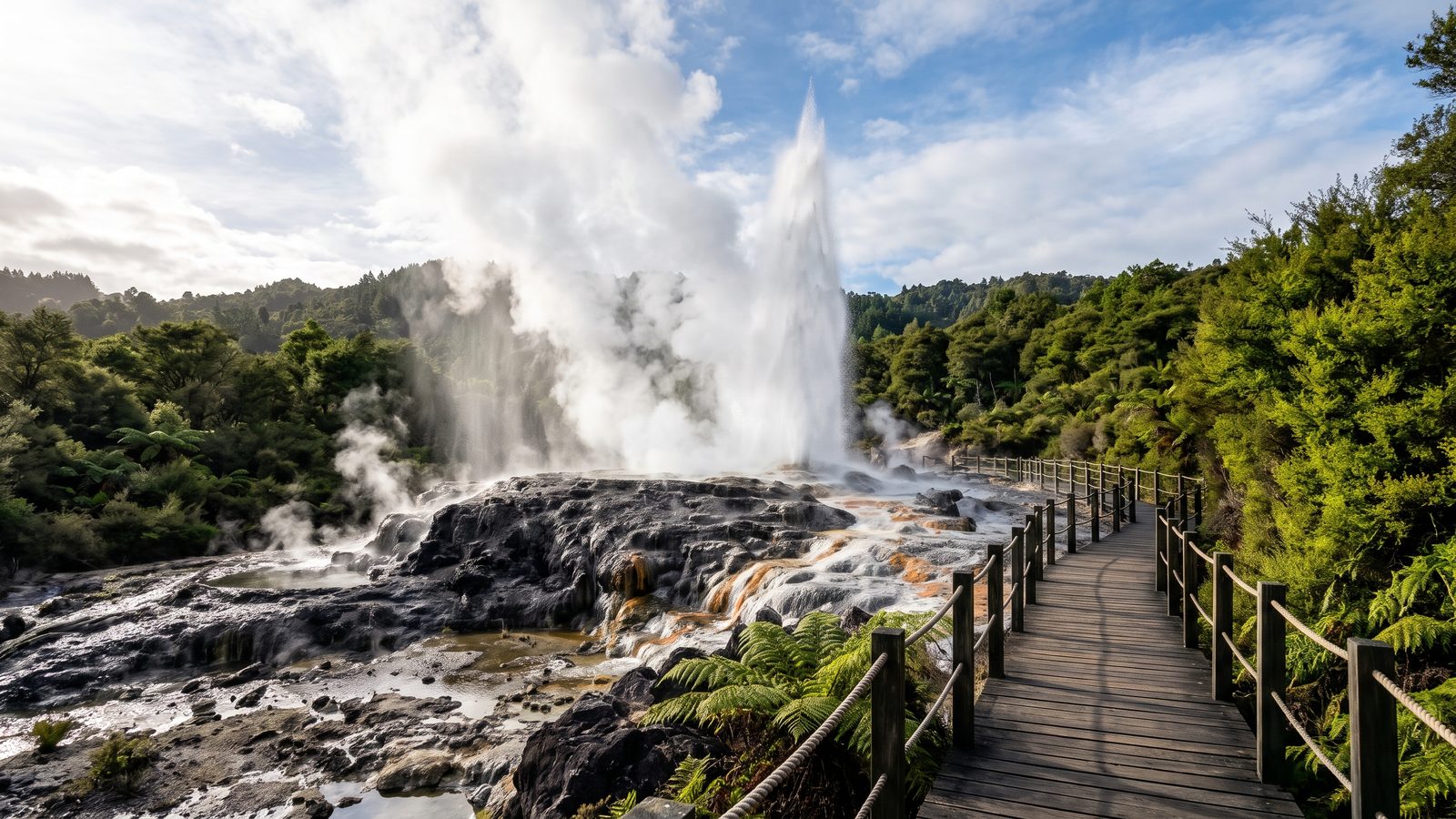
Step into a living landscape shaped by subterranean volcanic power and rich ancestral heritage. At Te Puia, the earth beneath your feet radiates heat while steam drifts across silica terraces and bubbling mud pools. Established as a recognized destination in 1931, this geothermal valley has long served as a sacred home for the Tūhourangi Ngāti Wāhiao people, blending natural marvels with living cultural traditions.
On this self-guided audio tour, you will discover the science behind powerful geysers, admire intricate wooden carvings and woven harakeke textiles, and experience a landscape where ancient stories and raw natural energy converge.
Listen to a sample
The opening of this tour, exactly as AllTours narrates it on site.
What you'll hear on this tour
Stop 1. The Might of Pohutu Geyser
Look out across the steaming vents toward Pōhutu Geyser, the largest active geyser in the Southern Hemisphere. As you stand here, superheated water and steam build immense pressure beneath your feet within the earth's crust. When that subterranean pressure reaches its peak, it erupts, blasting scalding water up to 30 meters into the air. Observe the distinct mineral deposits shaping the cone around the vent, formed over time by mineral-laden spray. For centuries, local Māori have watched these dramatic displays, weaving the geyser's power into their spiritual beliefs and oral histories as a testament to the earth's dynamic force.
Stop 2. Bubbling Mud and Volcanic Energy
Feel the heat radiating upward from the earth beneath your soles. You are standing directly above an active underground geothermal system driven by magma deep below, which heats groundwater to incredible temperatures. Look closely at the ground to see ochre and sulfur-yellow mineral deposits painting the soil. Nearby, mud pools churn and bubble like a cauldron, releasing trapped subterranean gases with every hiss and pop. This dynamic environment acts as a living laboratory, constantly shifting as subterranean pressure releases its raw energy. Take a moment to appreciate how the forces beneath Rotorua shape this vivid, ever-changing geothermal landscape around you.
Stop 3. Ancestral Carvings and Living Traditions
Surround yourself with a vibrant artistic legacy that stretches back through generations. As you examine the carved wooden panels of the wharenui, observe the detailed facial features representing specific ancestral lineages, creating a visual whakapapa in wood. Touch your mind to the texture of harakeke, or woven flax, fashioned into masterwork baskets and traditional cloaks with incredible patience. You can also witness contemporary Māori artists continuing this heritage through modern interpretations, including delicate greenstone pounamu carvings and abstract paintings. Here, the creative power of artistic expression mirrors the very energy of the surrounding geothermal wonders.
Stop 4. The Living Essence of Māori Heritage
Immerse yourself in the living essence of Māori culture that thrives across this valley. Look closely at the intricate meeting house carvings and woven panels, which serve as a visual language conveying tribal history, status, and spiritual beliefs. Listen closely for rhythmic chanting or watch the gentle sway of a poi dance, ancient artistic practices used to pass down stories from generation to generation. As you explore, you encounter a vibrant, enduring tradition where respect for the past and connection to the land remain central to daily life. The spirits of the ancestors resonate through every carved line and woven thread.
Stop 5. Centuries on Sacred Ground
Tread carefully upon this sacred ancestral landscape, cared for across generations by the Tūhourangi Ngāti Wāhiao iwi. Long before visitors arrived, local people lived in harmony with these geothermal vents, harnessing the earth's natural heat for daily cooking and warming their homes. Communal life flourished amid the steam, with important ceremonies and decisions taking place on this very ground. Through careful observation and spiritual connection, ancestors learned to navigate the delicate balance of this environment. As you walk among the vents, you follow in the footsteps of a community whose identity remains deeply bound to the land.
Stop 6. Life Thriving in Steam and Sulphur
Notice the damp, warm earth beneath your feet and the distinct scent of sulphur and wet soil filling the air. Even in this high-temperature environment, resilient nature finds a way to flourish. Look for unfurling green ferns growing beside steaming vents, adapted to the unique moisture and heat, alongside hardy mosses clinging to mineral-rich rocks. Gaze across glistening silica terraces, slowly sculpted over centuries as mineral-laden water trickles down the hillsides. This entire ecosystem hums with vitality, showcasing nature's remarkable ability to create a lush, thriving oasis right in the heart of a volcanic landscape.
Planning your visit
- Best time to go
- Morning or early afternoon for clear views of geyser steam and cooler ambient air.
- Approximate duration
- about 1.5 to 2 hours
- Where to start
- Begin at the main entrance area near the geothermal valley entrance boardwalks.
Access and conditions change seasonally — check the official site before you go.
Frequently asked questions
Is Te Puia worth visiting?
Yes, Te Puia offers a unique combination of world-famous geothermal features, including Pohutu Geyser, alongside authentic Māori cultural art and heritage.
How long do you need at Te Puia?
Most visitors spend about 1.5 to 2 hours exploring the geothermal pathways, viewing geyser eruptions, and discovering Māori traditional arts.
Who are the traditional Māori guardians of Te Puia?
The Tūhourangi Ngāti Wāhiao iwi are the ancestral guardians who have lived in the valley for centuries, utilizing the natural thermal heat in daily life.
Keep exploring
Header image is an AI-generated illustration of Te Puia. AllTours.ai is an AI audio tour guide — point your camera at any landmark and hear its story.