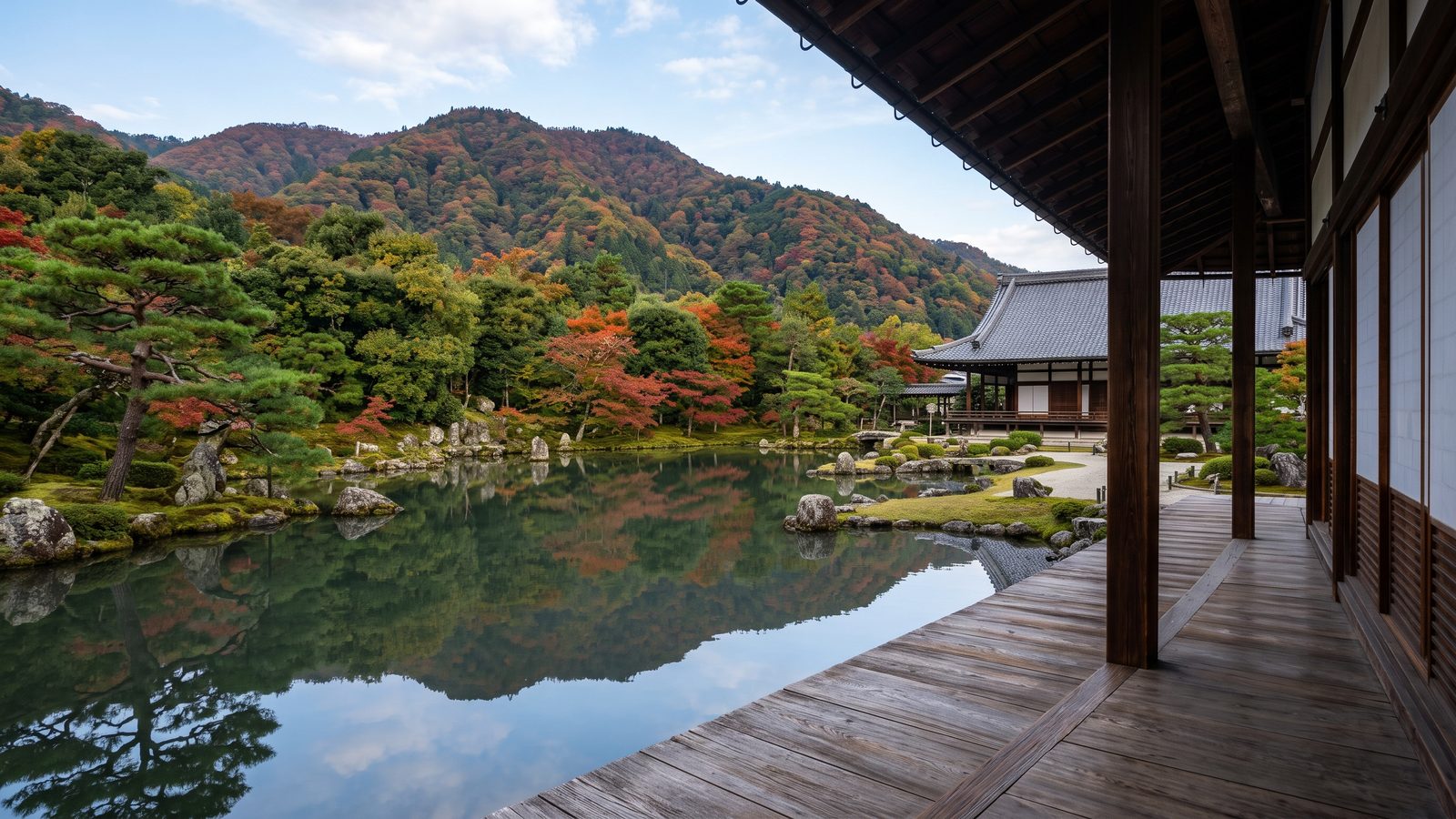
Welcome to Tenryu-ji Temple, a UNESCO World Heritage site situated in Kyoto's scenic Arashiyama district. Founded in 1339 by Shogun Ashikaga Takauji, this legendary center of Rinzai Zen Buddhism is world-renowned for its surviving 14th-century garden designed by master Musō Soseki. Through this self-guided audio tour, you will discover historic temple halls, symbolic stone arrangements, and breathtaking borrowed scenery that has inspired quiet reflection for centuries.
As you stroll past the Hojo main hall and around Sogenchi Teien, your audio guide reveals the Zen philosophy, architectural history, and seasonal beauty that make Tenryu-ji one of Kyoto's premier cultural treasures. Experience a living work of landscape art at your own deliberate pace.
Listen to a sample
The opening of this tour, exactly as AllTours narrates it on site.
What you'll hear on this tour
Stop 1. Kyoto's Timeless Masterpiece of Zen
You stand within a UNESCO World Heritage site, one of Kyoto's Five Great Zen Temples. Founded in 1339 by Shogun Ashikaga Takauji to appease the spirit of Emperor Go-Daigo, this sacred ground has weathered centuries of fire and renewal. While the wooden temple structures have been rebuilt over time, the breathtaking Sogenchi Teien, or Pond Garden, remains largely in its original 14th-century form. Designed by the visionary Zen master Musō Soseki, this strolling garden functions as a living scroll. As you gaze across the peaceful central pond framed by ancient pines and carefully chosen rocks, you are invited to leave worldly distractions behind and experience deep Zen tranquility.
Stop 2. Japan's Pioneer of Borrowed Scenery
Step into Sogenchi Teien, recognized as Japan's very first designated Special Place of Scenic Beauty. Masterfully crafted by Zen master Musō Soseki in the 14th century, this garden revolutionized landscape design through the concept of shakkei, or borrowed scenery. Look across the water to see how the distant peaks of Mount Arashiyama are perfectly framed, becoming an organic continuation of the garden itself. As you admire the dynamic carp-shaped rock formations along the water's edge, you behold a profound Zen allegory representing a carp ascending a waterfall—a spiritual metaphor for the hard struggle toward enlightenment etched in stone and water.
Stop 3. Architectural Wonders of the Hojo and Hatto
You now face the Hojo, the main hall of Tenryu-ji Temple. Though a serene modern reconstruction, it faithfully preserves classic Rinzai Zen architectural principles, complete with expansive wooden verandas that invite quiet meditation. Established in 1339 by Ashikaga Takauji to honor Emperor Go-Daigo, this historic site houses centuries of devotion. Nearby stands the Hatto, or Dharma Hall. If you gaze inside, you might glimpse the famous 'Cloud Dragon' painted across the ceiling. This powerful mythical creature symbolizes the elusive, enigmatic nature of enlightenment, reminding every visitor of the mysteries of the Zen path.
Stop 4. Sogenchi Teien: Pond of the Original Mind
Allow your eyes to absorb the calm surface of Sogenchi Teien, known as the 'Pond of the Original Mind.' As one of Japan's earliest strolling gardens designed by Musō Soseki, every vantage point reveals a fresh perspective. At its center, observe the prominent 'carp stone,' which symbolizes the strenuous journey a seeker undertakes toward spiritual awakening. Notice how the open water reflects the vast sky above while seamlessly blending with the backdrop of the Arashiyama mountains. This harmonious balance of water, stone, and distant nature creates a sanctuary designed to quiet your thoughts and restore inner peace.
Stop 5. Living Harmonies of Pines and Moss
Notice how meticulously pruned ancient pines frame your view of Sogenchi Pond. Their twisted, gnarled branches echo the rugged lines of the Arashiyama peaks beyond, blurring the boundary between cultivated art and raw wilderness. Beneath your feet, soft carpets of moss wrap around venerable stones, each intentionally positioned to evoke a miniature mountain range or a sacred, auspicious island. This living landscape changes dramatically with each passing season, transforming from fresh green foliage to autumn splendor. As you walk, observe how nature's breathing beauty creates a profound sense of tranquility.
Stop 6. Rinzai Zen Aesthetics and Wabi-Sabi
Immerse yourself in the profound spiritual legacy of Rinzai Zen aesthetics. Here, the suiho-chishiki style garden is far more than a decorative landscape; it is constructed as a deliberate path guiding you toward enlightenment. As you observe the subtle seasonal transitions across the temple grounds, you witness the classic Japanese reverence for nature's impermanence—the core philosophy of wabi-sabi. Every raked path, weathered stone, and seasonal bloom reflects centuries of spiritual devotion. Take a quiet moment to absorb this profound cultural harmony, connecting directly with the ancient Zen masters who once walked these grounds.
Planning your visit
- Best time to go
- Early morning near opening or late afternoon for smaller crowds and tranquil light over Sogenchi Pond.
- Approximate duration
- about 1 to 1.5 hours
- Where to start
- At the main entrance gate leading toward the Hojo and Sogenchi Teien Garden in Arashiyama.
Access and conditions change seasonally — check the official site before you go.
Frequently asked questions
Is Tenryu-ji Temple worth visiting?
Yes, Tenryu-ji Temple is a UNESCO World Heritage site and one of Kyoto's top Five Great Zen Temples. Its 14th-century Sogenchi Teien garden by Musō Soseki is famous for pioneering borrowed scenery (shakkei) against the backdrop of Arashiyama.
How long do you need at Tenryu-ji Temple?
Most visitors spend between 1 and 1.5 hours exploring the Sogenchi Pond Garden, walking the temple verandas, and admiring the surrounding landscape.
Who founded Tenryu-ji Temple and why?
Tenryu-ji was founded in 1339 by Shogun Ashikaga Takauji to honor Emperor Go-Daigo and appease his spirit, under the guidance of the celebrated Zen master Musō Soseki.
Keep exploring
Header image is an AI-generated illustration of Tenryu-ji Temple. AllTours.ai is an AI audio tour guide — point your camera at any landmark and hear its story.