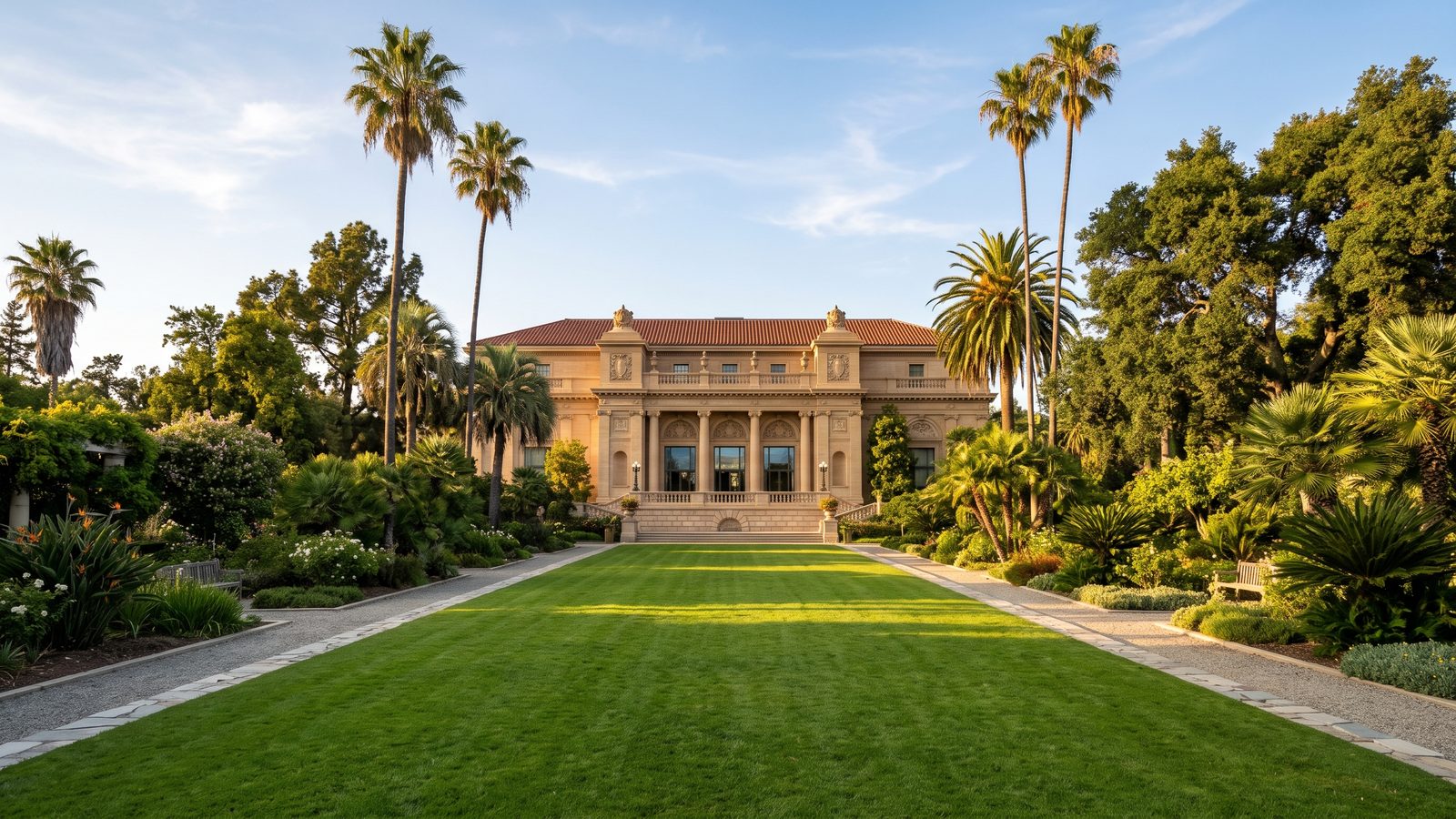
Step into a sanctuary of beauty and learning in San Marino, California. Established in 1919 by railroad magnate Henry E. Huntington, this magnificent 120-acre estate seamlessly blends world-class art collections, extraordinary botanical gardens, and rare historical treasures. As you explore the grounds, you will experience the enduring legacy of a passionate collector who sought to curate a living monument to natural beauty and human intellectual endeavor.
This self-guided audio tour leads you through imposing Beaux-Arts architecture, galleries housing European masterpieces, specialized botanical microclimates, and a world-renowned library housing foundational texts like the Gutenberg Bible. Immerse yourself in the vision of a couple whose lifelong pursuit of art, literature, and nature created a global cultural landmark.
Listen to a sample
The opening of this tour, exactly as AllTours narrates it on site.
What you'll hear on this tour
Stop 1. Portals to Human Thought
Step into the extraordinary library, the very soul of The Huntington. You are standing amidst a world-rivaling collection built on a profound love for the written word. Look at these shelves holding portals to bygone eras. You are looking at one of the most complete collections of early English printing, tracing language from Gutenberg's revolution to Shakespeare's genius. Before you rests the Gutenberg Bible from 1455, a foundational artifact of Western civilization that spread ideas like wildfire. Nearby reside the personal libraries of figures like George Washington and Thomas Jefferson. Every spine in this repository whispers stories of scholars, poets, and leaders who shaped our nation.
Stop 2. Living Botanical Treasures
Wander into a living masterclass in horticultural diversity spanning 120 acres of curated global ecosystems. Notice the towering cacti in the Desert Garden, like the iconic Saguaro, representing decades of adaptation to extreme aridity. As you step inside the humid conservatory, you enter a vital sanctuary for delicate tropical flora. Here, ancient cycads—plants that predated the dinosaurs—thrive alongside epiphytic orchids clinging to branches. Every bed features engineered soil designed to provide exact drainage and balance for specialized plants far from their native grounds. You are witnessing the Earth's botanical bounty, carefully gathered and nurtured across decades of scientific growth.
Stop 3. Masterpieces of Creativity
Immerse yourself in the art galleries, embarking on a curated journey through centuries of human creativity. As you stand before these historic masterpieces, observe the deliberate brushstrokes and fine detail capturing each subject's essence. Examine the Dutch and Flemish paintings, where delicate play of light and shadow reflects an era fascinated by scientific observation and burgeoning inquiry. These works challenge and celebrate societal norms, opening windows into historical relationships and intellectual currents. The Huntingtons passionately sought out these treasures not merely to adorn their home, but to educate and inspire generations of visitors walking these hallowed halls today.
Stop 4. Classical Beaux-Arts Grandeur
Pause to admire the striking Classical Revival influence and Beaux-Arts facade of the main Huntington buildings. Grand columns and intricate stone carvings immediately convey a sense of permanence and intellectual gravity. As you look closely at the stonework, notice the subtle variations chosen by architects and artisans for both structural strength and visual harmony. You are walking through spaces modeled after Europe's grandest public buildings, engineered to evoke awe and reverence. This architecture was built not just to store physical treasures, but to stand as an enduring monument dedicated to the grand pursuit of human knowledge and lasting beauty.
Stop 5. Transforming the San Gabriel Valley
Picture the untamed landscape that greeted Henry Huntington in the early twentieth century. Acquiring over 500 acres of arid land in the San Gabriel Valley rancho system, he envisioned a sanctuary of cultivation. Utilizing wealth derived from his uncle Collis P. Huntington's vast railroad empire, Huntington transformed dry soil into a living testament to nature and learning. He did not simply gather books and artwork; he meticulously prepared the ground for extraordinary botanical gardens and academic collections. As you walk this estate, you stand on land reshaped by one man's vision to foster education, preservation, and natural wonder.
Stop 6. The Spirit of Inquiry
Feel the thrill of discovery that permeates every corner of The Huntington. As you explore, you participate in an ongoing quest for understanding that inspired its founders. Behind these manuscripts and botanical specimens lie decades of scientific expeditions, painstaking library research, and insatiable curiosity. You stand in a living laboratory of human inquiry where pioneering minds challenged the status quo and expanded human boundaries. Every exhibit invites you to engage your mind, ask bold questions, and experience the spark of comprehension. Allow yourself to reflect on how these groundbreaking collections continue to inspire new ideas today.
Planning your visit
- Best time to go
- Morning hours are ideal for walking the extensive outdoor gardens before peak daytime warmth, followed by indoor gallery and library viewing.
- Approximate duration
- About 3 to 4 hours
- Where to start
- Begin at the main Huntington Visitor Center entrance plaza before moving toward the main library building and gardens.
Access and conditions change seasonally — check the official site before you go.
Frequently asked questions
Is The Huntington Library, Art Museum and Botanical Gardens worth visiting?
Yes, it is deeply worth visiting. The Huntington offers a unique combination of 120 acres of specialized botanical gardens, rare treasures like a 1455 Gutenberg Bible, and world-class European and American art collections.
How long do you need at The Huntington Library, Art Museum and Botanical Gardens?
Plan for at least 3 to 4 hours to comfortably tour the library exhibit hall, major art galleries, and key themed gardens such as the Desert Garden and Conservatory.
Who founded The Huntington Library, Art Museum and Botanical Gardens?
The estate was founded in 1919 by railroad pioneer Henry E. Huntington, who used wealth connected to Collis P. Huntington's railroad empire to assemble world-class collections of rare books, art, and botanical specimens.
Keep exploring
Header image is an AI-generated illustration of The Huntington Library, Art Museum and Botanical Gardens. AllTours.ai is an AI audio tour guide — point your camera at any landmark and hear its story.