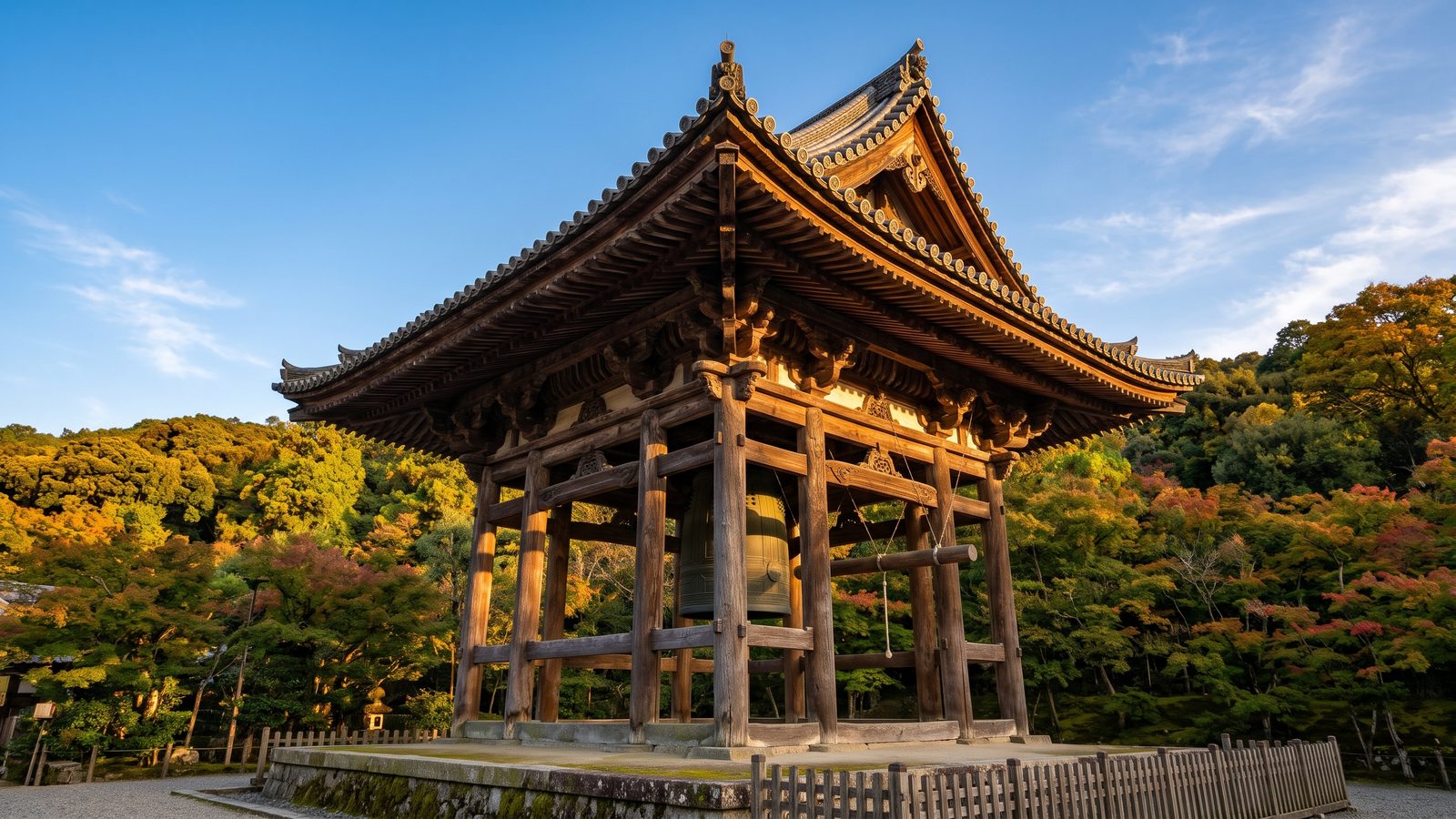
Welcome to the Todai-ji Temple Bell Tower, a monumental Kamakura-period wooden structure nestled in the heart of Nara, Japan. Built to house one of the nation's most sacred treasures, this resilient tower protects the Great Bell of Todai-ji, originally cast in 752 AD. As one of Japan's oldest surviving timber bell towers, it offers visitors a rare glimpse into ancient metallurgy, architectural genius, and spiritual tradition.
On this self-guided audio tour, you will discover how master carpenters crafted this nail-free masterpiece, explore its connection to Nara's sacred deer and primeval forests, and learn the cultural significance of its legendary 108 New Year's chimes. Prepare to step back over a millennium into Japanese history.
Listen to a sample
The opening of this tour, exactly as AllTours narrates it on site.
What you'll hear on this tour
Stop 1. A Survivor of War and Fire
As you stand before this impressive structure, understand that its history reflects remarkable resilience. The massive bronze bell within was cast in 752 AD, dating back to Emperor Shōmu's founding vision for Todai-ji and showcasing remarkable Nara-period metallurgy. While this ancient bell survived over twelve centuries, the original tower protecting it fell during the Genpei War in 1180. The wooden tower you see today is an early Kamakura-period reconstruction, rebuilt around 1200 under the leadership of the monk Chōgen. Remarkably, this tower predates the current Great Buddha Hall, standing as one of the oldest original Kamakura-era buildings on the temple grounds.
Stop 2. Masterpiece of Kamakura Carpentry
Look closely at the massive hinoki cypress timber pillars that support this monumental tower. Built in the Daibutsuyō style, this structure demonstrates brilliant Kamakura-period engineering without using a single nail. Notice the sweeping irimoya-zukuri tiled roof, designed with deep overhangs to shield the wood from rain and sun. Beneath the eaves, complex wooden bracket systems called tokyō act as cantilevers, efficiently transferring the roof's immense weight down to the main posts. The open upper story allows sound waves from the Great Bell to travel freely across the valley, while the deeply set stone foundation anchors the structure against earthquakes. Form and function unite here in timeless harmony.
Stop 3. Resonances of Japanese Soul
Listen to the quiet atmosphere around you, where centuries of Japanese spiritual devotion echo. Recognized as one of the Three Great Bells of Japan, this massive bronze treasure is far more than an ancient object; it serves as a living conduit of spiritual heritage. During New Year's Eve, known as Joya no Kane, monks ring the bell precisely 108 times, symbolizing the purification of 108 earthly desires. The deliberate, meditative action of swinging the heavy wooden beam creates a deep, sonorous ring that reverberates through the Nara landscape. This profound soundscape fosters a shared sense of mindfulness and connects listeners across generations to Japan's cultural continuity.
Stop 4. Sacred Deer and Primeval Forests
Cast your gaze past the wooden tower to take in the serene natural surroundings. Gentle Nara deer roam freely around the grounds; revered as sacred messengers of the gods, these animals have shaped the local landscape by creating a distinct browse line on the trees. Behind the temple complex rise the lush slopes of Mount Wakakusa and Mount Kasuga, home to ancient primeval forests of giant Japanese cedars and camphor trees. The very timbers used to construct this bell tower originated from similar ancient woods, creating a seamless connection between sacred architecture and the natural environment. Here, wild nature and sacred tradition exist in perfect balance.
Stop 5. Capturing Light, Wood, and Bronze
Framing this ancient monument through your camera lens offers extraordinary creative opportunities. Visit during the golden hour to watch warm sunlight rake across the weathered cypress timbers, casting dramatic shadows that highlight the intricate joinery. Position yourself near the base with a wide-angle lens to emphasize the towering height and sweeping eaves against the sky. Alternatively, use a telephoto lens to isolate the massive suspended bronze bell within the dark interior shadow of the tower. During the quiet blue hour after sunset, ambient light gives the structure a serene, ethereal quality. Try framing the wooden framing with overhanging tree branches for compelling natural composition.
Stop 6. Sounds of Spiritual Awakening
Reflect on the deep spiritual purpose behind this massive structure and its ancient bell. In Buddhist tradition, the resonant vibration of a temple bell serves as a powerful call to spiritual awakening and inner peace. Each solemn strike reminds listeners of the fundamental teaching of impermanence and guides minds toward liberation from worldly suffering. For over a millennium, monks have sounded this bell to mark periods of meditation and daily ritual. When struck 108 times on New Year's Eve, the purifying chime symbolically cleanses the 108 worldly desires that impede enlightenment, offering a moment of collective reflection and spiritual renewal.
Planning your visit
- Best time to go
- Late afternoon golden hour for warm sunlight on the wooden timbers, or early morning for peaceful reflection.
- Approximate duration
- about 30 minutes
- Where to start
- Directly in front of the Todai-ji Temple Bell Tower on the eastern side of the main Todai-ji temple grounds.
Access and conditions change seasonally — check the official site before you go.
Frequently asked questions
Is Todai-ji Temple Bell Tower worth visiting?
Yes, the Todai-ji Temple Bell Tower is well worth visiting. It is one of the oldest original Kamakura-era structures on the temple grounds and houses the Great Bell cast in 752 AD, recognized as one of the Three Great Bells of Japan.
How long do you need at Todai-ji Temple Bell Tower?
Most visitors spend about 20 to 30 minutes admiring the ancient Kamakura carpentry, viewing the massive bronze bell, taking photos, and observing the sacred deer roaming nearby.
When was the Todai-ji Temple Bell cast and built?
The massive bronze bell was originally cast in 752 AD during the Nara period under Emperor Shōmu. While the original tower burned down in 1180 during the Genpei War, the current wooden tower was rebuilt around 1200 by the monk Chōgen in the Kamakura-period Daibutsuyō architectural style.
Keep exploring
Header image is an AI-generated illustration of Todai-ji Temple Bell Tower. AllTours.ai is an AI audio tour guide — point your camera at any landmark and hear its story.