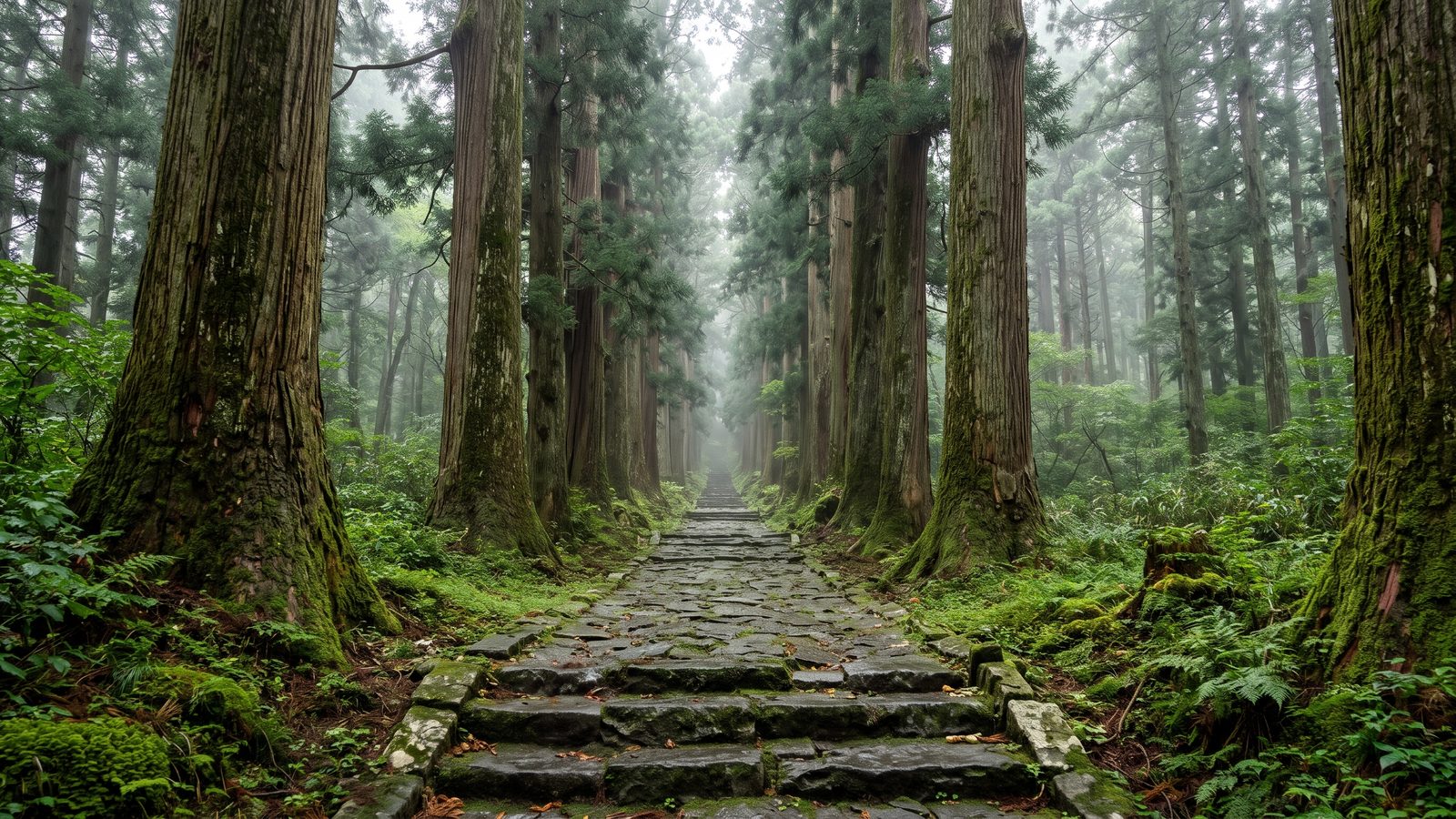
Togakushi Shrine Okusha sits deep within the forested mountains of Nagano Prefecture, offering a serene journey into Japan's ancient mountain worship. As you walk the famous cedar avenue, you follow in the footsteps of centuries of pilgrims, mountain ascetics, and nature worshippers. This self-guided audio tour reveals the sacred myths, syncretic religious history, and stunning natural wonders that make this mountain sanctuary one of Japan's most profound spiritual destinations.
Immerse yourself in the tranquil atmosphere as sunlight filters through 400-year-old trees. From ancient Shugendo ascetics to legendary Shinto deities, your audio guide leads you step-by-step through the sacred grounds, explaining the deep connection between the dramatic landscape and Japan's enduring spiritual traditions.
What you'll hear on this tour
Stop 1. The Sanctuary of Divine Strength
You stand before the Okusha main hall, dedicated to Ame-no-Tajikarao-no-mikoto, the deity of immense physical and spiritual strength. According to sacred legend, this powerful god pulled open the celestial rock cave to restore Amaterasu's divine light to the world. You notice how the simple, unadorned cedar and cypress architecture blends effortlessly into the primeval forest, prioritizing reverence for nature over human grandeur. For centuries, Shugendo practitioners have journeyed to this very sanctuary seeking enlightenment and spiritual resilience. As you look upon the weathered wooden beams and moss-kissed stone foundation, you feel the raw, ancient energy of this mountain retreat, inviting you to reflect on your own inner strength.
Stop 2. Cathedral of Four-Century-Old Cedars
You step into the profound stillness of an ancient cedar avenue where towering Cryptomeria japonica trees form a soaring natural cathedral. These colossal trunks, some reaching over fifty meters high, filter the sunlight into shimmering, ethereal shafts that dance upon the moss-covered forest floor. Fed by pure meltwater flowing down Mount Togakushi—a dormant volcano—this delicate ecosystem maintains its own cool microclimate. As you walk, you breathe in the rich scent of damp earth and evergreen resin, listening to the subtle symphony of rustling needles and distant mountain streams. The enduring power of this four-hundred-year-old grove wraps around you, offering a rare moment of deep quietude.
Stop 3. The Sacred Path of Purification
As you follow the Sugi Namiki, or Cedar Avenue, towering ancient guardians surround your path. Local villagers planted these massive cedar trees in the mid-seventeenth century to purify and prepare pilgrims for their encounter with the mountain deities. You breathe in the cool, crisp air infused with the calming aroma of ancient wood while dappled light shifts across the mossy ground. Walking beneath these colossal trees, you feel dwarfed by their sheer scale, instilling a sense of humility and quiet reverence. Each step along this living corridor becomes a meditative act, connecting your journey to centuries of human faith and the timeless energy of the forest.
Stop 4. The Pilgrim's Mountain Ascent
From the historic Zuishinmon Gate, your journey turns into a meaningful pilgrimage as you ascend the two-kilometer trail toward the upper shrine. You tread carefully over a living tapestry of earth, exposed tree roots, and ancient stones that demand your steady focus. Feel the gradual incline building anticipation with every step, shedding the noise of daily life as you venture deeper into the mountain stillness. In the final stretch, you conquer a steep series of natural stone steps carved directly into the slope. This physical exertion transforms your visit into a rewarding accomplishment, echoing the disciplined determination of past Shugendo ascetics.
Stop 5. Echoes of Syncretic Faith
You explore a mountain site where Japanese spiritual traditions deeply intertwined for centuries. Beginning with ancient mountain animism, Togakushi evolved during the ninth century into a major center for Shinbutsu-shūgō, blending Shinto deities with Buddhist bodhisattvas. Yamabushi ascetics trained intensely across these peaks, seeking enlightenment through nature. However, during the late nineteenth century, the Meiji Restoration ordered the strict separation of Shinto and Buddhism, forcing Togakushi to divest its Buddhist heritage and destroying many sacred structures. Standing here today, you witness the quiet resilience of a sanctuary that adapted to political upheaval while preserving its core spiritual gravity across the centuries.
Stop 6. The Legacy of Mountain Ascetics
You walk through the historic realm of the yamabushi, mountain priests of the Shugendo tradition who undertook arduous spiritual journeys to achieve enlightenment. Their distinctive conch shell trumpets, or horagai, once echoed through these giant cedars to signal spiritual discipline and prayer. This rugged terrain served as a rigorous training ground, forging both physical endurance and mental clarity through a unique synthesis of Shinto and Buddhist practices. Reverence for Tajikarao, the deity of strength, cultivated a local culture of perseverance and deep respect for the mountain as a living divine entity. You can still sense that enduring spirit of discipline woven into the quiet woods around you.
Planning your visit
- Best time to go
- Early morning for misty light and quiet crowds, lush greenery in summer, or vibrant autumn foliage.
- Approximate duration
- About 1.5 to 2 hours
- Where to start
- Zuishinmon Gate at the entrance to the Okusha cedar avenue path.
Access and conditions change seasonally — check the official site before you go.
Frequently asked questions
Is Togakushi Shrine Okusha worth visiting?
Yes, Togakushi Shrine Okusha is famous for its breathtaking 400-year-old cedar avenue (Sugi Namiki), rich Shugendo history, and serene mountain setting, offering an unforgettable pilgrimage experience.
How long do you need at Togakushi Shrine Okusha?
Most visitors spend about 1.5 to 2 hours completing the 2 km round-trip walk from the entrance gate through the cedar forest to the upper shrine.
What is the history of Togakushi Shrine Okusha?
Originally a site of animistic mountain worship, it became a major hub for Shinbutsu-shūgō (the syncretism of Shinto and Buddhism) by the 9th century. In the late 19th century, the Meiji Restoration separated Shinto from Buddhism, establishing it as a Shinto shrine dedicated to the god of strength, Ame-no-Tajikarao-no-mikoto.
Keep exploring
Header image is an AI-generated illustration of Togakushi Shrine Okusha. AllTours.ai is an AI audio tour guide — point your camera at any landmark and hear its story.