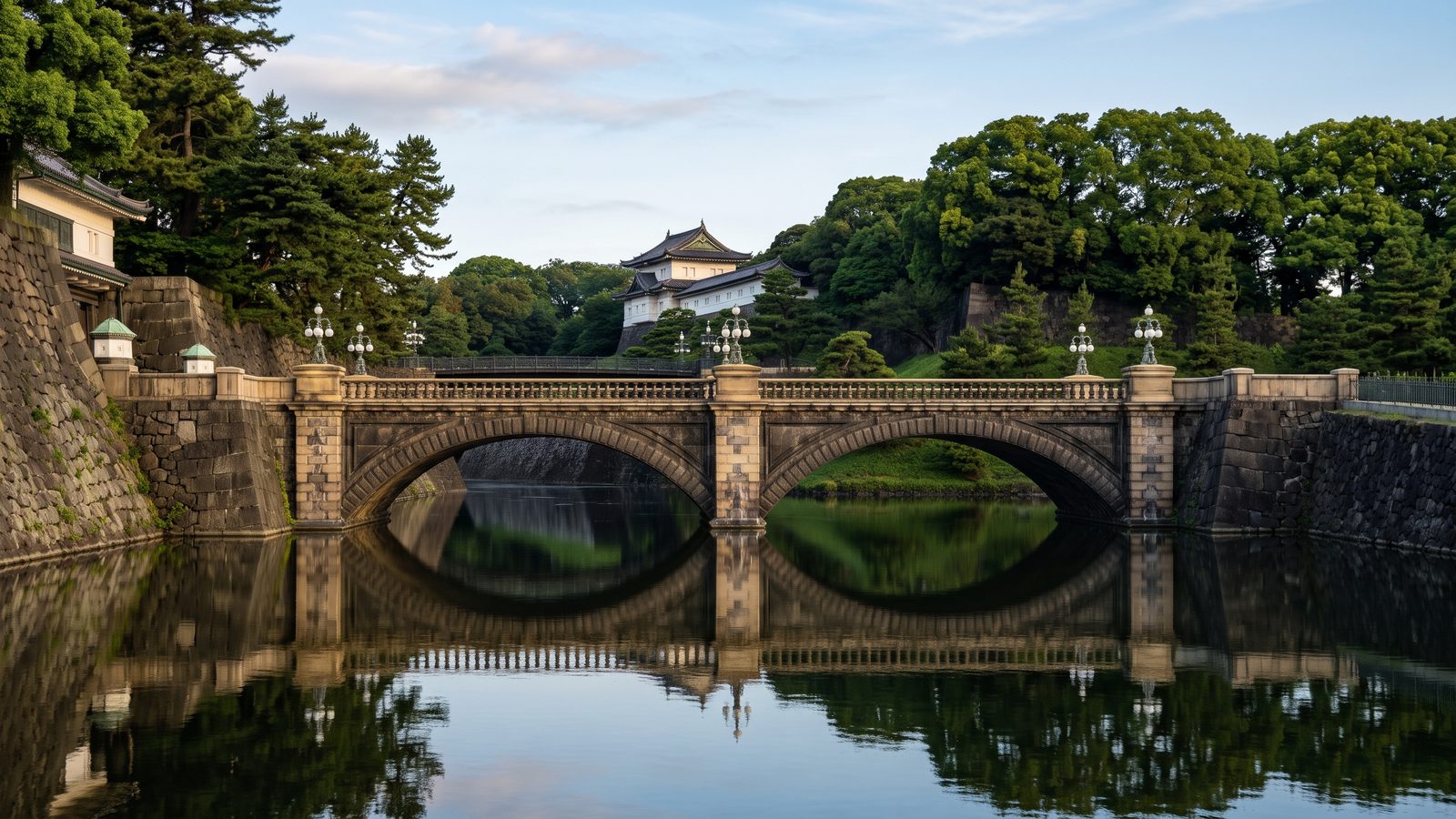
Welcome to the historic epicenter of Tokyo, where centuries of samurai rule transformed a quiet coastal village into one of the world's greatest metropolises. As you walk the expansive grounds of what was once Edo Castle, you tread the same soil where shoguns dictated national destiny and emperors shaped modern Japan. Surrounding you are monumental stone walls, peaceful moats, and serene garden paths that preserve the dramatic heritage of a bygone era.
This self-guided audio tour brings the remnants of Edo Castle to life around you. From the genius of Japanese stone masonry to mystical court legends and dramatic political shifts, you will uncover the secret stories hidden within these centuries-old ramparts and lush imperial gardens at your own unhurried pace.
Listen to a sample
The opening of this tour, exactly as AllTours narrates it on site.
What you'll hear on this tour
Stop 1. Birthplace of a Modern Capital
You stand at the birthplace of modern Tokyo. Picture a marshy fishing village transformed into the mighty fortress of Edo Castle after Tokugawa Ieyasu claims power in 1600. Look around and imagine the grand processions of the sankin-kōtai system, where powerful feudal lords were forced to journey here every alternate year, leaving their families behind to ensure unwavering loyalty. Though devastating fires swept through these grounds over the centuries, the fortress remained unshakeable. Feel the magnitude of 1868, when this grand stronghold surrendered peacefully during the Meiji Restoration, allowing Emperor Meiji to move his court here from Kyoto and cementing Tokyo as Japan's enduring imperial capital.
Stop 2. Masterpieces of Samurai Masonry
Cast your gaze upon these towering stone ramparts and notice the incredible craftsmanship of ishi-gaki. You are looking at massive granite blocks precisely cut and dry-fitted without mortar, surviving centuries of earthquakes and severe weather. Competing feudal lords sent their finest masons here to build these walls as a display of skill and devotion to the shogun. As you walk toward surviving structures like Sakuradamon Gate, observe how timber frames and narrow passages served as formidable military bottlenecks. Every angle, moat, and curved wall you see today represents a masterclass in ancient defense, built to keep the Tokugawa shogunate unassailable.
Stop 3. Mystical Guardians and Spiritual Geomancy
As you explore these tranquil grounds, look beyond the physical defense walls to discover a hidden realm of spiritual protection. You are walking through a sacred landscape engineered by the monk Tenkai, Ieyasu’s trusted advisor. He designed Edo Castle using advanced geomancy, aligning gates and establishing temples across the city to channel protective energies. This complex layout created a spiritual mandala intended to shield the realm from misfortune and preserve peace for centuries. As you take in the quiet beauty around you, consider how ancient mystical wisdom was woven directly into the foundation of this castle to safeguard its rulers.
Stop 4. Echoes of the Great Fortress
You are stepping onto what was once the largest castle complex in the entire world. Though the soaring main keep no longer stands, the sheer scale of the original fortress surrounds you in every direction. Stroll through the lush East Gardens, where samurai once stood guard and administrative halls hummed with political intrigue. Today, these manicured lawns, vibrant flowers, and quiet reflecting ponds offer a peaceful escape in the heart of modern Tokyo. Take a moment to reflect on how these surviving stone foundations bridge the gap between ancient samurai power and the serene modern home of Japan’s Imperial Family.
Planning your visit
- Best time to go
- Spring for cherry blossoms or autumn for vibrant foliage, preferably early morning for a quieter experience.
- Approximate duration
- About 1.5 to 2 hours
- Where to start
- Otemachi Station or Tokyo Station, entering through the Otemon Gate near the East Gardens.
Access and conditions change seasonally — check the official site before you go.
Frequently asked questions
Is Tokyo Imperial Palace worth visiting?
Yes, Tokyo Imperial Palace is well worth visiting for its rich samurai history, magnificent stone masonry, massive moats, and serene public gardens set right in the heart of modern Tokyo.
How long do you need at Tokyo Imperial Palace?
Most visitors spend between 1.5 and 2 hours exploring the public East Gardens, historic gates, and surrounding castle ruins at a comfortable pace.
What was Tokyo Imperial Palace called before?
Before becoming the Imperial Palace during the Meiji Restoration in 1868, the grounds were known as Edo Castle, the formidable seat of power for the Tokugawa shogunate.
Keep exploring
Header image is an AI-generated illustration of Tokyo Imperial Palace. AllTours.ai is an AI audio tour guide — point your camera at any landmark and hear its story.