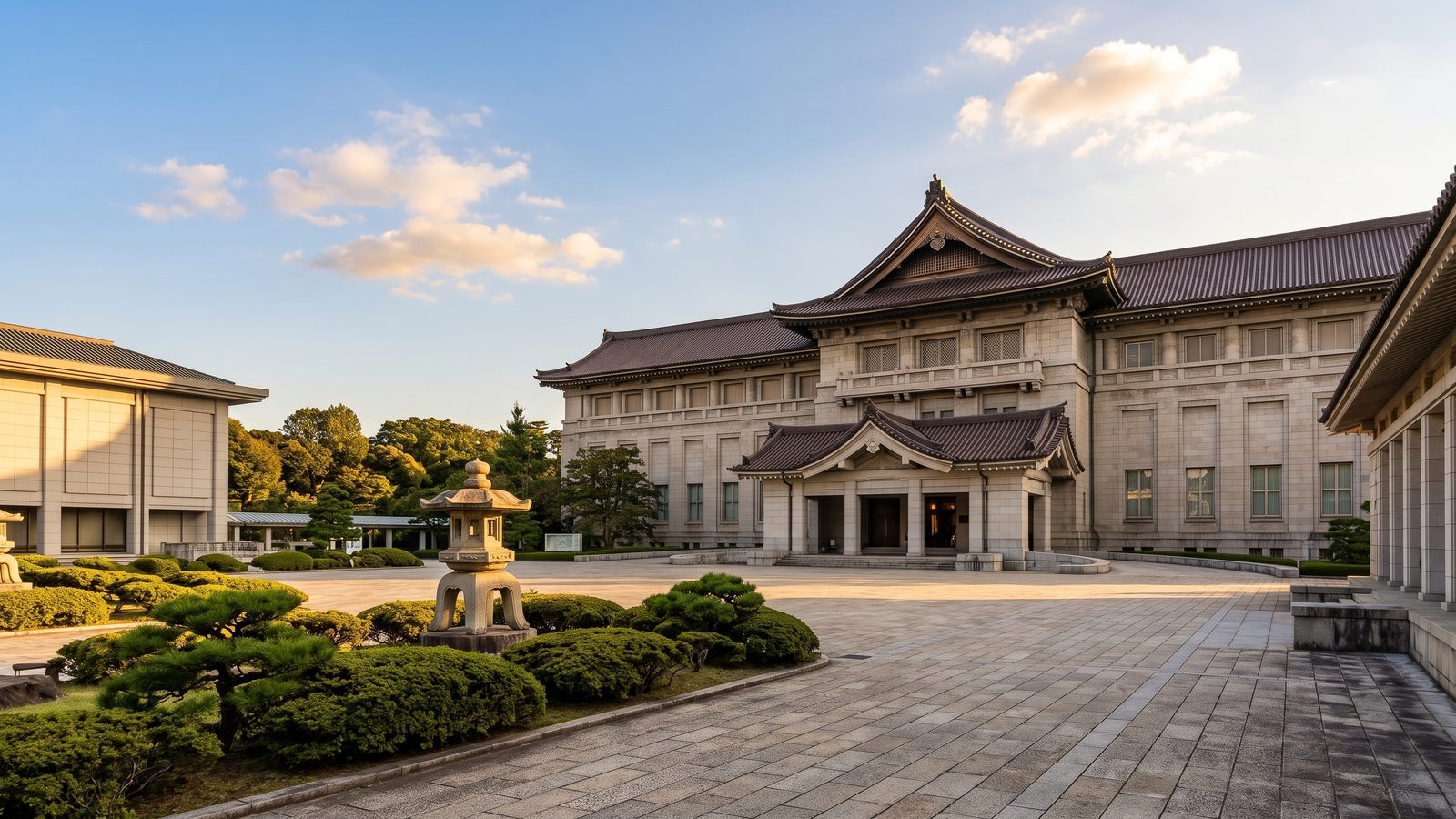
Welcome to the Tokyo National Museum, Japan's oldest and largest museum, established in 1872. Located in the heart of Ueno Park, this institution holds a vast collection spanning thousands of years of Japanese history, art, and Asian antiquities. From ancient pottery and serene Buddhist sculptures to formidable samurai swords and delicate tea bowls, you stand before a vessel carrying over a century of dedication to preserving the nation's rich heritage.
As you move through its iconic buildings, including the magnificent Imperial Crown-style Honkan and Western-style Hyokeikan, you will encounter the spirit of craftsmanship, spiritual aesthetics, and cultural evolution that shaped Japan. Let this self-guided tour lead you through the priceless masterpieces and stories waiting inside these historic halls.
Listen to a sample
The opening of this tour, exactly as AllTours narrates it on site.
What you'll hear on this tour
Stop 1. Echoes of the Warrior Class
As you step into the samurai gallery, formidable suits of armor immediately catch your gaze. You notice the intricate lacquered plates laced together to signal clan status, alongside terrifying menpo masks designed to intimidate opponents. Elaborate helmets bear striking crests, while legendary katana blades forged from folded tamahagane steel reflect centuries of metallurgical mastery. These weapons and armor represent more than battlefield gear; they embody the spirit of bushido, the warrior code emphasizing loyalty, honor, and disciplined self-mastery. Every detail, from the carved sword toggles to battle standards, reveals how deep aesthetic refinement coexisted with warrior life, shaping Japan's identity through generations.
Stop 2. Ten Thousand Years of History
You stand before raw, powerful Jomon pottery dating back over ten thousand years, featuring distinct flame-like rims and cord-marked patterns created by Japan's early inhabitants. Moving forward in time, enigmatic terracotta haniwa figures depict warriors, horses, and dancers, revealing the ancient funerary practices of Kofun chieftains. Nearby bronze dotaku bells display intricate agricultural scenes once used in Yayoi planting rituals. Your journey continues past masterfully forged Japanese swords and shimmering maki-e lacquerware delicately sprinkled with gold and silver dust. Each artifact offers a direct connection to vanishing ancient worlds, reflecting an enduring devotion to utility, spiritual reverence, and artistic perfection across thousands of years.
Stop 3. The Evolution of Visual Storytelling
You trace Japan's artistic legacy through delicate Heian-era emakimono handscrolls, where brushstrokes unfurl courtly tales and Buddhist parables. Moving into the Edo period, vibrant ukiyo-e woodblock prints bring the dynamic floating world of kabuki actors, geisha, and landscapes to life for everyday citizens. You marvel at tiny netsuke carvings that transform functional sash toggles into detailed miniature sculptures. Nearby, chawan tea bowls showcase the wabi-sabi philosophy, celebrating natural imperfections, crackled glazes, and quiet elegance. Through this captivating progression of decorative objects, paintings, and everyday tools, you witness a profound narrative unfolding through an evolving visual language that connects literature, spirituality, and ordinary life.
Stop 4. Resilience of a Modern Institution
You explore an institution born during Japan's rapid modernization in 1872, starting at the Yushima Seido temple as the country's first public museum. Moving to Ueno Park in 1882, it gained prestige under the Meiji government as the Imperial Museum. Although the catastrophic 1923 Great Kanto Earthquake destroyed early structures, the museum rose again from the rubble. The magnificent Honkan main building, designed by Jin Watanabe and completed in 1937, blends traditional Japanese rooflines with Western classical architecture. Renamed the Tokyo National Museum in 1947, this historic landmark stands today as a resilient monument dedicated to safeguarding Japan's cultural legacy across turbulent eras.
Stop 5. A Journey Across Asian Heritage
You experience a thoughtful curatorial layout across multiple specialized gallery buildings. The 1937 Honkan main building guides you chronologically through Japanese history, moving seamlessly from ancient Jomon artifacts to samurai armor and Edo kimonos. In contrast, the Toyokan showcases Asian antiquities, displaying Buddhist sculptures from India, Chinese ceramics, and Korean textiles to highlight shared artistic traditions. You also discover the Horyuji Homotsukan, a tranquil gallery displaying sacred treasures donated by Horyuji Temple. By rotating delicate scrolls and textiles for preservation, the museum ensures fresh perspectives while maintaining responsible stewardship over these irreplaceable national treasures and cross-cultural links across Asia.
Stop 6. The Aesthetic Soul of Japan
You discover the core philosophical values shaping Japanese life as you inspect subtle details throughout the collection. In raku tea bowls, intentional imperfections highlight wabi-sabi, the appreciation of transient beauty and simplicity that influences gardens and tea ceremonies. Delicate kimono patterns featuring embroidered cranes and cherry blossoms express a deep reverence for nature and desires for longevity. Formidable samurai armor reflects bushido, the warrior code of honor, loyalty, and disciplined aestheticism that structured historical society. Meanwhile, serene Buddhist sculptures convey a spiritual quest for inner peace. Together, these artistic creations reflect a shared cultural consciousness that continues to resonate across modern Japanese life.
Planning your visit
- Best time to go
- Weekday mornings, especially during spring cherry blossom or autumn foliage seasons in Ueno Park.
- Approximate duration
- About 2 to 3 hours
- Where to start
- In front of the main entrance of the Honkan (Main Building) inside Ueno Park.
Access and conditions change seasonally — check the official site before you go.
Frequently asked questions
Is Tokyo National Museum worth visiting?
Yes, as Japan's oldest and largest museum, it holds an unmatched collection of over 100,000 artifacts including ancient pottery, samurai armor, woodblock prints, and national treasures.
How long do you need at Tokyo National Museum?
Most visitors spend between 2 to 4 hours exploring the main Honkan building and surrounding galleries like the Toyokan and Horyuji Treasure House.
When was the Tokyo National Museum established?
The museum was established in 1872 at Yushima Seido temple before moving to its permanent home in Ueno Park in 1882.
Keep exploring
Header image is an AI-generated illustration of Tokyo National Museum. AllTours.ai is an AI audio tour guide — point your camera at any landmark and hear its story.