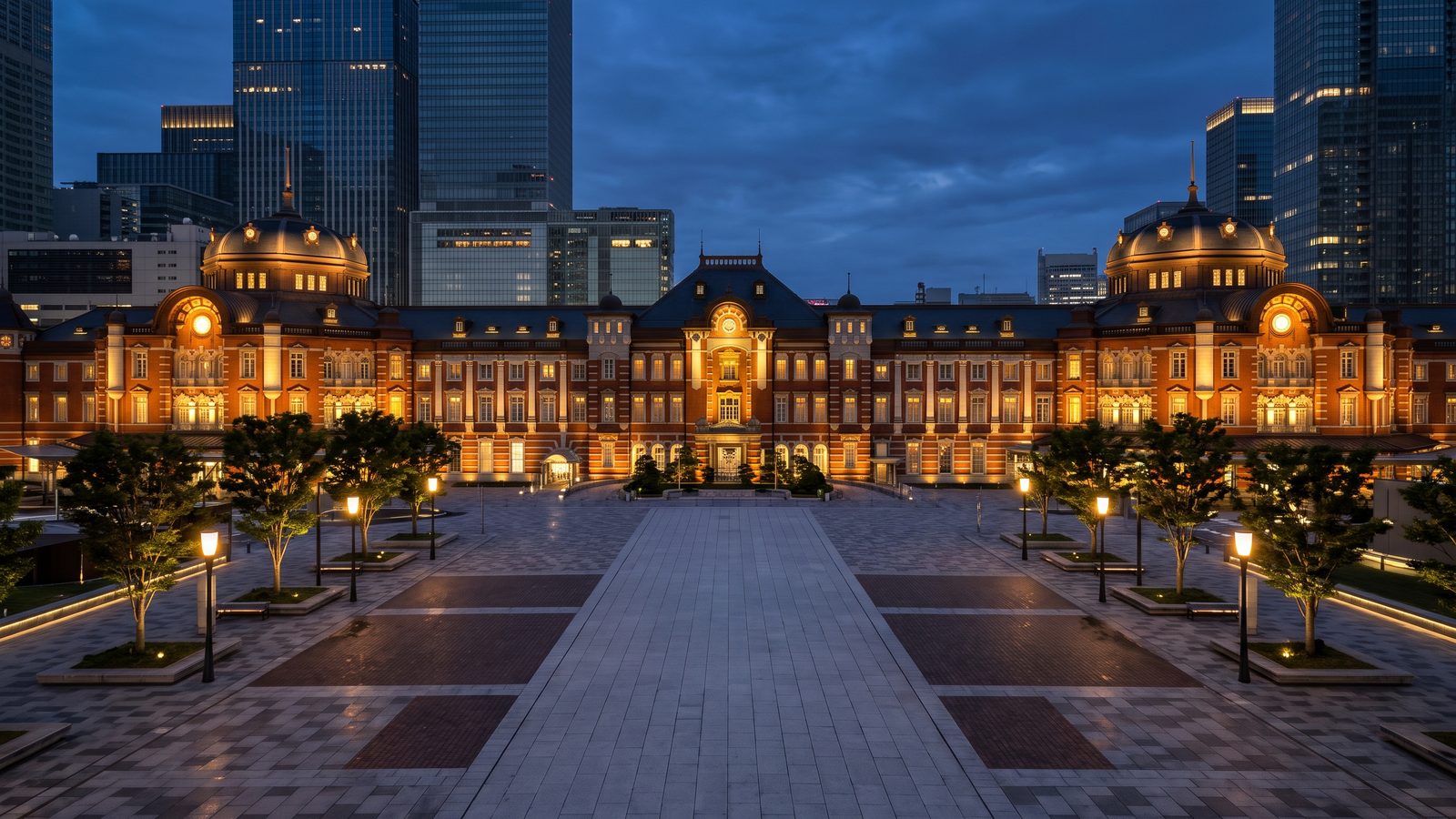
Welcome to Tokyo Station, a magnificent architectural titan and the beating heart of Japan's railway network. Designed by visionary architect Tatsuno Kingo and opened in 1914, its stately red-brick Marunouchi facade stands in striking contrast to surrounding modern skyscrapers. As millions of travelers pass through each day, you step into a living monument that blends historic Meiji-era ambition with high-speed modern transit and vibrant subterranean culture.
On this self-guided audio tour, you will explore painstakingly restored grand domes, navigate legendary underground dining corridors, and experience Japan's famed punctuality firsthand. From high-speed bullet trains to character shopping arcades, discover how this iconic landmark survived wartime destruction to remain the pride of the nation.
Listen to a sample
The opening of this tour, exactly as AllTours narrates it on site.
What you'll hear on this tour
Stop 1. Renaissance Revival and Restored Domes
As you stand before the Marunouchi side, you gaze upon a majestic red-brick facade designed in the Renaissance Revival style by architect Tatsuno Kingo. Completed in 1914, this landmark showcases intricate brickwork reflecting turn-of-the-century ambition. Although WWII bombings destroyed its grand octagonal domes, a meticulous restoration in 2012 recreated the original three-story structure. Step inside the north and south entrance halls to look up at the soaring ceiling reliefs. If you examine the detailed interior carvings closely, you will spot majestic eagles and the twelve animals of the zodiac, seamlessly blending Western architectural grandeur with Japanese precision.
Stop 2. Rising from Ashes to Grandeur
You are experiencing a century of resilience. Tokyo Station officially opened on December 20, 1914, representing the Meiji era's push toward rapid modernization. However, during World War II in 1945, severe firebombing raids damaged the structure, reducing its grand octagonal domes to rubble. For decades, a simplified two-story post-war rebuild focused solely on basic transit function. It was not until 2012 that a multi-year restoration project successfully brought back Tatsuno Kingo's original three-story vision. Today, you walk through halls painstakingly returned to their historic 1914 glory, standing as a living symbol of Tokyo's enduring spirit.
Stop 3. The Pulsing Arteries of Japan
Step into the bustling concourses where Japan's world-famous railway network converges. You are standing at the starting point of the iconic Tokaido Shinkansen bullet train, which departs with astounding precision toward Kyoto and Osaka alongside high-speed lines heading north. Across more than twenty surface platforms and deep underground tracks, commuter arteries like the Yamanote, Chuo, and Tokyo Metro Marunouchi lines move millions of daily travelers. Watch as station staff and commuters participate in an intricate, silent ballet of movement. Every train arrives and departs within seconds of its schedule, showcasing an engineering marvel powered by absolute punctuality.
Stop 4. Subterranean Flavors and Train Bento
Prepare your palate for a subterranean culinary journey within the station's vast food halls. As you explore, you encounter exquisite ekiben—meticulously packed train bento boxes filled with regional delicacies that preview far-off destinations. Head down to Ramen Street, a legendary underground corridor where eight renowned shops serve rich pork-bone Tonkotsu and delicate soy-based Shoyu broths. Nearby in Gransta and Kitchen Street, you can sample traditional wagashi sweets, premium sake, and regional dishes. From quick bites before boarding a bullet train to sit-down gourmet meals, this station transforms transit into an unforgettable gastronomic adventure.
Stop 5. A Character Shopping Metropolis
Beneath the surface lies a thriving shopping wonderland waiting to be discovered. Wander down Tokyo Character Street, a whimsical arcade featuring official shops for Pokémon, Studio Ghibli, and Weekly Shonen Jump, where you can find exclusive collectibles unavailable anywhere else. For sweet souvenirs, browse the omiyage gift shops packed with beautifully packaged treats like the famous Tokyo Banana. Connected directly to the station, the grand Daimaru department store offers floors of luxury fashion and food halls. Whether collecting limited-edition plushies or regional gifts, you are taking home unique treasures that capture the vibrant spirit of Tokyo.
Stop 6. Precision, Harmony, and Omotenashi
As you move through the crowded concourses, you witness the deep-seated cultural values that keep Japan moving. Notice the unwavering commitment to punctuality, where seconds matter and schedules reflect mutual respect. Station staff embody omotenashi—Japan's selfless hospitality—offering detailed guidance with exceptional politeness. You will also experience the innovative concept of eki-naka, which transforms transit hubs into self-contained urban spaces filled with quality dining and shopping. In the orderly streams of commuters and shared respect for common space, you observe a living reflection of Tokyo's pride, efficiency, and collective harmony.
Planning your visit
- Best time to go
- Mid-morning or early evening to avoid rush hour crowds while catching the station facade illuminated.
- Approximate duration
- About 1.5 to 2 hours
- Where to start
- Marunouchi Central Exit plaza facing the historic red-brick building.
Access and conditions change seasonally — check the official site before you go.
Frequently asked questions
Is Tokyo Station worth visiting?
Yes, Tokyo Station is worth visiting even if you are not taking a train. It features historic 1914 red-brick architecture, restored octagonal ceiling domes, subterranean dining hubs like Ramen Street, and character shopping arcades.
How long do you need at Tokyo Station?
Most visitors spend 1.5 to 2 hours exploring the Marunouchi building, admiring the dome interiors, and browsing the underground shopping and dining areas like Gransta and Tokyo Character Street.
When was Tokyo Station built and restored?
Tokyo Station officially opened on December 20, 1914, designed by architect Tatsuno Kingo. After severe bombing damage in World War II, its original three-story layout and octagonal domes were fully restored in 2012.
Keep exploring
Header image is an AI-generated illustration of Tokyo Station. AllTours.ai is an AI audio tour guide — point your camera at any landmark and hear its story.