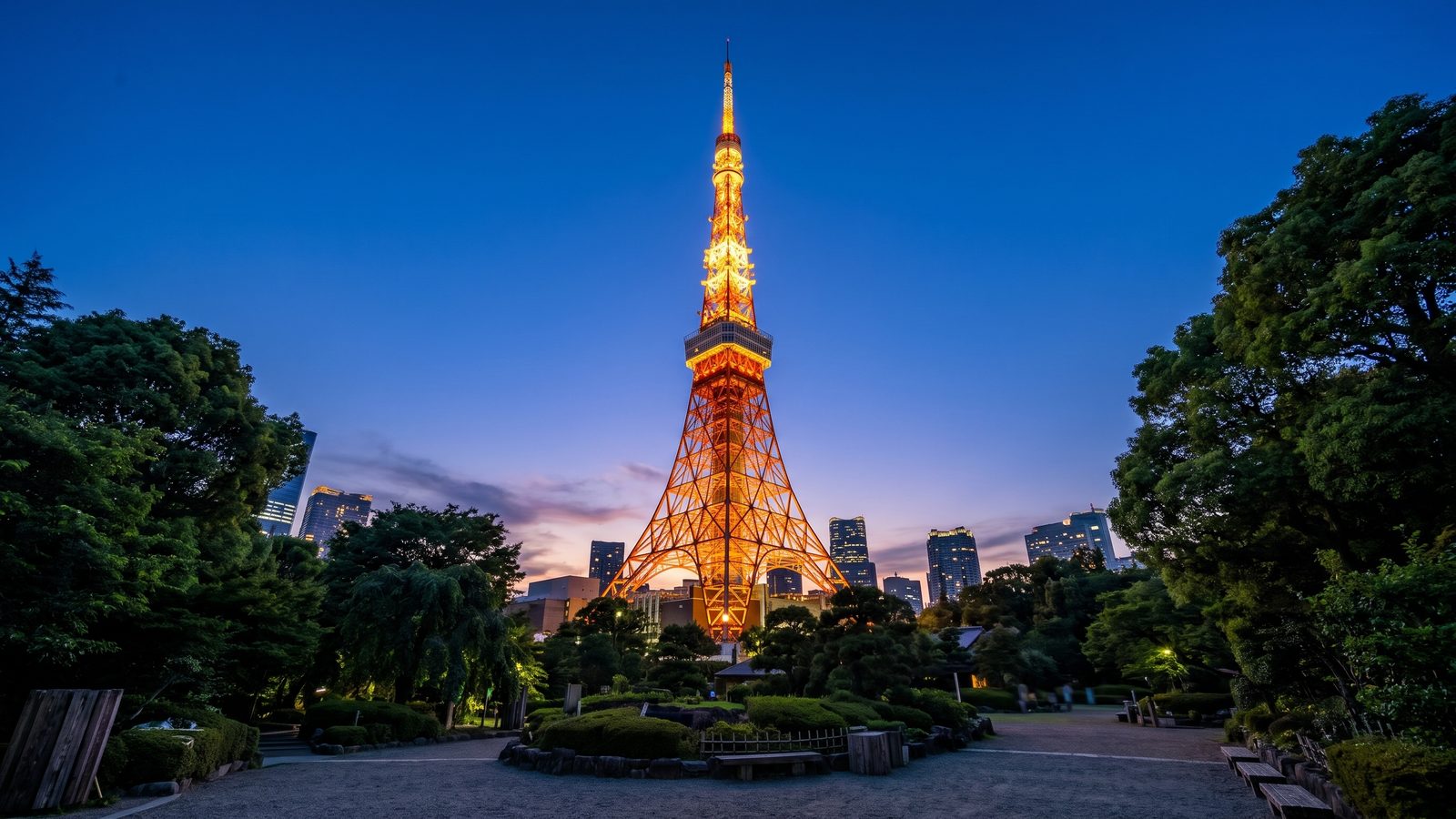
Stand beneath Tokyo Tower, an unmistakable 333-meter symbol of Japan's remarkable post-war recovery and economic growth. Completed in 1958, this lattice marvel soared past the Eiffel Tower while forging a uniquely Japanese identity against the skyline. As you explore its distinct international orange framework, you will discover how mid-century engineering, brilliant safety design, and rich cultural romance came together to create one of Tokyo's most beloved beacons.
This self-guided audio tour leads you through the landmark's fascinating architecture, sweeping deck vistas, and famous night lighting displays. Learn how artisans painted its soaring steel by hand, take in panoramic views stretching to Mount Fuji, and experience the warm, captivating glow that illuminates Tokyo long after sunset.
Listen to a sample
The opening of this tour, exactly as AllTours narrates it on site.
What you'll hear on this tour
Stop 1. Engineering Elegance and Seismic Sway
As you tilt your head back to observe the lattice framework, you are looking at a masterwork of post-war Japanese engineering. Designed by architect Tachū Naitō, this soaring tower stands 13 meters taller than the Eiffel Tower, yet uses just 4,000 tons of steel compared to the Eiffel's 10,100 tons. This remarkable lightness is a deliberate engineering choice for earthquake resilience, allowing the structure to sway gracefully during tremors rather than resist rigidly. Notice the iconic international orange and white paint scheme, a mandatory aviation safety measure. Every rivet and tapering beam blends functional necessity with mid-century elegance, creating a resilient silhouette against Tokyo's dynamic skyline.
Stop 2. Panoramas from the Skyline Decks
Step out onto the Main Deck at 150 meters and watch the metropolis unfold beneath you. Below, the serene green grounds of Zojoji Temple offer a peaceful contrast to the surrounding concrete buildings. Looking toward Tokyo Bay, you can trace the arc of Rainbow Bridge leading to futuristic Odaiba, while the distant silhouette of Tokyo Skytree marks the skyline. Ascend to the Top Deck at 250 meters for an extraordinary 360-degree panorama. On a crisp, clear winter morning, Mount Fuji's snow-capped peak rises in the distance. As night falls, the view turns into a glittering, endless tapestry of urban light.
Stop 3. A Living Canvas of Evening Light
Watch as twilight turns the tower into a radiant light show. The traditional Landmark Light bathes the framework in a warm orange glow powered by 176 high-pressure sodium lamps from October to July, bringing warmth to cold nights. From July to September, the lighting switches to a cool white using metal halide lamps to counter the summer heat. On special occasions, you can witness the Diamond Veil, where 276 LED lights transform the tower across 12 distinct colors. Each shade celebrates events, anniversaries, or global causes, turning this massive steel structure into a dynamic, living canvas that speaks directly to the city below.
Stop 4. Hand-Painted Symbol of Post-War Pride
Gaze up at the striking lattice and trace the history of Japan's post-war resurgence. Built in just 13 months, Tokyo Tower represents an extraordinary feat of rapid engineering and national optimism. The bold international orange and white paint scheme—often called Tokyo Tower Red—was applied entirely by hand by skilled artisans working at daring heights to meet strict aviation safety rules. Master architect Tachū Naitō designed the slender form to blend Western inspiration with traditional Japanese resilience, creating a structure that stands firm against powerful typhoons and earthquakes while serving as a timeless beacon over the city.
Stop 5. Sensual Energy of the Nocturnal Skyline
As night falls, you experience Tokyo Tower at the center of the city's vibrant nocturnal energy. The glowing orange superstructure and seasonal light displays create a romantic setting that draws couples and visitors from around the world. From the observation decks, you look down upon a neon tapestry of millions of twinkling urban lights. Down on the first floor, Club 333 occasionally fills the space with live music, adding rhythm to your visit. Outside, nearby Shiba Park and the lively streets of Roppongi buzz with cocktail bars and dining, all thriving under the tower's iconic, glowing backdrop.
Stop 6. Tokyo's Iconic 333-Meter Beacon
Look up at this magnificent 333-meter landmark, completed in 1958 as a broadcasting antenna and enduring symbol of post-war recovery. Rising taller than the Eiffel Tower, its striking red and white colors make it instantly recognizable across the metropolis. From the observation decks, Tokyo stretches out like a glittering canvas, making the tower a prominent star in countless Japanese films and anime. Long cherished by couples for its romantic evening ambiance, this soaring structure remains one of the most beloved heartbeats of the Tokyo skyline, proudly connecting the city's rich past with its vibrant, forward-looking present.
Planning your visit
- Best time to go
- Late afternoon just before twilight, allowing you to experience daylight vistas, clear sunset views, and the evening illumination.
- Approximate duration
- about 1.5 to 2 hours
- Where to start
- Outside the main entrance at the base of Tokyo Tower, near Shiba Park.
Access and conditions change seasonally — check the official site before you go.
Frequently asked questions
Is Tokyo Tower worth visiting?
Yes, Tokyo Tower offers an exceptional mix of mid-century architecture, post-war history, and panoramic views of Tokyo, including Zojoji Temple and Mount Fuji on clear days.
How long do you need at Tokyo Tower?
Most visitors spend between 1.5 and 2 hours exploring the observation decks, admiring the steel architecture, and enjoying the light displays.
When was Tokyo Tower built and why?
Tokyo Tower was completed in 1958 as a radio and television broadcasting tower, serving as an iconic symbol of Japan's post-war economic resurgence.
Keep exploring
Header image is an AI-generated illustration of Tokyo Tower. AllTours.ai is an AI audio tour guide — point your camera at any landmark and hear its story.