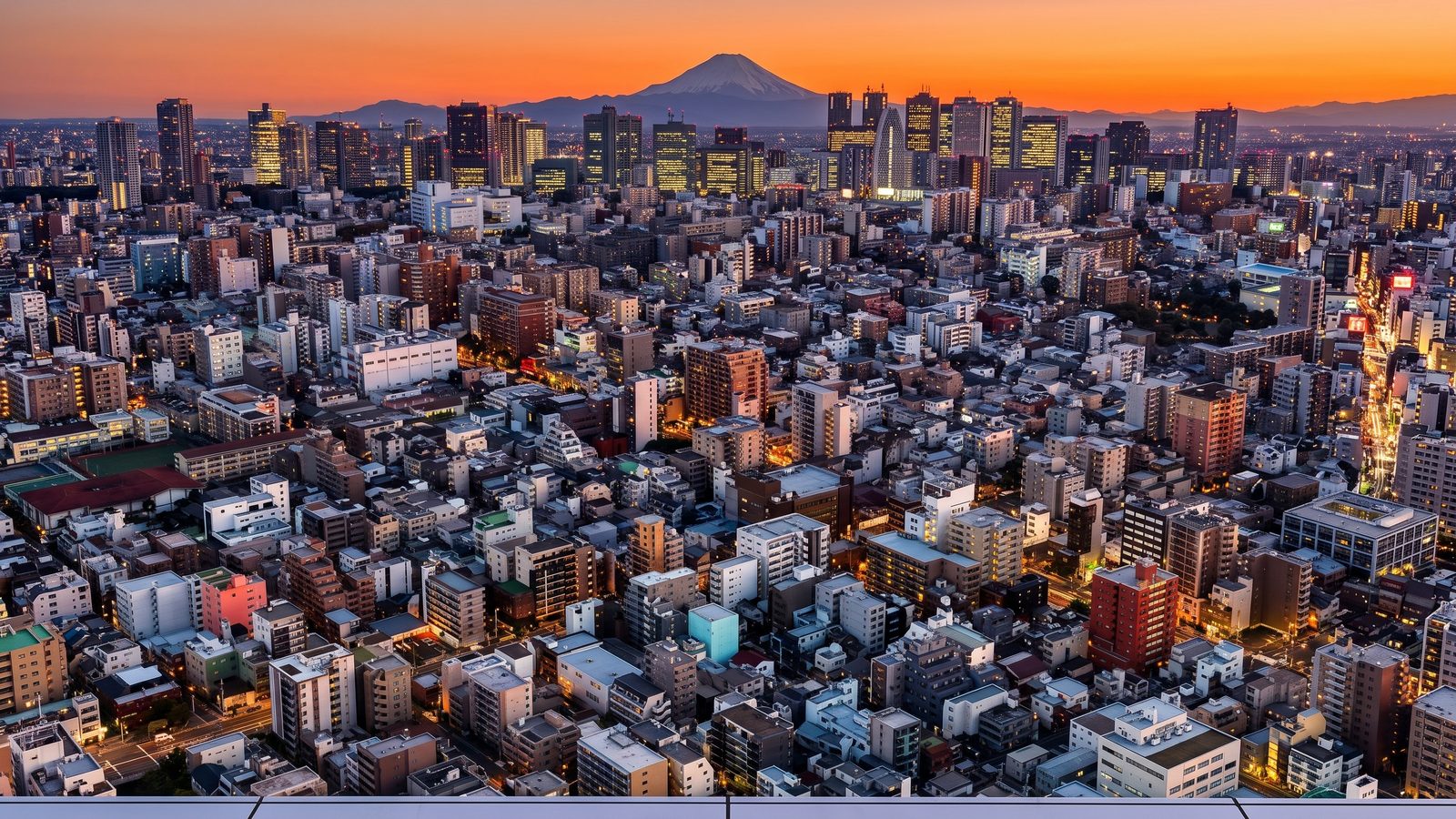
Welcome to Tokyo, a sprawling global metropolis where ancient traditions seamlessly fuse with futuristic innovation. Originally known as Edo, the powerful seat of the Tokugawa Shogunate for over two centuries, this dynamic domain transformed into Tokyo, meaning Eastern Capital, in 1868. Today, you stand amidst a living, breathing testament to resilience, where serene historic gardens and wooden temples whisper feudal tales alongside sky-piercing towers defining a modern skyline.
This self-guided audio tour leads you through Tokyo's captivating urban landscape. As you explore, you will experience the remarkable interplay between grand vertical architecture and intimate alleyways. Prepare to immerse yourself in the unparalleled energy, rich history, and profound cultural depth of Japan's vibrant heart.
Listen to a sample
The opening of this tour, exactly as AllTours narrates it on site.
What you'll hear on this tour
Stop 1. Sacred Guardians and Glowing Horizon Views
From this incredible vantage point, you witness Tokyo's boundless energy unfold right beneath you. The sprawling urban tapestry stretches out endlessly to the distant horizon, serving as a powerful testament to human endeavor and relentless innovation. On clear days, you can spot the majestic silhouette of Mount Fuji gracing the western sky, standing like a sacred guardian watching over this modern metropolis. As dusk falls across the city, Tokyo transforms into a glittering constellation of lights, where every single illumination represents a unique story, a living memory, and a vibrant purpose pulsing through the heart of Japan.
Stop 2. Towering Ecosystems and Hidden Yokocho Alleyways
As you navigate Tokyo's dynamic urban tapestry, you feel the city breathing with a relentless, unstoppable energy. Verticality defines its very core, where towering skyscrapers house entire self-contained ecosystems of bustling shops and high-rise offices, constantly reshaping the skyline above you. Yet, tucked directly between these massive structural giants, you discover a vibrant network of narrow alleyways known as yokocho. Inside these tucked-away lanes, tiny traditional izakayas buzz with lively energy, revealing the city's intimate, human scale right in the midst of its vast urban sprawl. This constant interplay between grand structural scale and hidden intimacy makes Tokyo entirely unique.
Stop 3. Ancient Timber Craftsmanship Meets Seismic Engineering
You stand amidst Tokyo's architectural genius, where traditional timber craftsmanship engages in a profound dialogue with cutting-edge seismic engineering. Look closely at how the sleek glass facades of Marunouchi reflect the open sky above, creating a stark visual contrast against the intricate, nail-less wooden joinery of nearby Edo-period structures. This resilient city constantly rebuilds itself, continuously pushing vertical boundaries with innovative lightweight materials to construct a dynamic, evolving urban tapestry. As you look around, you see firsthand how historic preservation and futuristic construction coexist side by side, proving that Tokyo's architectural evolution honors its storied past while boldly building for tomorrow.
Stop 4. A Chronicle of Post-War Resilience and Light
As your gaze sweeps across Tokyo's breathtaking skyline, you witness a living chronicle of urban ambition and post-war resilience. Each towering structure around you, from the iconic red-and-white Tokyo Tower to the soaring Tokyo Skytree, embodies the city's incredible modern transformation. This vertical tapestry constructed of steel and glass tells endless tales of relentless technological innovation and a constant upward reach into the heavens. The skyline truly comes alive at dusk, when twilight paints the metropolis in a million twinkling lights, illuminating a vibrant city that continues to reinvent itself day after day.
Stop 5. Interconnected Sky Bridges of Futuristic Design
You are observing an audacious 1970s urban planning marvel, originally conceived as a living blueprint for future cities. As you look up at its distinctive interconnected towers, notice how each structure was thoughtfully designed with a unique civic purpose, ranging from residential living spaces to vibrant cultural hubs. Local legend whispers about the visionary architect behind the project, who firmly believed that elevated sky bridges would foster an unparalleled sense of community among residents. Standing here today, you experience a bold architectural space where daring innovation literally reshaped Tokyo's vertical landscape, leaving a lasting legacy on how modern urban environments operate.
Stop 6. From Feudal Edo to the Eastern Capital
You stand at the vibrant heart of Japan, a sprawling metropolis where ancient traditions seamlessly fuse with futuristic innovation. This city represents a living, breathing testament to human resilience and progress. Once known as Edo, the powerful seat of the Tokugawa Shogunate for more than 250 years, this domain transformed into Tokyo—meaning Eastern Capital—in 1868 as it embraced a new imperial era. Looking around, you see a breathtaking architectural tapestry ranging from serene, historic wooden temples that whisper tales of feudal Japan to the dazzling, sky-piercing towers of districts like Shinjuku, defining a world-famous skyline that constantly reaches toward the future.
Planning your visit
- Best time to go
- Late afternoon into early evening for clear daytime views, Mount Fuji sightings, and the glittering night lights.
- Approximate duration
- About 2 hours
- Where to start
- Central Tokyo, starting near major transit hubs like Tokyo Station or Shinjuku.
Access and conditions change seasonally — check the official site before you go.
Frequently asked questions
Is Tokyo worth visiting?
Yes, Tokyo is widely considered one of the world's most dynamic cities, offering a unique mix of historic Edo heritage, cutting-edge architecture, iconic skylines, and world-class dining.
How long do you need in Tokyo?
Most visitors recommend spending at least 3 to 5 days to explore Tokyo's distinct neighborhoods, major observation decks, historic temples, and vibrant alleyway food scenes.
What is the history of Tokyo?
Originally named Edo, the city was the seat of the Tokugawa Shogunate for over 250 years. In 1868, it became the imperial capital and was renamed Tokyo, meaning 'Eastern Capital'.
Keep exploring
Header image is an AI-generated illustration of Tokyo. AllTours.ai is an AI audio tour guide — point your camera at any landmark and hear its story.