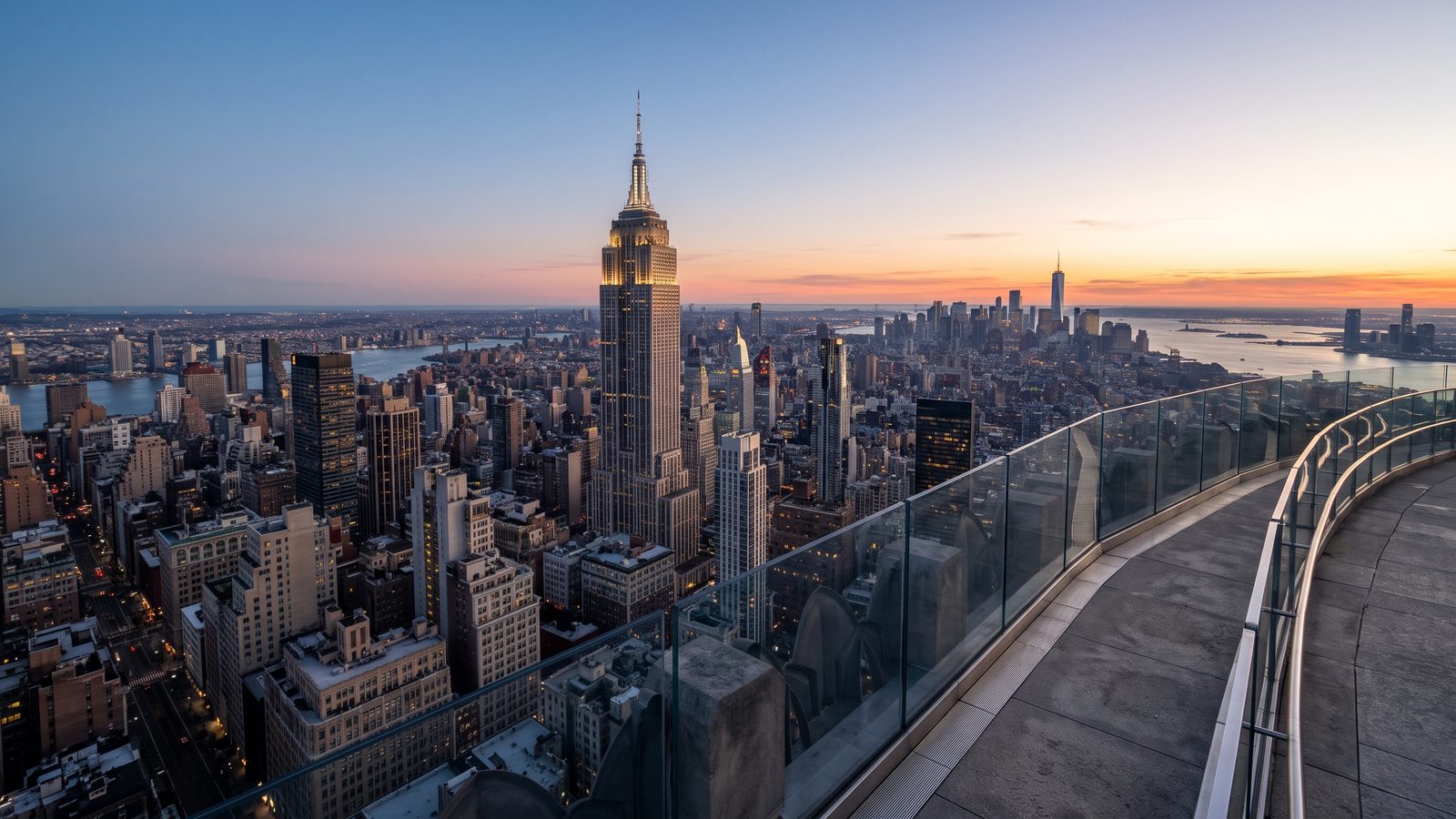
Welcome to the top of 30 Rockefeller Plaza, rising 70 stories above the vibrant streets of Midtown Manhattan. Conceived by John D. Rockefeller Jr. during the Great Depression, this landmark stands as a triumph of Art Deco architecture and human ambition. Step out onto the observation decks to experience a legendary 360-degree panorama that spans from the green expanse of Central Park to the towering Empire State Building and beyond.
With this self-guided audio tour, you will explore three distinct viewing tiers designed for incredible perspectives. Discover the story of New York's grid plan, admire iconic skyscrapers framing the horizon, and capture crisp, glare-free photographs of the world's most famous skyline from an open-air vantage point.
Listen to a sample
The opening of this tour, exactly as AllTours narrates it on site.
What you'll hear on this tour
Stop 1. Three Tiers Above Manhattan
You stand on the observation decks of Rockefeller Center, exploring three distinct outdoor levels designed to showcase New York City from every angle. On the lower levels, expansive glass panels shield you from the wind while giving you the exhilarating sensation of floating directly over Midtown. As you ascend to the top tier, you step into an entirely open-air space free of glass barriers. Here, you feel the brisk breezes and hear the distant hum of the streets below. You are not simply observing the cityscape from a distance; you are completely immersed in its energy, experiencing an open panorama that connects you directly to the vibrant pulse of Manhattan.
Stop 2. Perfect Glare-Free Photo Angles
You hold your camera ready as you explore one of the finest photographic vantage points in the world. Unlike many city observatories, Top of the Rock features open space without reflective glass on its highest deck, allowing you to capture crystal-clear photographs without distracting glare. You frame the Empire State Building's iconic spire perfectly against the Midtown skyline or look north to capture the neat green rectangle of Central Park. Whether you visit during the warm light of golden hour or watch the city transform into a glittering nightscape of lights, every angle offers an effortless photo opportunity free from reflections.
Stop 3. Panoramas from River to River
From this high perch, you command an unobstructed 360-degree view across the entire island of Manhattan. Looking north, Central Park unfolds before you as a massive emerald rectangle, serving as a masterfully designed urban lung amidst dense stone and steel. Turning south, you enjoy an unbeatable, direct perspective of the Empire State Building, with One World Trade Center standing tall in the distance. To your east and west, you trace the Hudson and East Rivers outlining the island, giving you a clear view of how water and geography shape this dynamic metropolis as a living, breathing map.
Stop 4. The Grid and the Empire State
As you gaze southward, the Empire State Building commands your attention, standing as a triumphant symbol of hope born during the Great Depression. Looking straight down, you trace the relentless street grid unfolding beneath your feet. This orderly layout stems from the historic Commissioners' Plan of 1811, which carved out the straight avenues and cross streets that drive NYC's commerce and culture today. Looking across the rooftops, you notice how different architectural eras coexist side by side, from elegant pre-war stone facades to sleek modern glass, detailing the continuous evolution of New York City over centuries.
Stop 5. Art Deco to Glass Towers
You sweep your eyes across the horizon, witnessing a living timeline of vertical architecture. Proud pre-war masterpieces like the Art Deco Chrysler Building stand side by side with modern glass skyscrapers, showing how building design has evolved across generations. You can see how sunlight plays off diverse materials, from warm limestone to polished stainless steel and glass. Each distinct silhouette along the skyline tells a story of relentless ambition, innovation, and vertical expansion. Standing here, you appreciate how these contrasting styles join together to forge the world's most recognized urban horizon.
Stop 6. Rockefeller's Vision in the Sky
You are standing 70 stories above the city at 30 Rockefeller Plaza, the centerpiece of Rockefeller Center. Conceived during the economic hardship of the Great Depression by John D. Rockefeller Jr., this complex was built as an Art Deco symbol of optimism, unity, and American ingenuity. From this high elevation, you can see how his vision of a 'city within a city' came to life. Every sleek line, soaring vertical column, and artistic detail of this building reflects the lofty ambitions of the 1930s, offering you a historic space where past craftsmanship seamlessly meets the modern horizon.
Planning your visit
- Best time to go
- Late afternoon leading into golden hour and sunset, allowing you to experience both daytime clarity and the glowing night skyline.
- Approximate duration
- about 1 hour
- Where to start
- Top of the Rock main entrance inside 30 Rockefeller Plaza, following signs to the observation deck elevators.
Access and conditions change seasonally — check the official site before you go.
Frequently asked questions
Is Top of the Rock worth visiting?
Yes, Top of the Rock is widely considered one of New York's best observation decks because it offers clear, unobstructed 360-degree views, including the best direct view of the Empire State Building and Central Park, along with open-air decks free of glass glare.
How long do you need at Top of the Rock?
Most visitors spend between 45 minutes and 1.5 hours exploring the three observation deck levels, taking photographs, and taking in the panoramic views.
When was Top of the Rock built?
Top of the Rock is located at 30 Rockefeller Plaza, an Art Deco landmark conceived by John D. Rockefeller Jr. and constructed during the Great Depression in the 1930s.
Keep exploring
Header image is an AI-generated illustration of Top of the Rock. AllTours.ai is an AI audio tour guide — point your camera at any landmark and hear its story.