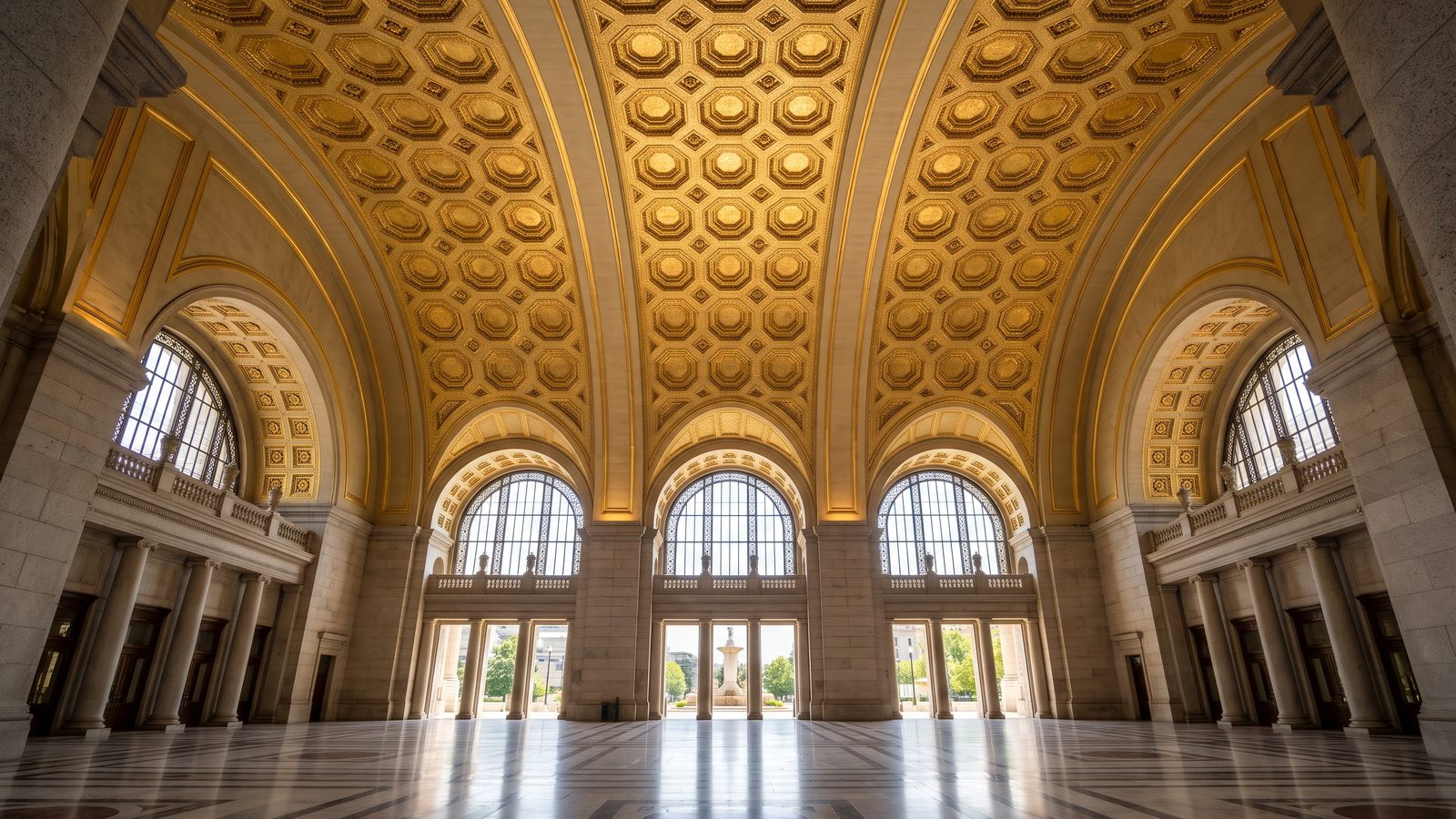
Step inside Union Station, Washington D.C.'s majestic Beaux-Arts gateway designed by visionary architect Daniel Burnham. Opened in 1907, this monumental structure stands as a testament to American ambition and civic pride. As you walk beneath soaring coffered ceilings shimmering with gold leaf, you follow in the footsteps of presidents, wartime soldiers, diplomats, and millions of travelers who have passed through its halls for over a century.
This self-guided audio tour leads you through the magnificent Main Hall, highlighting Roman-inspired architecture, heroic statuary, rich history, and modern concourses. Discover how a grand portal to the nation's capital survived near-demolition to remain one of Washington's most vibrant landmarks.
Listen to a sample
The opening of this tour, exactly as AllTours narrates it on site.
What you'll hear on this tour
Stop 1. Ancient Rome in the Heart of D.C.
You step into the grand Main Hall, where architect Daniel Burnham draws directly from ancient Rome's Baths of Diocletian and Arch of Constantine. Look up at the soaring barrel-vaulted ceiling, adorned with an intricate coffered design glistening with real gold leaf. Outside, three massive arches carved from pristine white granite welcome visitors in classical triumphal style. Around you stand sixty-two plaster legionnaires sculpted by Louis Saint-Gaudens to symbolize the march of rail progress. If you look closely at their classical forms, notice the bronze drapery; Saint-Gaudens originally sculpted them nude, prompting a public outcry that forced a hasty compromise to cover their modesty.
Stop 2. From City Beautiful to Modern Rebirth
You are standing in the centerpiece of Daniel Burnham’s City Beautiful movement, commissioned in 1903 to consolidate Washington's disparate rail lines into one magnificent capital gateway. Since its 1907 opening, Union Station has served as a critical national artery. During both World Wars, millions of uniformed soldiers marched through this Great Hall, filling the air with poignant farewells and emotional reunions. As air and automobile travel grew, the station suffered a severe decline, culminating in a botched 1970s conversion into a National Visitor Center that left the roof crumbling. A sweeping 1980s restoration saved Burnham's masterpiece, renewing its legacy for future generations.
Stop 3. Allegories of Progress and Patriotism
As you gaze at the main facade outside, six colossal allegorical statues sculpted by Louis Saint-Gaudens greet you, representing concepts like Fire, Electricity, Freedom, and Imagination—symbols of rail travel's transformative power. Step inside to look up at thirty-six gilded plaster figures lining the Great Hall ceiling. Though often mistaken for Roman soldiers, these figures are American Legionnaires, added after World War I to honor the nation's fallen servicemen. Around the hall, carefully chosen inscriptions quote visionaries like Daniel Burnham, framing the Beaux-Arts ornamentation with thoughtful purpose. Every statue and carved phrase turns this bustling terminal into a solemn gallery celebrating national achievement.
Stop 4. Feasts of the Golden Age and Today
You can easily imagine the golden age of train travel, when dining inside Union Station was a grand affair. In the legendary Presidential Suite Restaurant, uniformed waiters served elegant multi-course meals on fine china to visiting dignitaries and socialites as locomotives rumbled nearby. While those historic dining rooms have evolved, culinary life remains central to the station's pulse. As you wander today, you can grab a quick bite in the bustling lower-level food court, sit down for a coffee in the historic East Hall, or enjoy a relaxed meal under the soaring arches, keeping alive a century-old tradition of gathering over food.
Stop 5. A Marketplace Beneath Classical Arches
Notice how seamlessly commerce weaves through this vast historic space. During the monumental 1980s restoration, designers deliberately integrated a vibrant shopping center to revive the building beyond its transit functions. As you transition from the quiet grandeur of the Main Hall into the bustling concourses, you discover a lively marketplace set beneath classical arches. Head down to the lower level to explore a labyrinth of shops offering local souvenirs, books, and fashion. What once served early twentieth-century travelers grabbing a quick newspaper has transformed into a dynamic retail experience, where commuters rushing for trains mingle with visitors taking time to shop.
Stop 6. The Crossroads of American Journeys
Stand still for a moment and listen to the rhythmic hum of travelers surrounding you. This station was engineered not just as a train depot, but as the primary portal to the American capital, built to turn transit into an uplifting experience. During World War II, these concourses swelled with troops heading overseas, their departures shaping the nation's history. Generations of politicians, foreign diplomats, and ordinary citizens have crossed these floorboards to begin new chapters. Designed with expansive waiting rooms and clear orientation, the station honors the universal human desire to explore, connecting distant corners of the country inside Washington.
Planning your visit
- Best time to go
- Morning or early afternoon on weekdays offers lighter crowd levels and optimal sunlight streaming through the Main Hall's Roman arches.
- Approximate duration
- about 45 minutes
- Where to start
- Main Entrance Portico on Massachusetts Avenue NE
Access and conditions change seasonally — check the official site before you go.
Frequently asked questions
Is Union Station worth visiting?
Yes, Union Station is one of Washington D.C.'s premier architectural landmarks, famous for its Beaux-Arts design by Daniel Burnham, Roman-inspired arches, golden coffered ceilings, and historic role as the capital's central train hub.
How long do you need at Union Station?
Most visitors spend between 45 minutes to an hour exploring the Main Hall architecture, statues, historic concourses, and retail areas.
When was Union Station built and who designed it?
Construction began in 1903 and the station officially opened in 1907. It was designed by renowned architect Daniel Burnham as part of the City Beautiful movement.
Keep exploring
Header image is an AI-generated illustration of Union Station. AllTours.ai is an AI audio tour guide — point your camera at any landmark and hear its story.