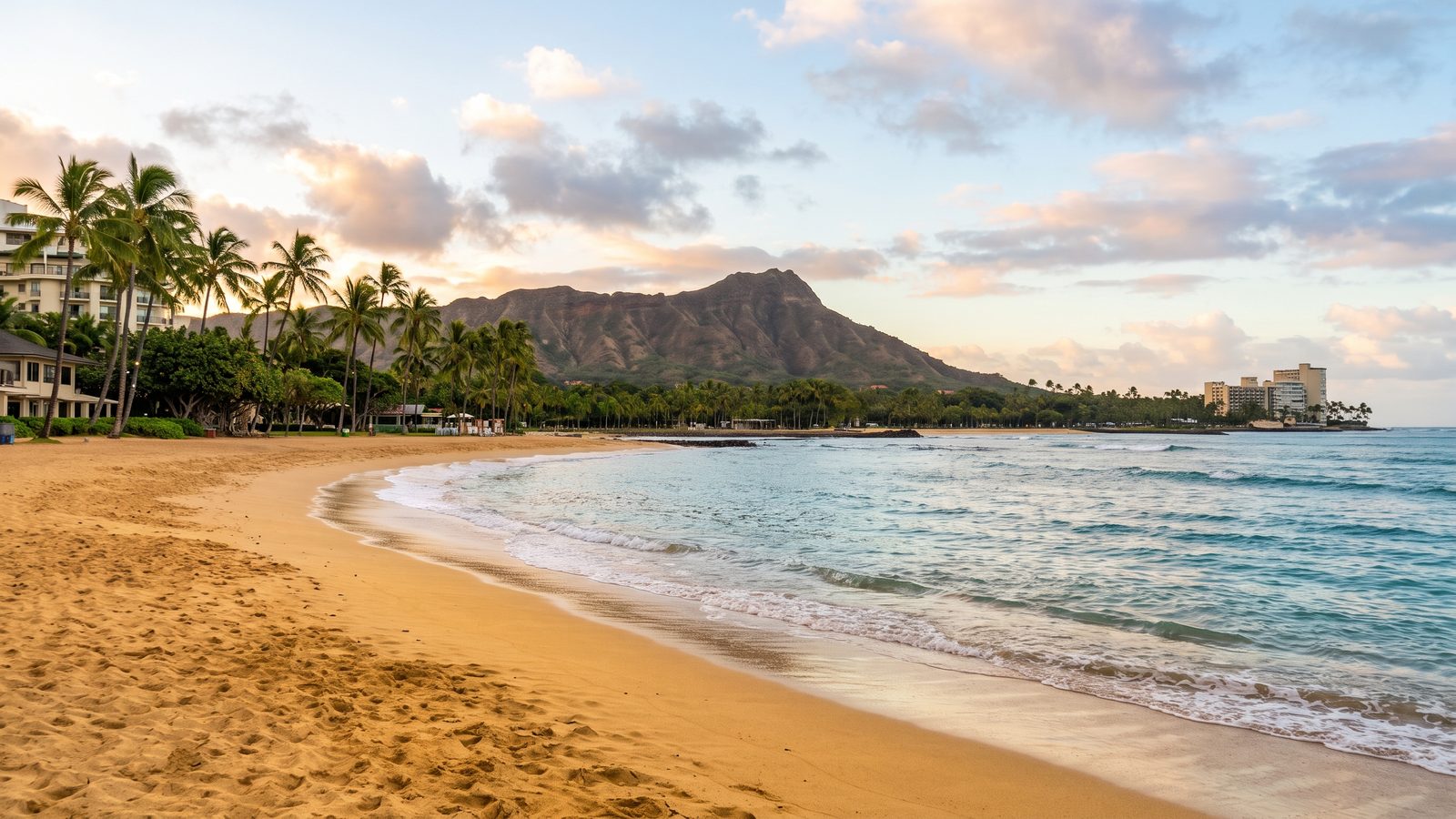
Welcome to Waikiki Beach, a legendary stretch of coast where ancient Hawaiian history meets modern ocean paradise. As you walk along these world-famous golden sands, you tread on former royal lands that transformed from fertile taro patches and royal fishponds into a global resort icon. This self-guided audio tour invites you to connect with the spirit of aloha and explore the incredible heritage beneath your feet.
Immerse yourself in the story of Waikiki's gentle rolling waves, vibrant Hawaiian culture, and famous beach boy history. Listen to the ocean, feel the warm trade winds, and discover how imported sands and ancient coral reef geology shaped this timeless Hawaiian oasis into a worldwide destination.
What you'll hear on this tour
Stop 1. From Royal Taro Fields to Resort Capital
You stand on land that sustained Hawaiian royalty for centuries. Long before high-rise hotels lined the shore, vast taro patches and fishponds stretch inland to feed the royal court. As you walk along the coast, imagine the 19th-century transformation as private estates give way to modest guesthouses. In 1901, the grand Moana Hotel opens its doors as the First Lady of Waikiki, introducing luxury steamship travelers to island paradise. Early 20th-century dredging and land reclamation reshape the coastline, paving the way for the iconic Royal Hawaiian Hotel in 1927. You walk the exact pathways where global tourism took root.
Stop 2. The Living Legacy of the Beach Boys
You look out over the ocean and watch surfers glide gracefully across longboard waves. Here, you witness the living legacy of the Waikiki Beach Boys, legendary watermen who shared the soul of aloha with visitors since the early 1900s. Notice distinct breaks like Canoes, Queens, and Populars, where soft swells offer unhurried glides over gentle reefs. Surfers ride traditional longboards in homage to classic styles perfected on these very waves. This surf break acts as the world's welcoming classroom, inviting you to embrace the joy of riding the ocean's patient teachers just as Duke Kahanamoku once taught the world.
Stop 3. The Healing Waters and Golden Shore
Your bare feet sink into soft golden sand, touching a shore with a remarkable history of transformation. Much of the sand you feel beneath you was imported from California and neighboring islands starting in the 1920s to expand a naturally narrow, marshy coastline. Ancient Hawaiians revere this area as Waikiki, meaning spouting waters, believing its gentle currents hold profound healing properties. You tread on the sacred playground of Hawaiian royalty, who perfected wave-sliding right here. Notice how the offshore coral reef creates a natural breakwater, ensuring safe, rolling waves that make this stretch the ultimate playground for ocean lovers.
Stop 4. Turquoise Waves and Marine Life
You gaze at the magnificent Pacific Ocean shifting from brilliant turquoise to deep sapphire in the sunlight. These warm, inviting waters offer a gentle embrace year-round. As you look toward the clearer shallow patches, you might spot a protected green sea turtle gliding effortlessly above the sandy bottom. Offshore reefs sculpt the swells into long, forgiving waves, perfect for beginners learning to ride the surf. The ocean slopes gradually underfoot, allowing you to wade far out safely. You stand beside an ancient maritime highway that nurtured generations of Hawaiian voyagers, fishermen, and ocean enthusiasts.
Stop 5. Sacred Hawaiian Heritage and Aloha
You are standing on the ancestral lands of the Kanaka Maoli, the indigenous people of Hawai'i. Waikiki once served as a vibrant cultural center where Hawaiian chiefs gathered to surf and enjoy rich coastal fishponds. Imagine moonlight hula performances and ancient chants echoing across the sand, passing stories of gods and heroes down through generations. The spirit of aloha you feel in the warm trade winds is a living philosophy of love, compassion, and respect. As locals pass by wearing handcrafted flower lei, you observe a silent language of celebration deeply rooted in this sacred coastal sanctuary.
Stop 6. Crushed Coral and Living Reef Artistry
You press your toes into the fine carpet beneath you, feeling a living testament to the ocean's ongoing artistry. This golden shoreline consists of pulverized ancient coral reefs, tiny shell fragments, and microscopic skeletons of marine organisms. Look closely to spot subtle pinkish grains, created by microscopic red foraminifera shells. Marine creatures like parrotfish continuously create this biogenic sand by grazing on coral reefs and excreting fine particles. The relentless wave action grinds down these fragments into a remarkably soft texture. This specific granular composition acts as a natural water filter, creating the extraordinary coastal clarity you see today.
Planning your visit
- Best time to go
- Early morning at sunrise for peaceful walks and calm ocean conditions, or late afternoon for vibrant golden hour sunsets over Diamond Head.
- Approximate duration
- About 1 to 1.5 hours
- Where to start
- Outside the historic Moana Surfrider hotel near Kalakaua Avenue, stepping directly onto the beachfront path.
Access and conditions change seasonally — check the official site before you go.
Frequently asked questions
Is Waikiki Beach worth visiting?
Yes, Waikiki Beach is worth visiting for its iconic views of Diamond Head, legendary gentle surf breaks, deep Hawaiian royal history, and vibrant oceanfront atmosphere.
How long do you need at Waikiki Beach?
Plan to spend 1 to 2 hours for a leisurely walking audio tour, though you can easily spend half a day enjoying swimming, surfing, and relaxing along the shore.
What is the history of Waikiki Beach?
Originally a marshy agricultural land of taro patches and fishponds for Hawaiian royalty, Waikiki transformed in the late 19th and early 20th centuries into a world-famous resort destination, marked by dredged shorelines, historic hotels like the Moana, and imported sands.
Keep exploring
Header image is an AI-generated illustration of Waikiki Beach. AllTours.ai is an AI audio tour guide — point your camera at any landmark and hear its story.