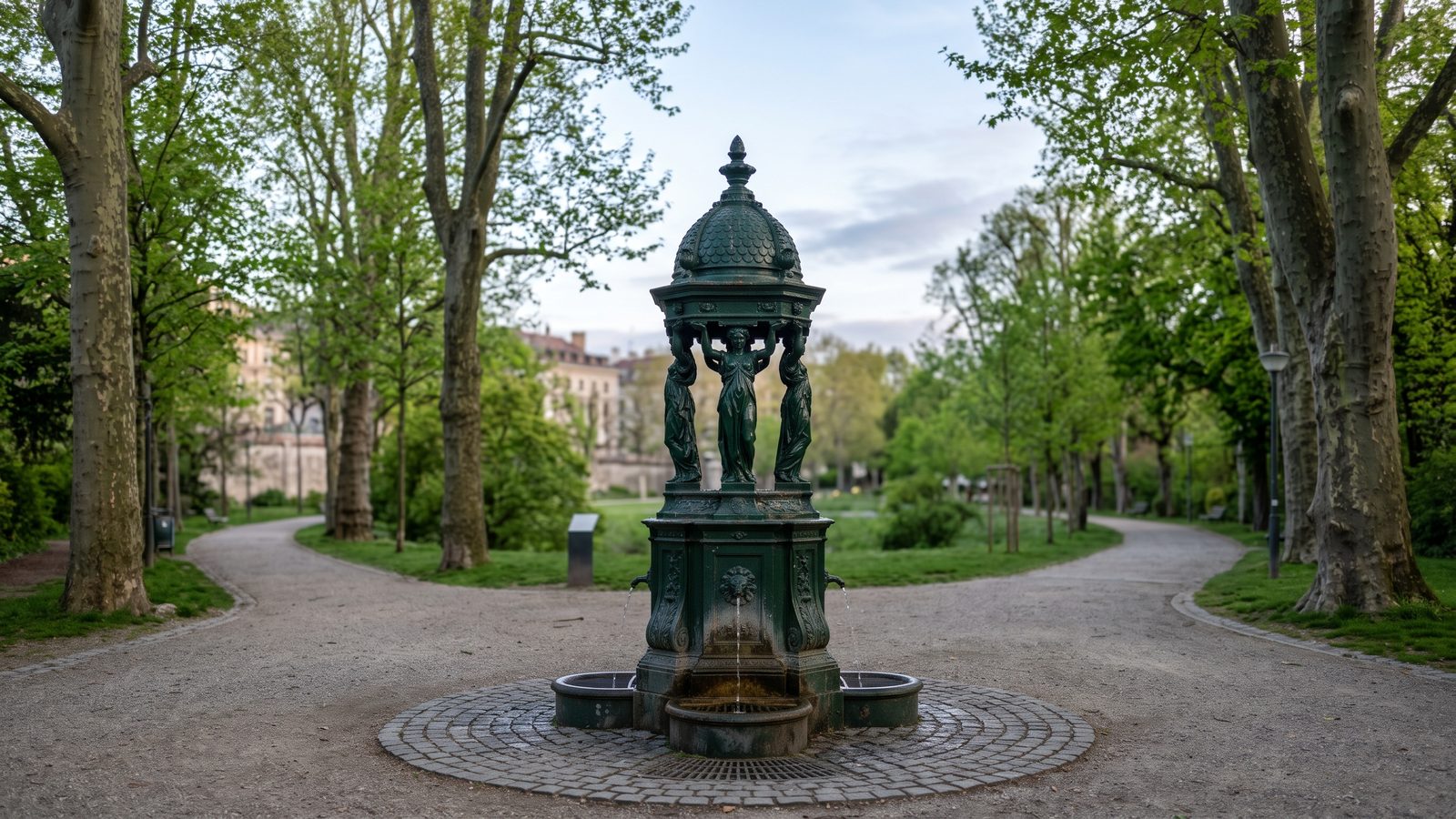
Welcome to Parc des Bastions in Geneva, where history and public art quietly intersect. Standing before you is a celebrated Wallace Fountain, an elegant dark green cast-iron structure designed by sculptor Charles-Auguste Lebourg. Donated by British philanthropist Sir Richard Wallace in the late 19th century, this historic drinking fountain brings Parisian flair and clean water to Geneva’s vibrant city center, continuing its original noble purpose to this day.
On this self-guided audio tour, you will discover the intricate artistic details of the fountain, the deep historical meaning behind its four caryatids, and the relaxing atmosphere of Parc des Bastions. Step closer to appreciate this harmonious blend of artistic beauty, civic virtue, and pure Lake Geneva water.
Listen to a sample
The opening of this tour, exactly as AllTours narrates it on site.
What you'll hear on this tour
Stop 1. Virtues Cast in Dark Green Iron
You stand before the dark green cast-iron masterpiece created by sculptor Charles-Auguste Lebourg. Four graceful caryatids hold up an ornate dome, serving as both structural supports and profound moral symbols. As you examine each figure closely, you recognize the distinct allegorical representations of kindness, simplicity, charity, and sobriety. The continuous flow of fresh, potable water cascades gently beneath the dome, offering a constant gift of life and refreshment to passersby. This deliberate design transforms an everyday civic utility into an inspiring public artwork. Take a moment to admire how art and social purpose merge seamlessly here, creating an enduring emblem of public health that still serves Geneva's citizens today.
Stop 2. A Legacy of Parisian Philanthropy
You trace the origin of this remarkable fountain back to Sir Richard Wallace, an Englishman moved by the suffering and water shortages following the Franco-Prussian War. In 1872, Wallace commissioned these iconic structures to ensure everyone had access to free, clean drinking water. Inspired by this humanitarian mission, Geneva brought these Parisian-style fountains into its own urban landscape to promote public health and shared civic values. As you stand here today, you connect with a long tradition of European philanthropy that began in Paris and took root in Geneva. The fountain remains an active monument to compassion, standing as proof that thoughtful design can solve pressing social challenges while beautifying city spaces.
Stop 3. Echoes of Historic Geneva Fortress
As you walk through Parc des Bastions, you tread on land that once formed Geneva's formidable 16th-century fortification ramparts. These ancient defensive bastions gave the park its enduring name, transforming former military walls into the peaceful green heart of the modern city. Nearby, you notice locals gathered around large outdoor chessboards, engaging in quiet strategic games that infuse the leafy promenades with intellectual energy. This dynamic contrast between defensive history and contemporary leisure makes the park an essential gathering spot. Take in the surrounding pathways and mature trees, appreciating how Geneva cleverly converted its historic fortifications into a welcoming, public urban sanctuary centered around art and nature.
Stop 4. Dappled Sunlight Under Ancient Canopies
You pause beneath the towering canopy of ancient plane trees that shade the fountain. Sunlight filters through the leafy branches, casting a delicate, dancing pattern across the dark green iron and shimmering water. During autumn months, golden leaves carpet the surrounding pavement, framing the sculpture in a rich seasonal tapestry. The clean water cycling through the fountain originates from Lake Geneva, creating a vital oasis for songbirds that frequently swoop down for a drink. As you watch the soft movement of light and leaves, you experience the peaceful harmony between this sculpted iron fountain and the natural ecosystem thriving right in the center of Geneva.
Stop 5. Soothing Sounds in an Urban Sanctuary
You step closer to the fountain and immediately feel the calming effect of its continuous water movement. The soft, cascading murmur acts as natural white noise, gently blocking out the surrounding city noise and creating a quiet pocket of peace. You find a nearby wooden bench and take a seat, taking in the faint, refreshing mist drifting off the water. Watching the steady stream flow down from the dome invites quiet contemplation, offering a soothing break from your urban explorations. This tranquil atmosphere makes the fountain a beloved resting spot where you can pause, recharge, and enjoy a timeless moment of calm in Geneva.
Stop 6. Masterful Classical Details in Iron
You zoom in on the finer artistic details of Charles-Auguste Lebourg’s sculpture. Cast in durable dark green iron, the four classical caryatids display intricate drapery and reflective, thoughtful expressions that highlight their symbolic roles. Each figure—representing Kindness, Simplicity, Charity, and Sobriety—stands in a dignified pose that elevates a simple water dispenser into a refined work of fine art. As you look at the flowing lines of their robes and the detailed work on the dome above, you appreciate the sculptor's mastery. This outdoor monument invites you to reflect on timeless human virtues while admiring the technical craftsmanship required to mold iron into poetic form.
Planning your visit
- Best time to go
- Spring through autumn, especially in late afternoon when sunlight filters through the plane trees.
- Approximate duration
- about 20-30 minutes
- Where to start
- Inside Parc des Bastions, near the main central promenade and the outdoor giant chessboards.
Access and conditions change seasonally — check the official site before you go.
Frequently asked questions
Is Wallace Fountain in Parc des Bastions worth visiting?
Yes, it is well worth visiting as a historic, elegant example of 19th-century civic art and philanthropy located inside Geneva's peaceful Parc des Bastions.
How long do you need at Wallace Fountain in Parc des Bastions?
You typically need about 15 to 30 minutes to view the caryatid statues, learn about its origin, drink fresh water, and enjoy the surrounding park.
What is the history behind the Wallace Fountain in Parc des Bastions?
Designed by Charles-Auguste Lebourg and funded by British philanthropist Sir Richard Wallace in 1872 after the Franco-Prussian War, these fountains were created to supply free, clean drinking water to the public.
Keep exploring
Header image is an AI-generated illustration of Wallace Fountain in Parc des Bastions. AllTours.ai is an AI audio tour guide — point your camera at any landmark and hear its story.